 Bernadette Peters.
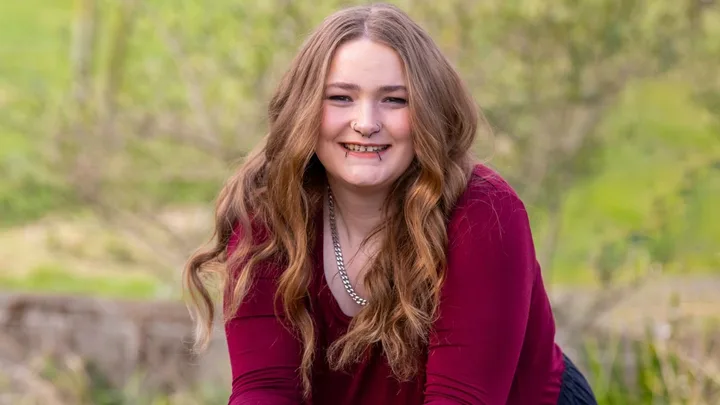
As a child, Calais Campbell was obsessive about arranging her soft toys in a specific way. Looking back, the 22-year-old from Marton suspects this need for order was an early sign of the condition that stole her teenage years.
At one stage, her obsessive compulsive disorder (OCD) was so bad, Calais couldn’t bear to look at her home, let alone go inside it. Every aspect of her life was affected by the mental health condition which involves unwanted thoughts, urges and compulsions.
The beginning of her OCD
It was when she was 15 that her OCD spiralled out of control.
“One night, I couldn’t cross the line on the floor between the kitchen and our lounge,” recalls Calais. “I thought it would hurt the people I love and wasn’t willing to take that risk. I was stuck.”
Not long after, she had a second episode where the OCD was telling her that she wasn’t allowed to talk or open her eyes, and her mum Shona ended up calling an ambulance.
Soon Calais was struggling to leave the bathroom or walk around the house for fear of doing something that would harm others.
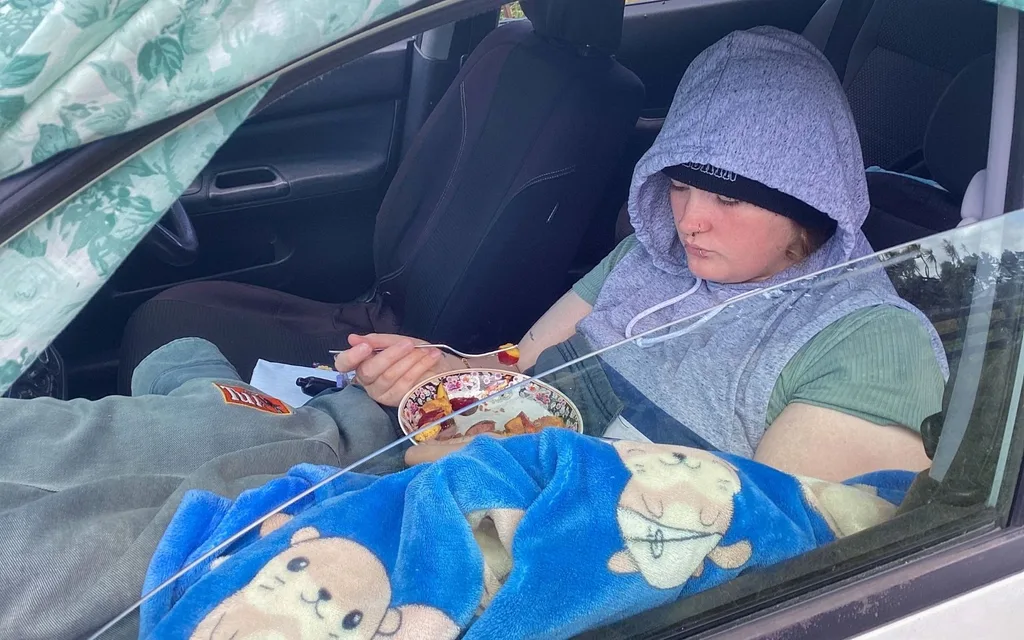
“It got to the point where I couldn’t even be in the house,” she recalls. “Against Mum’s wishes, I decided to stay one night in the car because going inside was just too difficult. I stayed in that car for a year.”
At night, the car was parked beside the house and she kept her hood up so she could avoid seeing it. During the day, the car was positioned beneath an apple tree for shade.
“When I was in the car, anything I wanted or needed had to be brought to me. I had to be driven uptown to use the public toilets. And if I needed a shower, I went to someone else’s house. It wasn’t just me that was affected – it was everyone around me. Having to do all these things for me meant that my mum didn’t have a life of her own.”
Support from her partner
Calais also had lots of support from her partner of four years, Reggie Harris, who spent time with her in the car while she struggled with everyday life.
“I saw lots of different psychologists and counsellors,” says Calais. “I tried holistic healing and hypnotherapy, took natural medicines and psychiatric drugs. But nothing was working.”
The medications she was taking made Calais so drowsy, it was impossible to lead a normal life.
“All they did was turn me into a zombie,” she tells. “A lot of the time at school, I’d be in the sick bay because I couldn’t keep my eyes open.”
Online support
Through the Facebook support group Fixate, Shona learnt about charitable trust Open Closed Doors that helps people with OCD get better access to effective treatment. She also discovered the ground-breaking Bergen 4-day treatment, an intensive programme pioneered in Norway that has high success rates treating people with OCD.
“Mum came out to the car one day and asked if I wanted to give it a go. And I said, ‘Hell yes if it gets me my life back.’”

Back in January, Calais went to Auckland with a group of other young people who had severe OCD and they became the first Kiwis to receive the Bergen Treatment. Their progress was filmed for new documentary Exposure and although Calais doesn’t appear on screen, she says the experience changed her life.
Bergen Treatment
Bergen is a form of exposure therapy, where patients choose what to do rather than following what OCD dictates. For Calais, it involved things like turning on powerpoint switches, flushing toilets or screwing on bottle caps. She had also become incapable of using her phone.
An aspect of the treatment that really helped her was group therapy, meeting people struggling with the same thoughts and feelings, then seeing them begin to improve.
“There was one girl who was running around turning on powerpoints and I was like, ‘I want to do that’. She was a huge inspiration for me,” says Calais.
For Calais, the therapy has been a game-changer. On the second day, she was able to make a phone call to Reggie. And with the treatment completed, there was a huge moment when she walked inside her house for the first time in over a year.
While there are still things to work on, Calais is back sleeping in her bedroom now. She and Reggie have even been out to a couple of music gigs and she’s hoping to take a pottery course. All of that would have been unthinkable before the treatment.
Calais explains, “My OCD affected everything, everywhere I went,” says Calais. “There’s such a difference now. It’s massive. My advice to anyone with OCD is remember you’re not alone, don’t give up hope and get the Bergen 4-day treatment, if you can.”
DNZ: Exposure screens 8.30pm Monday on TVNZ 1 and streams on TVNZ+.

Related stories
Native ad body.

Native ad body.




Native ad body.