





Setting sail with a thunderstorm on the horizon, celestial navigator Hinerapa Rupuha prepared to use all of the knowledge she’d gained in the past 10 years. With no modern technology at her disposal, she found herself crossing the ocean as her ancestors once did, looking to the sky, stars and seas for signs she was on the right path.
It was a life-changing experience, but Hinerapa, 28, shares, “It definitely wasn’t all smooth sailing.” Leaving in September 2025, the six-week voyage from New Zealand to Samoa and back marked the final graduation test for seven navigators aboard the waka Ngahiraka Mai Tawhiti.
All of them had studied under Pwo navigator Jack Thatcher, the highest rank currently known, at the celestial navigation school Te Kura Waka. Each student was the lead navigator for one leg of the journey, with Hinerapa at the helm for 500 nautical miles from Samoa to Tonga.
Looking back, Hinerapa recalls, “We went into a thunderstorm. There was complete cloud cover, but we had good winds. Well, they weren’t actually good, but we made them good for us. Our chief tells us, ‘All a navigator does is make good decisions.’
“Yes, it’s understanding how the stars rise, how they inform latitude, where the sun is and wind navigation and swells, but when it comes down to it, it’s making the decisions.”
Running on empty
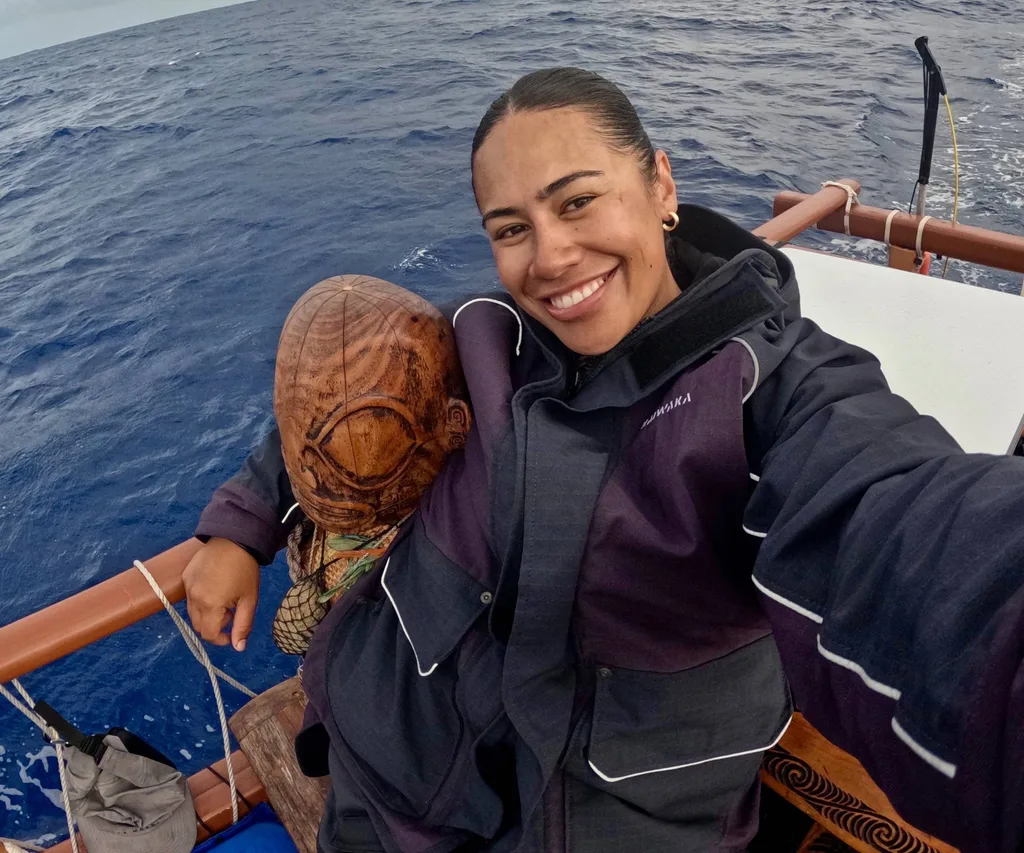
While navigating for five and a half days, she slept in just 30-minute blocks every five to six hours.
“Lives were dependent on me knowing where I was,” says Hinerapa.
She trained for the lack of sleep on land with solo camping missions and even staying up for 48 hours at a time.
“It came down to preparation, believing in myself and trusting in my tīpuna [ancestors]. Putting it all into practice was my biggest dream come true.”
On board were also quartermaster Joyce Conrad-Munns, who was responsible for preparing food, and captain Kiharoa Nuku. Kiharoa alone monitored the journey, using modern technology like GPS and Starlink as a safety precaution. But he never shared this information or interfered with the navigators’ decisions.
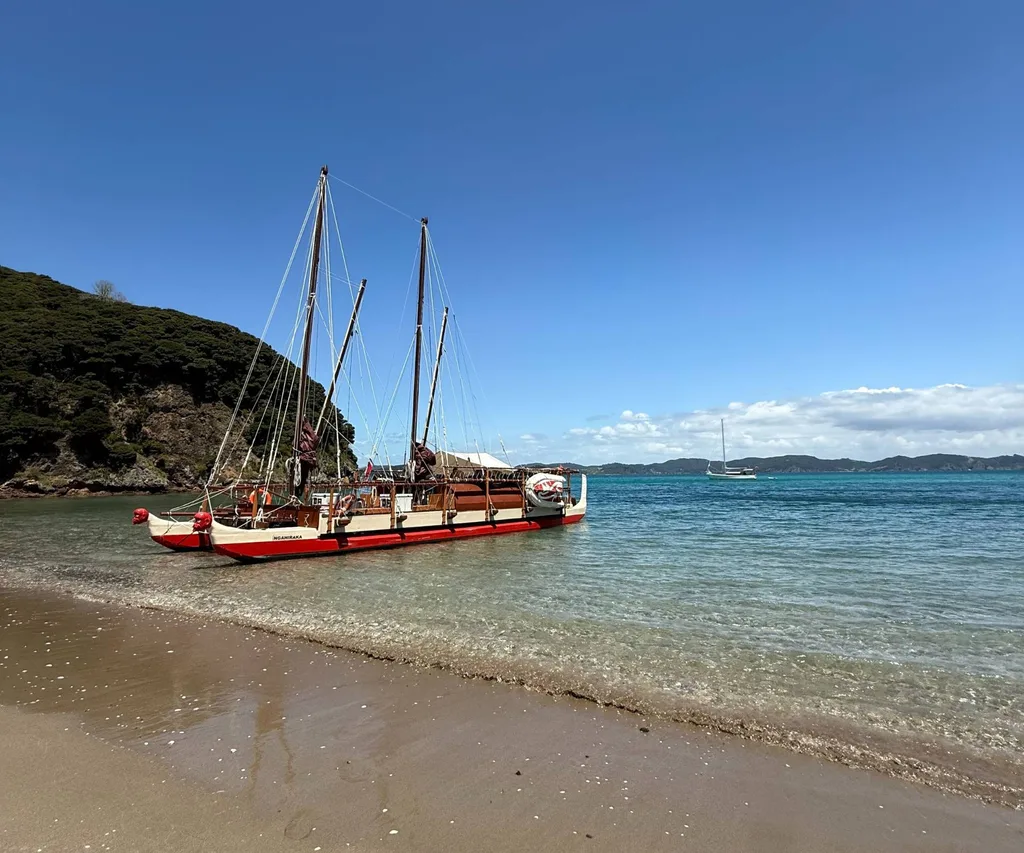
Life on the 16-metre, double-hulled kauri dugout waka Ngahiraka, perched just half a metre above sea level, stripped everything back to the essentials.
“Apart from the sleeping areas [six yoga mat beds] there’s no shelter, everything is open,” tells Hinerapa.



Resolving conflict the Māori way
Living in such close confines, at times the biggest challenge wasn’t being exposed to the elements – but to each other. But a lifetime of growing up in te ao Māori – her family was fundamental in the establishment of te reo Māori immersion school Te Kura Kaupapa Māori o Hoani Waititi and its marae – Hinerapa and her peers handled conflicts the way they’ve always been taught to.
“Like the marae, you will hash things out on the ātea [the open courtyard in front of the meeting house], come together, harīru [shake hands] and have kai. We took all that tikanga [traditional values] with us to keep us safe on the waka,” she shares.
“Going out believing in each other and trusting in what our teachers taught us was a huge learning.”
There were incredible moments, like diving into the 7000 metre-deep ocean with seemingly endless clear blue water, or when a tohorā whale joined the waka as they left Tonga.
“This whale came up and started clapping his tail for two minutes until we passed,” she marvels.
“It was like a goodbye… Like tīpuna were with us.”
A voyage completed
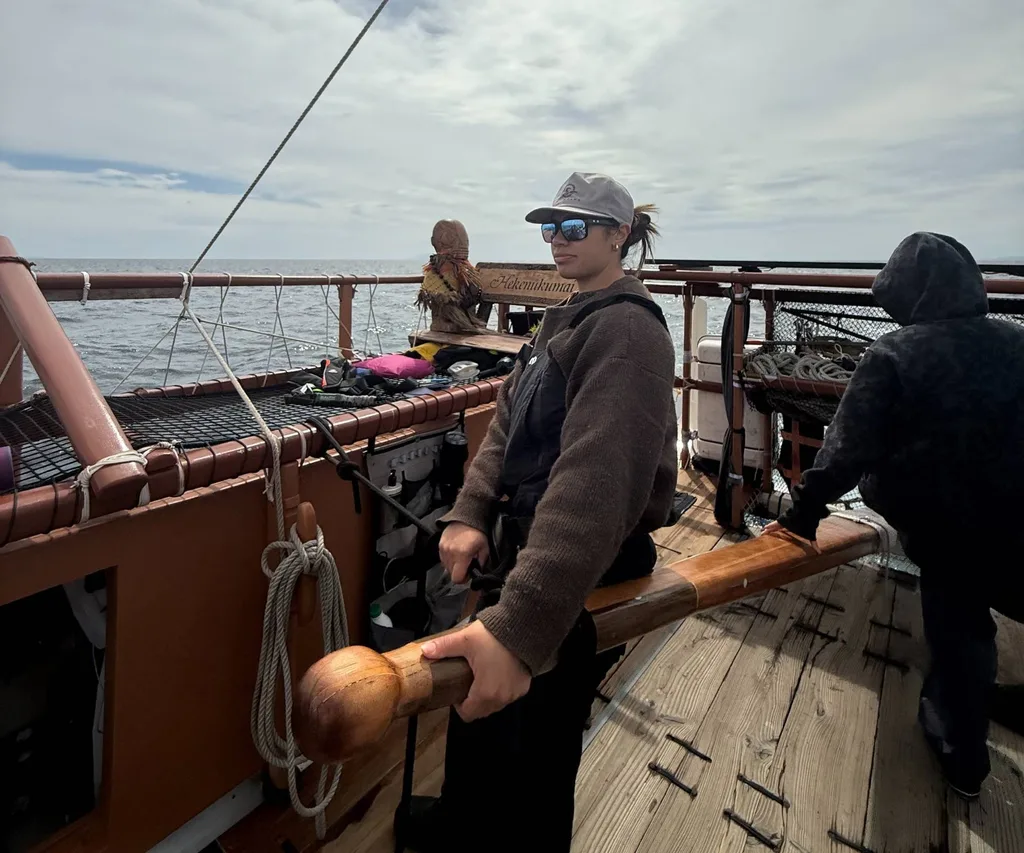
A beaming Hinerapa tells the Weekly she and her fellow navigators all successfully completed their legs of the voyage.
“I always knew we would – there was no doubt in my mind – but to see what our tīpuna would have seen was amazing. It’s something most only live through our stories.”
With the navigation complete, Hinerapa, who also teaches te reo Māori at Te Wānanga o Aotearoa, is hopeful of a future as a mother and, one day, taking her tamariki with her on voyages.
“Babies are the dream now,” smiles Hinerapa, who put aside starting her own family until after the voyage.
“Before navigation, I thought success meant a law or doctor’s degree – that’s what I wanted to do. But through Te Kura Kaupapa o Hoani Waititi, I saw success could also be navigation and pursuing our systems. “The wealth, especially spiritually and culturally, from navigation has given back to me tenfold and I’ve never had to compromise myself.”
More than anything, she has a message for the man who started it all, Jack.
Hinerapa enthuses, “To our chief, I hope that from this voyage, he feels like he can rest. The voyage was always to celebrate him and his sacrifices.”