



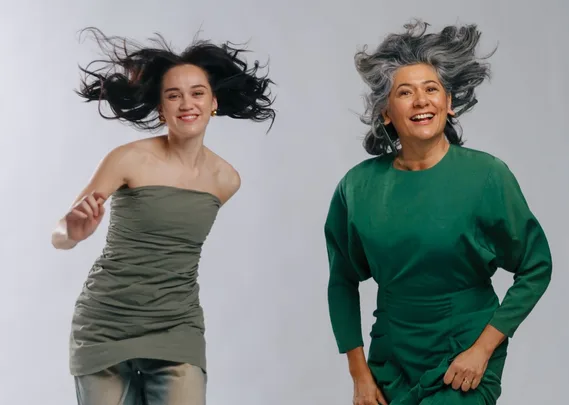
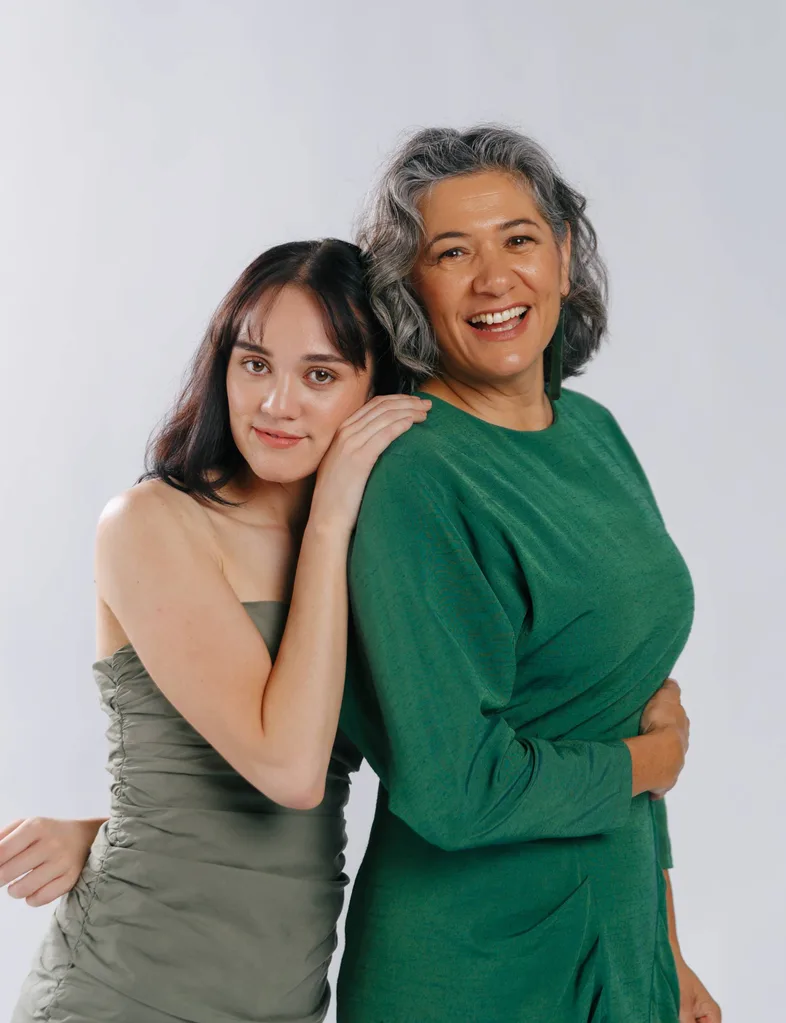
Nicola Kawana, 55,
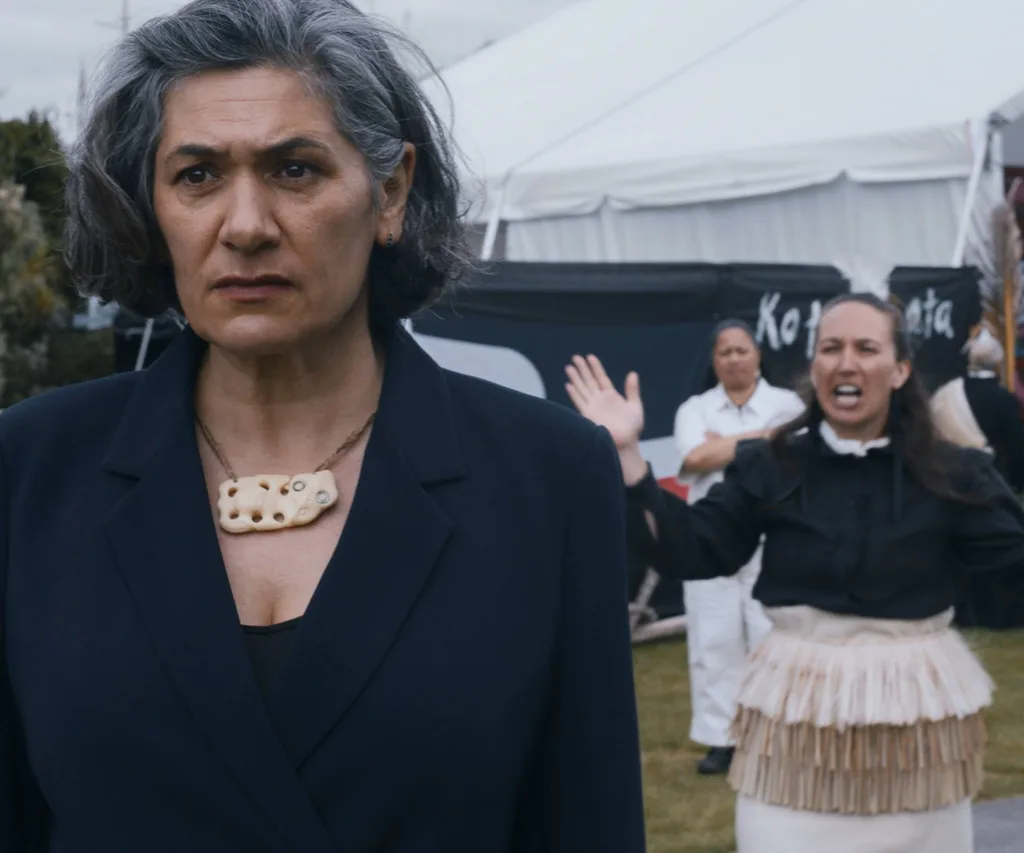
Whose iwi is Ngāruahine, Ngāti Ruanui, Rangitane, Ngāti Kahungungu o Wairarapa, plays politician Ahorangi.
How was filming in New Plymouth?
Filming in Ngāmotu/New Plymouth was quite surreal. There are ghosts of my much younger self on every street and many of the buildings we filmed in or near. Life was a bit shit for me as a teenager – that teenager could never have imagined her future self running around those same streets with a film crew in the most challenging role of her career.
From the first scenes, Ahorangi cuts a controversial figure but she’s also a protective and fiercely loving mother. Are there parallels between her and you?
Ahorangi has worked her arse off to get where she is and I’m a hard worker too. I had my daughter when I was 20, so all of my career I’ve been parenting at the same time.
What role has te ao Māori played in your life?
I was born and raised in Hāwera, South Taranaki. My mum is Pākeha and Dad is Māori. It was only when I moved to the city and began tertiary education that I started analysing my Māoriness. I had no idea there were names for ways in which we lived our lives, like kaitiakitanga. I grew up surrounded by aunties, uncles and cousins on both sides. It was a rambunctious small town, mixed-race upbringing where we belonged in both worlds and to neither simultaneously, but always we belonged to our big te ao Māori-te ao Pākehā whānau.
Tell us about your experience learning te reo Māori?
I’ve been learning te reo Māori since third form at school but I have never managed to become fluent. I’ve studied as an adult and worked with te reo my whole career. My grandparents were native speakers of te reo and Dad was that generation who first lost the language because it was punishable to speak it and considered a hindrance to “getting ahead in a Pākehā world”. There is so much grief and shame in not only losing but relearning what should have been a birthright. I imagine I’ll be on that haerenga [journey] forever with te reo Māori.
You also use sign language in the show.
The work that went into preparing for this role was epic as I learned to sign and speak pages of te reo, sometimes at the same time. There were times when I felt like my brain was going to explode, and I would have to shut down and nap like a computer to recharge. Many times, I thought I wouldn’t get there. But with the patience of Mereana Hond [for te reo] and Jared Flitcroft [for NZSL], and daily drilling for hours, I hope I’ve pulled off something credible.
Ariāna Osborne, 28
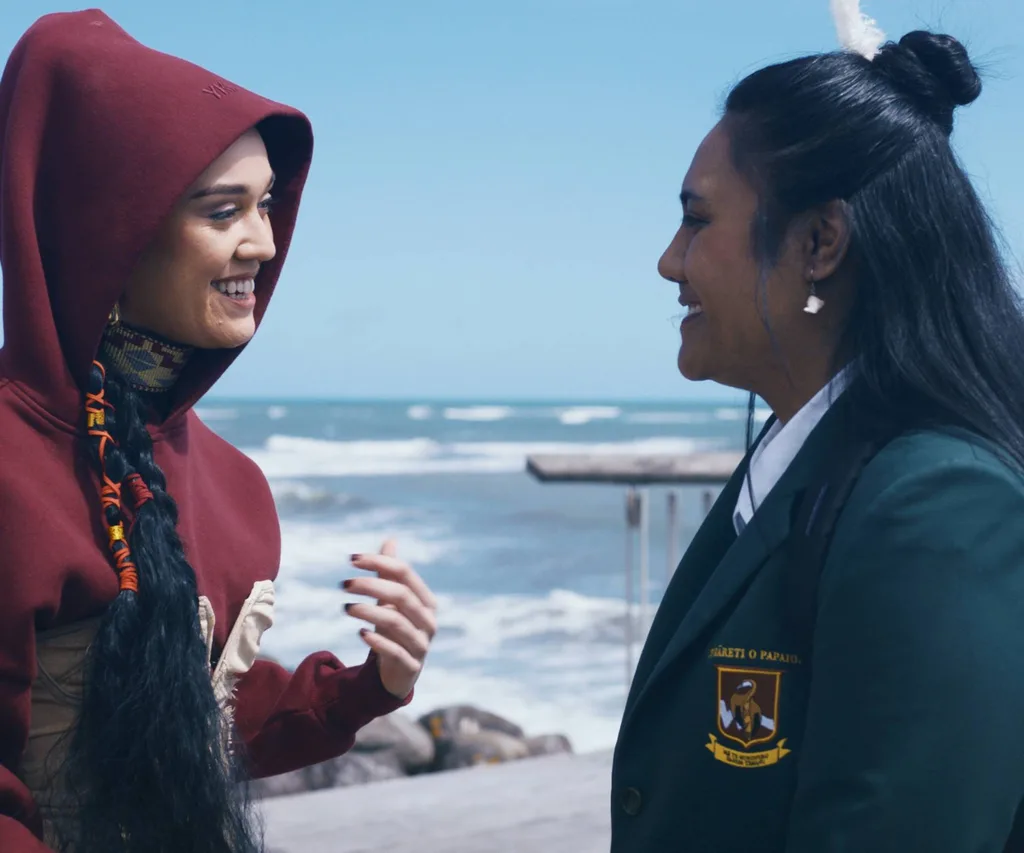
Whose iwi is Ngāti Mutunga, Taranaki, Te Āti Haunui-a-Pāpārangi, plays musician Willa.
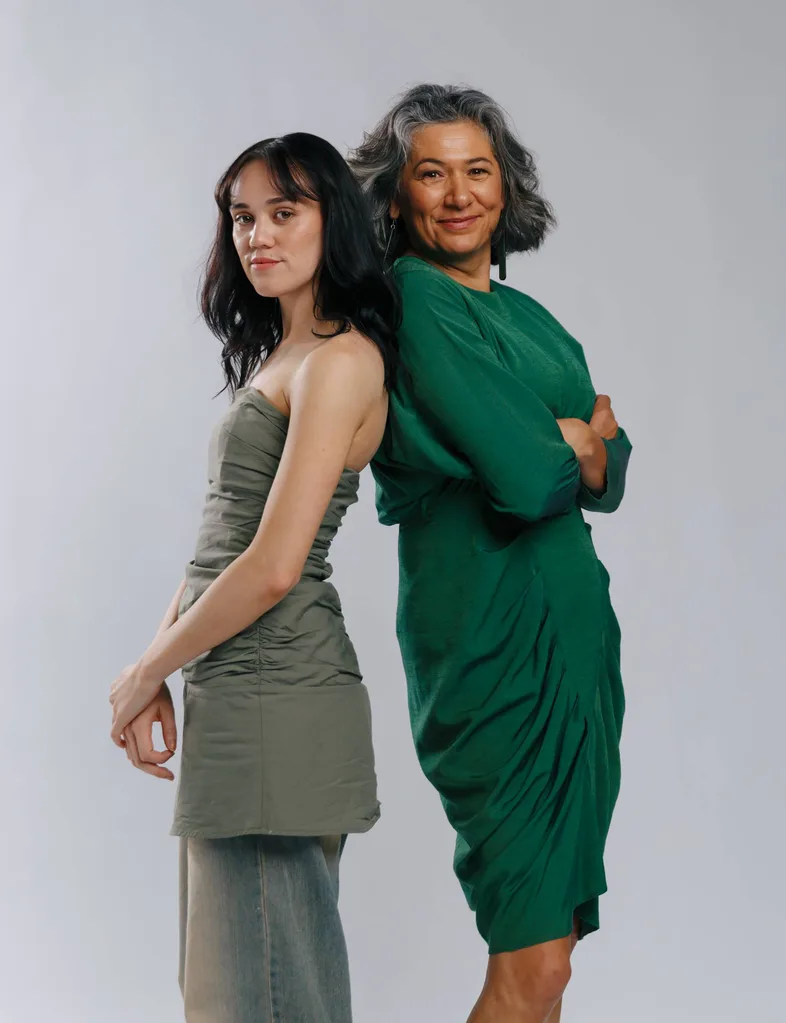
What has it meant for you to work on Tāngata Pai?
I’ve found it quite hard to put into words. It feels equally exciting, scary and also like, “Yeah, about time.” I’m really proud to be a part of a show that puts te reo Māori, tikanga and our culture at the centre.
Willa comes across as passionate, talented, and staunch but also vulnerable. Did you resonate with her?
Definitely, I felt like I immediately knew her. I understood her frustrations and although I’m not stuck in it the way she is, I’ve felt them before.
What has your experience learning te reo Māori been like?
I’m still very much a beginner and in the deep thick of that, and only really began learning on set. I just really wanted to do it right. The highlight, of course, is getting to speak te reo at all. And how rewarding it felt, to me, to be in a scene where it’s sunk in enough to feel as natural as English would.

How has te reo become a part of your life off-set?
I’ve gained a lot more courage to use te reo or kupu more casually in my life. I think before I was really worried it would ping too much, like what’s that sudden kupu Māori doing in that sentence? But it was happening so naturally on set and it felt good, so I really wanted to keep that.
You’re also a Japanese language speaker. Tell us about that?
As a kid, my family spent some time overseas and my first primary schooling was in Japan, so I learned it there. Japanese was more of a natural second language at home because we were all trying to learn it. When we left, that sort of just stuck. But I’m quite out of practice and not nearly as good as I used to be!
Taangata Pai screens Tuesdays, at 8.30pm on Three and streams on ThreeNow.