




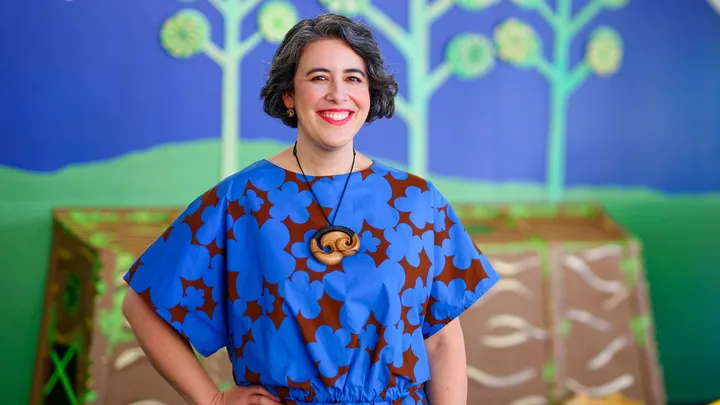
In the immediate aftermath of the Marokopa shootings, while police were still searching for two of Tom Phillips’ three children, our Children’s Commissioner Dr Claire Achmad was interviewed on the evening news.
“What was her message to the children?” she was asked at the time.
There was a long pause while she took time to think about the question … and then came her reply, “You are important,” she said simply.
“That’s what I would say to them. You are important.”
It was an answer that spoke volumes about the sort of woman Claire is – compassionate, thoughtful and intelligent, with the welfare of children at the core of her being. When we meet, I ask her about that pause and her answer. She admits the question caught her off guard.
“I was just taking a moment to ground and reset myself, and think through the eyes of a child,” she recalls.
“I always like to put myself in their place and that’s what came to me in that moment. “I guess I was thinking about the fact those children’s lives had been under the microscope for a number of years, by dint of the actions of their father, and that’s often the way in children’s lives, they are so influenced by the people who are around them. I was thinking, ‘Gosh, I hope those children actually know that, above all, they are important.’ It came from the heart in the moment.”
Championing every child’s potential
Claire, who took over the role from Judge Frances Eivers, continues, “I would hope that every single child in this country knows they’re important and I hope they have people in their lives who tell them that. That can make a big difference, just that positive person in their life, no matter who it is, who shows up for them, who’s there for them through the amazing times, the tough and dark times, who’s a constant and who’s a cheerleader for them.”
“When I started this job, I thought a lot about how I wanted to harness my time in the role to make a positive impact and one of the messages I share wherever I go is that all children come into this world with boundless potential. Sometimes, when we’re working with children on some of the really tough issues, we can forget the boundless potential that’s innate in all children.””
Harnessing and valuing the potential of our Kiwi kids is a driving force for the 42-year-old.
“All children are born with mana, and they should get to build on that and grow it throughout their childhood,” she explains.
Valuing children every day
“That’s what sets children up well to have good, positive, healthy lives down the track. I really feel we don’t yet truly have a collective culture in this country of really valuing children. Truly respecting them, seeing them for who they are and recognising that potential,” she says.
“A kuia [female elder] pulled me aside the other day and said, ‘Thank you for showing love to our tamariki.’ And I said to her, ‘That’s what I want all people in this country to do, to really show up every day with a sense of aroha towards the youngest amongst us.’ Because if we do that, I really think we can change the story in this country and get people to truly care.”
Solutions start within communities
“The solutions to a lot of these problems are within us, within families, whānau, hapu and iwi, they are within communities. There is so much solution to be found in the everyday.”
The role of Children’s Commissioner is apolitical, an independent crown entity.
“When it comes to children, and their lives and their rights, the best thing politicians can do is to put children above party politics and work in a cross parliamentary way,” says Claire.
“My job is to remind them what’s going on in children’s lives, what the evidence shows, what works, and to hold them to account for doing those things. It’s incumbent on them [the Government] to take that bold, courageous leadership to make the really significant changes that will have a positive impact in children’s lives.”
Listening with care
Claire says that often, steps toward success, solutions, or change can be right in front of us. This is true even in the most horrific of circumstances.
She explains, “It’s interesting that in some of the places I’ve been – especially with children and young people who’ve been sexually abused or experienced family violence or have been in state care and not had it go well – I see the depth of hurt they’re carrying, the pain and I find that maybe they’re circumspect when I turn up. They think, ‘Oh, who is this random person?’ But often by the end of the conversation, they’ve really opened up and shared a lot with me. They have a sense that here is someone genuine, who is truly listening and truly caring. That’s what’s really important in this work. In te reo Māori, āta whakarongo … to listen with care.”
Children hold the solutions
“They hold the solutions; there’s so much wisdom that sits within them. They come up with solutions that as adults we never think of. When I came into the job, I said to my team, ‘How do we shape our strategy as an organisation? How do I shape my work grounded in what children and young people are saying?’ And they said to me, ‘Oh, that’s a different way of thinking about it. We’ve never thought about our strategy from that perspective.’”
That was Claire’s starting point: asking the children themselves what is important to them.
She tells, “We came up with this one big question: ‘In your world, what matters most?’”
Turns out, it’s their family, wha¯nau, and relationships with their friends and those around them that matter.
“So that means strengthening and weaving support around families,” says Claire, while acknowledging the areas of poverty, poor health, an increasingly digital world and the impact on children’s lives all play a role in how we protect our kids and their future. But she is more than up for the challenge.
Childhood trauma
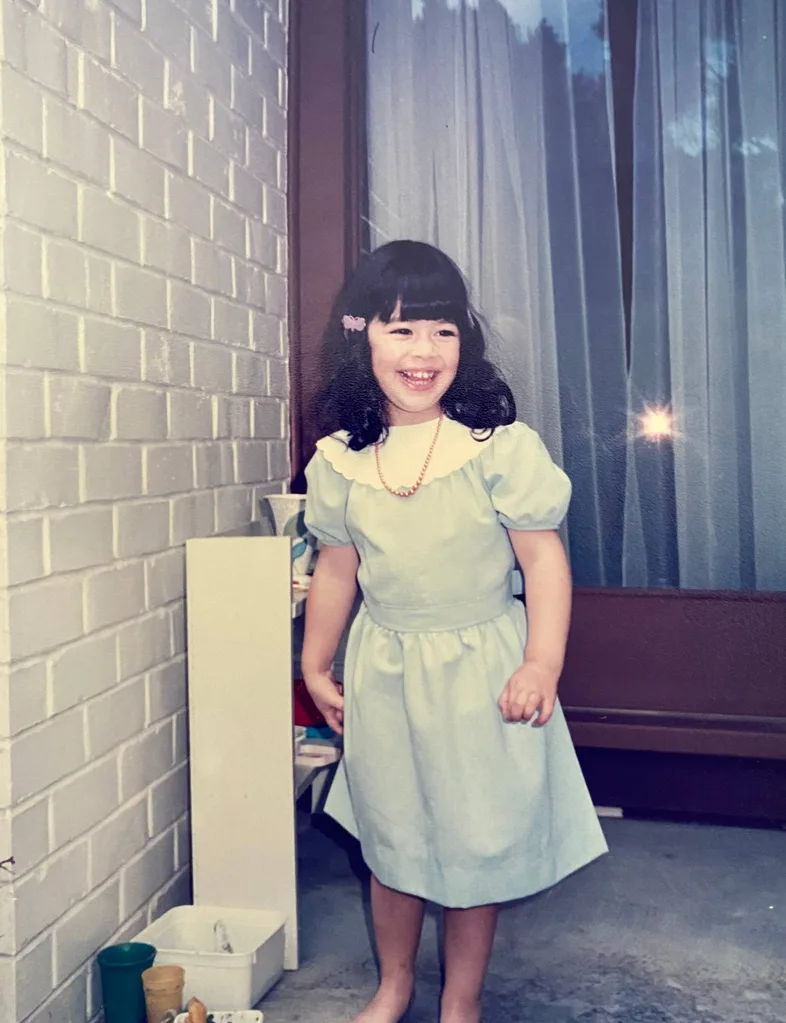
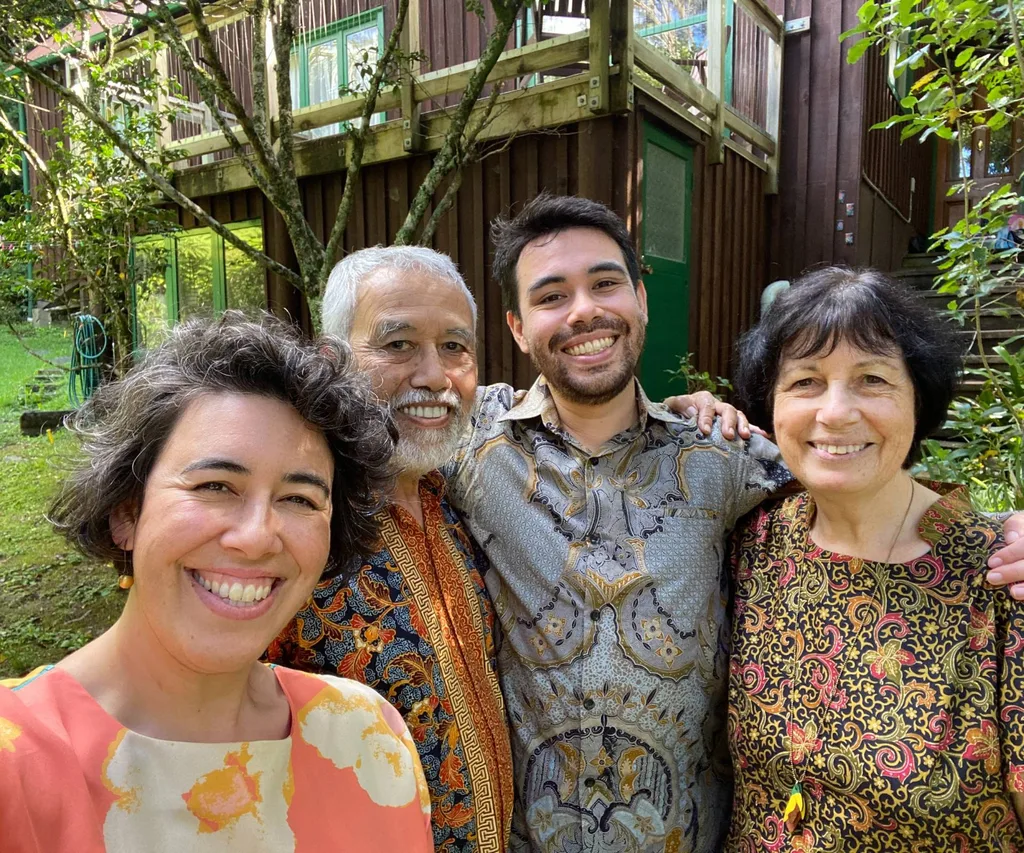
Claire is the oldest of two children born to Robin and Bambang Achmad. Robin met her Javanese husband at a university student party in Auckland. She went on to become a lecturer in Indonesian language at the University of Auckland. Meanwhile, her husband worked in quality assurance in the plastics industry.
Claire was six when her brother Andrew was born. He received a leukaemia diagnosis at just two and a half years old.
“We nearly lost him,” she shares.
“During those years when he was really unwell, he lived in Starship for quite a long time. The world was a bit fraught then and really difficult for my parents. My grandparents took on a big caregiver support role, looking after me as well. They were extremely community-oriented and I think that’s probably where my ethic of service really comes from.”
Claire’s mother, too, loves nothing more than serving the community.
Lessons from her parents
“That’s what really gives her joy,” she tells.
“She volunteers at the hospital and at Auckland Airport. Care for others is one of the big values my parents passed on to us and that sense of love of learning, that was really instilled in me by them from a very young age. They have always been my biggest supporters. I always felt they believed in me and backed me to do the things that I love to do. They encouraged me to dig deep for courage and strength in myself, and always reminded me I have this in me.”
She treasures her Javanese connections, explaining, “As I’ve got older, I’ve started to really value that woven heritage – there are real strengths that come from that. Knowing what it’s like to walk in multiple worlds, what that means for your own sense of identity and place in the world. Claire and her brother are close.”
A calming counterbalance
“He has quite a different personality to me,” she reflects.
“He has a science degree in biology, and an arts degree in film media and TV. He’s also very musical and really funny. He’s someone who can always remind me to lighten up a bit. Andrew can always make me laugh and he’s really good for keeping me calm. I guess I can be a bit intense at times and he’s good at balancing that out.”
Claire has always thrown herself wholeheartedly into anything she is involved in.
Driven to make a difference
She tells, “I was that kid who wasn’t satisfied with just signing up a few people over the course of a few weeks to sponsor me for the World Vision 40 Hour Challenge. I was the kid who insisted on standing in Titirangi Village for a whole day over that weekend with a big sign and talking to people about what I was doing. There was always encouragement for me to be part of causes that would help me make a difference for others.”
Much of that encouragement came from her teachers, first at Titirangi Primary, then Glen Eden Intermediate and Avondale College. Then the world suddenly changed.
“I was diagnosed with cancer at 15,” she says.
“You can imagine the huge effect that’s had on us as a family. It’s been really difficult for my parents. We’re fortunate we’ve stayed so close.”
It was Hodgkin’s lymphoma, discovered when Claire noticed a lump in her neck.
Holding on to normal
“I was determined to stay in school,” she recalls.
“It was my fifth form year, School Certificate. My teachers and friends were so supportive. I think having that aspect of normalcy continue in my life was important, like an anchor.”
She would endure more than a year of chemo and radiation therapy on three weekly rotations. She would spend a week or so at home being really ill, then be back at school.
“It was hard going, having already seen my little brother endure so much with his cancer, it naturally made me quite fearful,” she admits.
“And I was treated in the adult hospital system – not Starship – and though I received exemplary care, there’s a certain level of trauma you get exposed to in adult hospital spaces that takes a toll.”
Thriving despite challenges
Despite the health challenges, Claire excelled at school and earned the role of head girl in her final year. But the cancer has had a continuous effect on her life.
“From a mental health perspective, psychologically it’s been the biggest ongoing thing for me to deal with and has led to quite a bit of anxiety at various points in my life,” she reflects.
“I’ve done a lot of work to navigate that and it’s still not perfect.”
She worries about the cancer returning, but is quick to find the positives in her experience.
Lessons in empathy
“I guess that’s where in part some of my sense of compassion and empathy for children in really tough situations stems from. I’m more able to put myself in their position. I think it’s easy maybe for young people to see someone in a role like mine and they might think, ‘Oh, she won’t struggle with her mental health.’ Well, actually, I do. The majority of us do at some point in our lives. It comes back to that whole thing of being real.”
When Claire finished high school, there was a hunger to learn more, but her future wasn’t always clear.
“I was either going to go to fine arts, journalism or law school.” Law won, but law school wasn’t easy.
Carving her own way in law
“It was a bit of a struggle for me, especially in the first few years,” she says.
“I really felt like I didn’t fit in. We don’t have any lawyers in the family and a lot of my peers had a parent as a lawyer or judge, so I didn’t immediately find my place there.”
She was also studying for her BA, majoring in political science.
“Towards the end of my law degree, I knew I wanted to go deep on human rights and international law, and those papers weren’t available here, so I started to look into an exchange.”
Diving into children’s rights law
Despite the health challenges, Claire excelled at school and earned the role of head girl in her final year. After finishing, she returned to New Zealand and applied for a job at the Ministry of Social Development. Soon, she focused on human rights law. She gave advice on the treatment of children in state care. She also worked on issues affecting stateless children and inter-country adoption.
“I was like a sponge, I learned so much. That was where I really started to get into children’s rights law.”
Claire was keen to consolidate and expand her knowledge of human rights, so she applied for a Rotary Scholarship to study at Leiden University in the Netherlands. She completed her Master’s there and went on to study for her PhD. Claire met her Australian husband Peter in Wellington.
“This is very nerdy,” she laughs.
“We met at a conference I had organised for young public servants. Peter was there and we struck up a conversation.”
A life of adventure & advocacy
The pair have been together ever since. He is a talented people leader and strategic thinker currently working in the health sector. They married in 2011. The couple loves to travel, and have plans to walk the Camino de Santiago in Spain and some of the Shinto trails in Japan.
“I’m planning to take Peter to the West Coast of the South Island sometime soon. I love the landscape and natural beauty there – it’s so unlike other parts of the country.”
Right now, though, it’s the job that consumes her. At the time of writing, Claire is about to launch a new advocacy campaign calling on each one of us to play our part in looking out for kids and preventing child abuse.
“If children raise concerns with you about something happening in their life, come back to that concept of deep listening and actually believe them,” she encourages.
“If they’ve suffered family or sexual violence, the biggest thing you can do in that moment is stick with them and say, ‘I’ll be alongside you while we navigate this.’”
It’s an important message.
Claire insists, “I want each and every child to grow up knowing that they’re loved, that they’re safe, that they’re well and that they’re flourishing to their full, boundless potential. It’s as simple as that.”



Share this post