




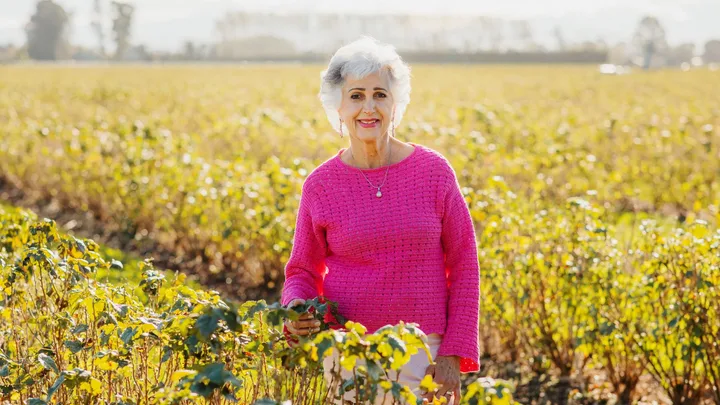
 Photography: Chris Stanley.
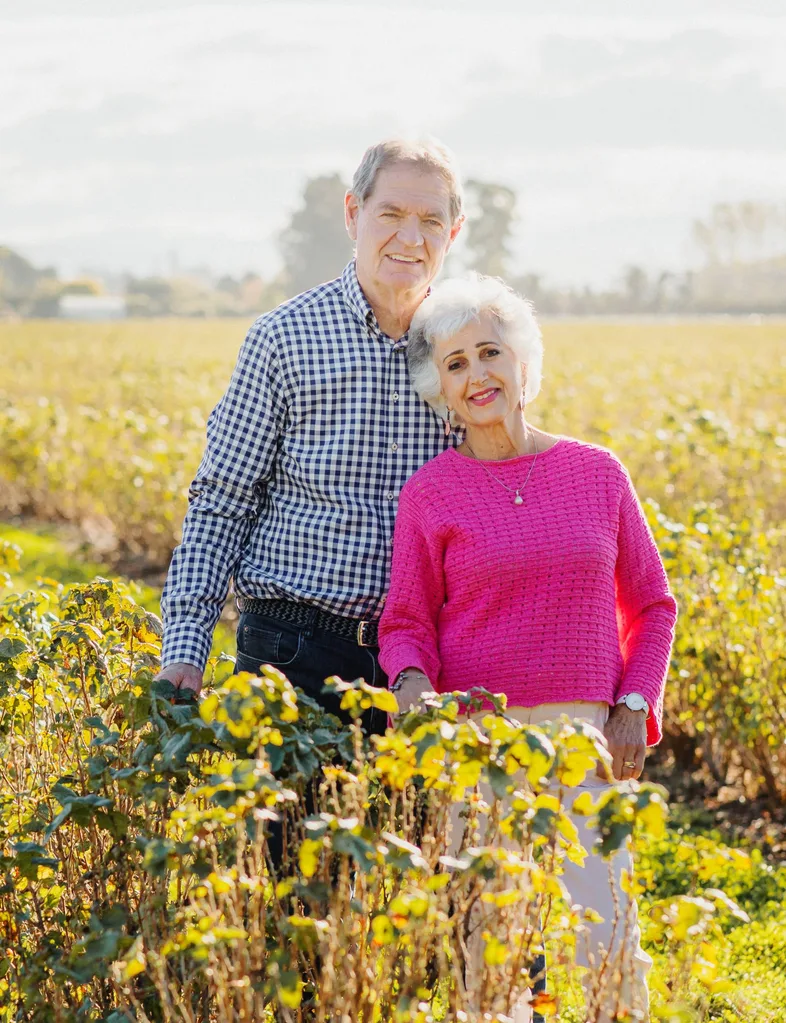
More than 40 years ago, Afsaneh Howey arrived in New Zealand as a young Iranian refugee. Today, she’s a farmer, mother and mentor with deep roots in the South Canterbury soil, and on a mission to support other refugees starting life from scratch.
“It’s wonderful to be in a position to be in service to other people,” smiles Afsaneh, 67.
Talking to the Weekly, Afsaneh, who runs organic blackcurrant farm and business ViBERi with her husband Tony, 67, reflects on her life. Growing up on the warm shores of southern Iran, education was highly prized by her parents, Malakeh and Habib.
“They always wanted for us to have higher and better education,” remembers Afsaneh.
That desire carried her from their small city of Rafsanjan to the capital, Tehran, then across the world to the Philippines for university. But while studying electronics and communications engineering, her homeland was forever changed.
From 1977 to 1979, the Iranian Revolution sparked widespread political unrest, culminating in the overthrow of the monarchy by the Islamic Republic of Iran. Suddenly, home was no longer safe to return to.
A one-way journey
Her passport had expired and as a member of the Bahá’í Faith, Afsaneh says even if it had been possible to get a new passport and return, she would have faced religious persecution under the new Islamic regime.
So her parents made a difficult decision to send her to New Zealand instead, where her brother Nasser was already studying.
“I couldn’t go back without a passport and the country was at war with Iraq [a conflict that started in 1980 and lasted eight years], so I came here as a refugee through the United Nations,” Afsaneh shares.
“It was really sad feelings, knowing that you cannot go back to your own country, to your parents and relations. But for me, as a Bahá’í, we also consider the world is but one country and mankind its citizens.”
A new beginning in Aotearoa
Finding comfort in her faith, a determined Afsaneh embraced her new home in the South Island.
She reflects, “It was safe to walk around at night, there was a better justice system, people were friendly and it made me feel comfortable living here.”
-scaled.jpg?resize=380%2C285&format=auto)
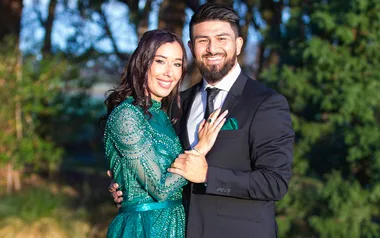
Not long after arriving at a summer camp in Blenheim, she met her now-husband Tony, a young local farmer who already knew her brother.
“It felt right for both of us to be with each other,” she smiles.
“So at the end of the camp, we decided to get married.”
Six months later, they tied the knot. In small-town Temuka, their union turned heads.
Afsaneh tells, “There was an article about us – ‘Local farmer marries a girl from the Middle East’. It was very unique 40 years ago. Now when I walk down the street, it’s wonderful to see the diversity of people.”
Building a life from the ground up
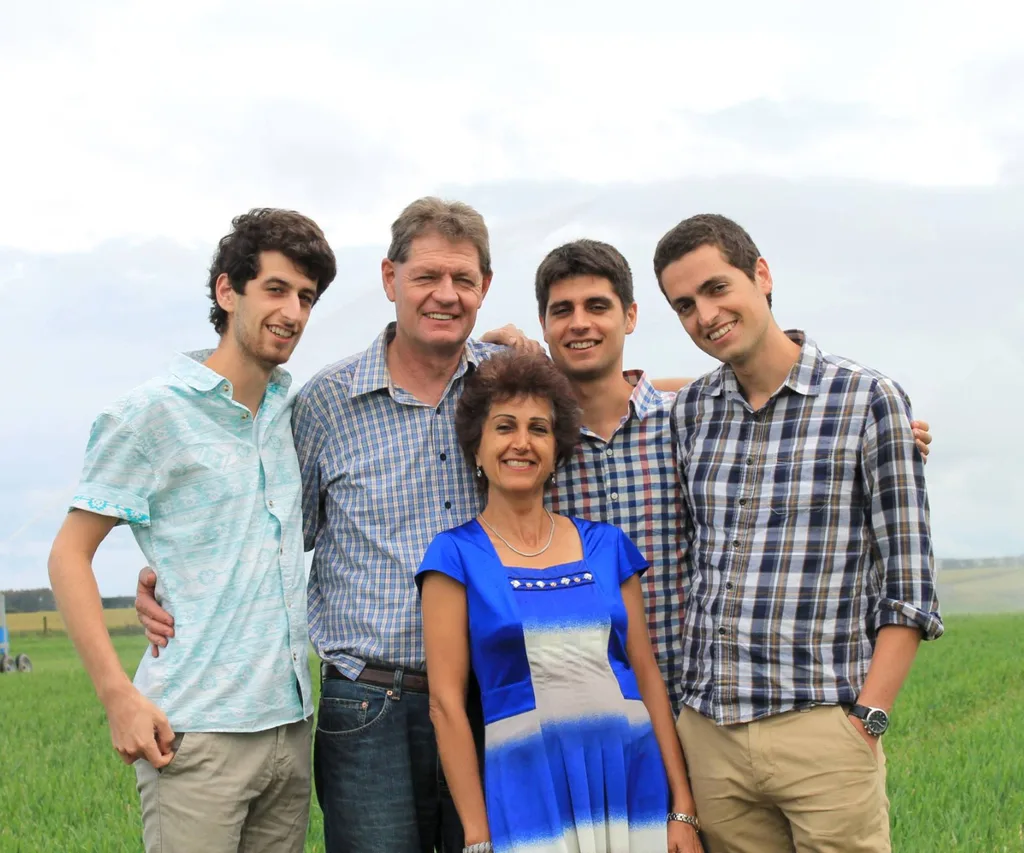
Together, she and Tony built a life growing crops like potatoes, carrots and onions on a large scale while raising their three sons.
“I learned how to be self-sufficient and practical, doing things myself,” says Afsaneh.
She also forged a career in education, working at the local high school for 20 years. In 2004, the couple turned their farming focus to blackcurrants. Now, Afsaneh and Tony grow certified organic blackcurrants on 150 hectares of land. The berries are sold frozen, freeze-dried, concentrated, puréed, powdered and rolled in chocolate, supplying both their own ViBERi retail products and bulk ingredients to other brands.
“We thought it would be a very good semi-retirement project,” smiles Afsaneh, who features on this week’s episode of TVNZ’s Hyundai Country Calendar.
But even now, her heart remains tied to Iran. While her parents have passed away, she still has family living there.
A call for peace
“I’m very worried about them,” she admits.
“It doesn’t matter what background religiously they come from, seeing innocent people suffering is hurtful. I wish all that money being spent on destruction was used for peace and security. I pray and hope for peace.”
Back here in Aotearoa, she feels a deep responsibility to help other refugees find their footing. It began as language lessons for parents and has expanded to teaching English to their children in local schools.
“The kids learn so fast,” says Afsaneh with passion.
“When they first arrive, they can’t speak a word of English, but by the end of the term, they are talking to me and asking questions. It brings me so much joy.”
Afsaneh encourages the children to make the most of opportunities, just as she has.
“I tell them how lucky they are to live here, and to study and work hard so they can give back. It’s a way of saying thank you to the country who accepted and opened its arms to us.”
Watch Hyundai Country Calendar, Sundays, 7pm on TVNZ 1 and TVNZ+.



Share this post