




Growing a baby comes with enough surprises without the added concern of whether your beauty products are safe to use. Dermatologists generally advise against the topical use of chemical sunscreens and ingredients such as retinoids, high-strength salicylic acid, and hydroquinone during pregnancy because of their potential for absorption and associated risks to fetal development. As a result, your well-acquainted skincare routine may require an overhaul.
At the same time, hormonal changes throughout pregnancy and postpartum can introduce a whole new set of concerns to treat, such as melasma, acne and increased sensitivity.
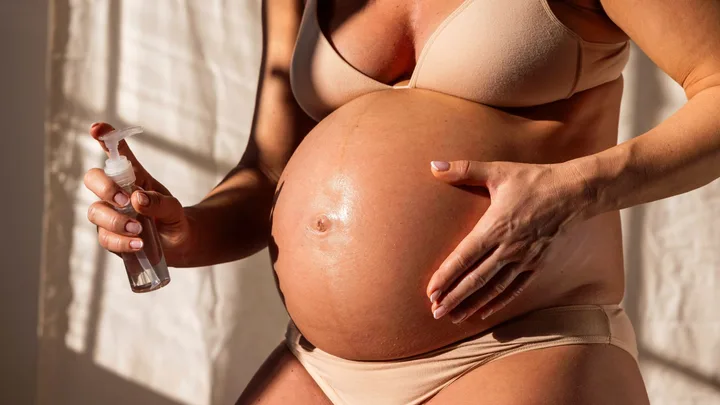
If there’s one pregnancy skincare product we swear by morning and night, it’s a deeply nourishing belly oil. Although it’s a genetic gamble whether a body oil can help prevent stretch marks from forming, a rich formulation will keep your tight, itchy skin supple and hydrated as it stretches over your growing bump.
Below, browse a curation of effective and pregnancy-safe skincare products from brands favoured by mothers in Aotearoa and worldwide, including brightening serums for pigmentation, natural retinol alternatives for treating fine lines, and C-section scar care.
The best breastfeeding and pregnancy-safe skincare brands in New Zealand

Antipodes skincare
Best for: Natural skincare for soothing sensitive skin
Every product in the Antipodes skincare and haircare ranges is safe for pregnant and breastfeeding women.
Whether you’re looking to overhaul your skin routine or target particular concerns like redness, irritation, fine lines or dryness, you can create a personalised skincare ritual via the Antipodes regime builder to select recommended products.
We recommend:
- Eve Bio-Retinol Line Reduction Serum, $60 for softening fine lines. Notably, the formula includes bakuchiol, a widely used natural alternative to retinol, to stimulate collagen production.
- Supernatural SPF50+ Ceramide Silk Facial Sunscreen, $62 for sun protection, with added plant and coconut oils for nourishing the skin. Importantly, it doesn’t leave a white cast.
- Culture Probiotic Night Recovery Water Cream, $72, for soothed, refreshed skin. The lightweight night cream works wonders overnight to reduce redness and calm irritated skin.
- Aura Manuka Honey Mask, $52, for brightening and hydration. Use it twice a week or whenever your skin is feeling parched or looking dull for just 15 minutes.
Editor’s note: According to the New Zealand brand, while some formulas contain low levels of fragrance components derived from essential oils, these amounts are far below those used for therapeutic purposes.
Available at:

Weleda Skincare
Best for: Affordable, pregnancy-safe skincare
Swiss skincare brand Weleda is used all over the world, with pregnancy-friendly bestsellers such as the Stretch Mark Body Oil, which has been a favourite for more than 20 years. The brand also has a baby skincare range to help protect your precious bundle’s skin.
We recommend:
- Stretch Mark Massage Oil, $34.94, to nourish and hydrate the skin during pregnancy.
- Perineum Massage Oil, $34.94, for prenatal massage to support skin flexibility and help protect against tears and cuts during childbirth.
- Calendula Nappy Change Cream, $21.40, an essential item in your diaper bag to apply after changing your baby’s nappy, helping to soothe and protect delicate skin from irritation.
Available at:

Emma Lewisham
Best for: Pregnancy-safe, high-performing skincare alternatives to retinol and injectables
Emma Lewisham skincare was created after its namesake founder was advised to avoid hydroquinone, a commonly used ingredient to address hyperpigmentation, during conception, pregnancy, and breastfeeding. Lewisham set out to formulate luxury skincare products which were both natural and underpinned by scientific research, for people seeking efficacious yet safe skincare for concerns like hormonal pigmentation and anti-ageing.
We recommend:
- Supernatural Vitale Elixir, $166, a topical alternative to anti-wrinkle injections for a lifted, smoother complexion.
- Skin Reset Serum, $160, for brightening dark spots, including hormonal and sun-induced hyperpigmentation, and evening skin tone.
- Supernatural Face Oil, $160, for softening fine lines, deep hydration, and supporting the skin barrier and healthy skin. The oil includes natural retinol alternative bakuchiol.
- The Pregnancy and Maternity Collection, $404. A luxurious gift for pregnant or breastfeeding mothers, this trio of key skincare products (exfoliant, serum and oil) work together to target hormonal pigmentation and reduce the visibility of fine lines for a more radiant, fresh-faced visage.

Bio Oil
Best for: Supporting skin elasticity during pregnancy
A cult-favourite body oil with many applications that go beyond the fourth trimester, Bio-Oil Skincare Oil is used among mothers all over the world to reduce the appearance of scars and stretch marks, with efficacy supported by clinical studies.
Today, you can choose between the original oil and Bio-Oil Natural. While the brand states that both oils are safe for use during pregnancy, the original formula includes both mineral and botanical oils, alongside a small amount of retinyl palmitate. Some pregnant women choose to avoid this vitamin A derivative altogether in favour of the natural version, which is made from botanical and essential oils, including rosehip, jojoba and pomegranate.
Editor’s note: If you’re breastfeeding, it’s not recommended to use either the original or natural Bio-Oil formulations on your nipples in case of ingestion.
Available at:

Pure Mama
Best for: Pampering your body and mind
Kiwi Lara Christie launched the natural pregnancy skincare brand Pure Mama in 2021. The brand is attuned to both physical care and emotional wellbeing of women during pregnancy and postpartum, openly acknowledging the emotional impacts of motherhood and dismantling misconceptions like the belief that C-section births are an ‘easy way out’ through marketing.
Pure Mama recently debuted the Complex Scar Serum, a first-of-its-kind formulation designed specifically to improve the appearance of C-section scars. As Christie explains, “A C-section is a major surgery. It deserves thoughtful, considered care. We felt there was a real opportunity to create something that supported women through this part of their journey in a way that felt both effective and emotionally supportive. Not just something clinical, but something they would want to use every day, a moment of care, connection, and restoration.”
The serum is made from targeted ingredients that support the skin as it heals over time, boost skin resilience and firmness, and improve the overall look and feel of the scar as it matures.
Pure Mama is also one of the only skincare brands offering medical-grade silicone strips for C-section care. “Silicone therapy has been widely recognised and used in clinical settings for years, but it hasn’t translated into everyday postnatal care in a way that feels accessible or considered for women. What we’ve seen is that postnatal recovery, particularly after a C-section, has historically been under-supported. There’s been a gap between what exists clinically and what is actually placed into the hands of women. We wanted to bridge that gap,” explains Christie.
We recommend:
- Belly & Body Oil, $74, for improving the visibility of stretch marks and smoothing skin texture.
- Nipple Butter, $44, an organic, baby-safe formula for soothing sore, dry nipples while breastfeeding, or as a hydrating lip balm.
- Silicone Scar Strip, $39, a washable, reusable solution made from medical-grade silicone to protect the area, retain hydration and support optimal C-section scar healing.
- Complex Scar Serum, $138, for scar refinement and recovery over time. Begin using this from 8–10 weeks post-C-section, after the original incision has healed.

Kora Organics
Best for: Effective yet gentle organic formulations for glowing skin
Australian supermodel Miranda Kerr’s Kora Organics has been vetted and awarded the Sorette Seal of Approval, meaning its products have met the organisation’s science-backed product standards for pregnancy and postpartum skincare. Kora’s certified organic products are gentle enough to be used on irritated or sensitive skin.
We recommend:
- Turmeric Brightening and Exfoliating Scrub + Mask, $88, a gentler alternative to chemical exfoliants that helps decongest pores, smooth the complexion and revive tired-looking, dull skin.
- Plant Stem Cell Retinol Alternative Serum, $52, formulated with bakuchiol to improve the appearance of signs of ageing.
- Kakadu Plum Vitamin C Eye Cream, $102, for hydrating the delicate under-eye area, brightening dark circles, alleviating signs of fatigue and smoothing the skin before makeup application.
- Active Algae Minty Mineral Hydration Mist, $75, for instant hydration and a refreshing boost when you’re running hot, with a dewy finish. Keep it in your purse and spritz on the go.
Available at:

Alpha-H
Best for: Pregnancy-safe skincare actives
Focusing on acne-clearing and anti-ageing skincare acids, the majority of Australian-made Alpha-H’s skincare products are safe to use during pregnancy and breastfeeding.
We recommend:
- Triple Action Cleanser, $63, for cooling the skin while removing excess oil.
- Liquid Gold Exfoliating Treatment, $85, Alpha-H’s bestselling product, made with 5% glycolic acid. It’s designed to accelerate skin renewal and reduce hyperpigmentation, including melasma, and uneven texture.
- Vitamin C Serum, $45, with 10% ethyl ascorbic acid for clearer, brighter skin. Don’t forget to use SPF to help further protect against hyperpigmentation.
Available at:

Endota
Best for: Skincare that replicates the spa-experience at home
Endota offers a selection of products crafted to replicate the restorative experience of its spas in the home.
The Mother & Baby range includes hydrating belly oils, nourishing nipple balms, and rich belly butters formulated to support skin elasticity during pregnancy, as well as gentle bath and body care suitable for infants.
We recommend:
- Hydrating Belly Oil, $45, a staple for nourishing stretching skin across your belly, breasts, thighs and buttocks.
- Moisture Rich Belly Butter, $45, for an added layer of hydration after applying the oil.
- Nourishing Nipple Balm, $30, to relieve sore nipples or dry, broken skin.
- Protecting Barrier Balm, $30, to soothe nappy rash.
- Gentle Baby Bath & Body Wash, $40, for gently cleansing baby’s delicate skin.
- Gentle Baby Lotion, $40, for a gentle massage after bath time.
Available at:

Tronque
Best for: Luxury bodycare for health-conscious individuals
Luxury New Zealand-made bodycare brand Tronque is free of ingredients commonly associated with endocrine disruptors, which may affect hormonal function. This makes it a considered choice for those taking a closer look at their bodycare ingredients while trying to conceive.
We recommend:
- Scar Concentrate, $160, for reducing the appearance of scars.
- Firming Butter, $130, for deeply hydrating the skin.
- Natural Deodorant, $50, a natural alternative to conventional deodorants.

Trilogy
Best for: A low-effort skincare routine
All Trilogy products are safe to use during pregnancy, and its hero product, the certified organic Rosehip Oil, is a true multitasker for the face and body. It removes makeup, smooths fine lines, helps minimise the appearance of stretch marks and deeply hydrates the skin. If you’re pregnant, tired and short on time for a full skincare routine, this is the one product you can’t sleep on.
Editor’s tip: For an even quicker shortcut to glowing skin, use the Trilogy Instant Glow Rosehip Oil, made with responsibly sourced mica for a natural-looking, luminous glow.
Available at:
Which skincare ingredients are safe to use during pregnancy and breastfeeding?
Many skincare ingredients are widely regarded as safe to use during pregnancy and breastfeeding. However, because pregnancy can increase skin sensitivity, it is possible for products that were previously well tolerated to irritate.
When introducing acids or other active ingredients during pregnancy, begin with low concentrations and avoid applying multiple potent actives simultaneously to minimise the risk of adverse reactions. If you experience notable irritation, promptly discontinue use and seek advice from a medical professional.
Here is a list of skincare ingredients commonly used during pregnancy.
- Hyaluronic acid: A hydrating ingredient that helps attract and retain moisture in the skin, leaving it looking plumper and smoother.
- Vitamin C: An antioxidant that can help brighten the appearance of pigmentation and support collagen production.
- Glycolic acid: An alpha hydroxy acid (AHA) that exfoliates the skin and can help improve the appearance of uneven texture and pigmentation when used in appropriate concentrations.
- Lactic acid: A gentle exfoliating acid that can help smooth and brighten the complexion and treat acne.
- Zinc oxide and titanium dioxide: Mineral sunscreen ingredients that help protect the skin from UV damage.
- Niacinamide: A water-soluble form of vitamin B3; niacinamide can help support the skin barrier, reduce inflammation, and improve the appearance of hyperpigmentation.
- Ceramides: Lipids that help support the skin barrier and prevent moisture loss.
- Bakuchiol: A plant-based retinol alternative that can help target the appearance of fine lines, uneven texture and other signs of ageing.
Which skincare ingredients should I avoid during pregnancy?
The ingredients most commonly recommended to avoid during pregnancy include retinoids, including retinol and prescription retinoids, and hydroquinone.
High-strength salicylic acid is also often avoided during pregnancy, particularly when used over large areas of the body or in high concentrations.
Some mothers also choose to avoid chemical sunscreens, but you shouldn’t avoid SPF altogether; instead, use a broad-spectrum mineral sunscreen to protect your skin and protect against pigmentation and melasma.
How do I care for a C-section scar?
Once the incision has fully healed and your healthcare provider has confirmed it is safe to do so, you may wish to apply medical-grade silicone strips to create a protective layer over the scar and help retain hydration. Scar oils can also help nourish the surrounding skin and improve the appearance.
Will my C-section scar go away?
A C-section scar may fade and become flatter and paler significantly over time, but it may not disappear completely. The good news is that C-section scars are often positioned relatively low on the abdomen, just under the bikini line.
What are the best time-saving beauty tips for new mothers?
Once your baby arrives, keeping up with an elaborate skincare routine can feel like a full-time job. Our advice? Choose products that do more than one job.
A glow serum with added SPF, a lip tint that doubles as a cheek tint and dry shampoo can all help you save time. But you may also find, as I did, that you become much more comfortable with a makeup-free face.
Rather than trying to recreate your pre-baby beauty routine, focus on the things that make you feel good and are easy to maintain. If you can find the time to get your eyebrows tinted, laminated and lashes lifted, and use a glowy SPF, you’ll look naturally ‘done’ bare-faced.
Read next:
- Tired-looking eyes? Try these brightening and firming eye creams
- The Emma Lewisham products beauty lovers swear by
- Why Antipodes’ move into haircare is anything but ordinary



Share this post