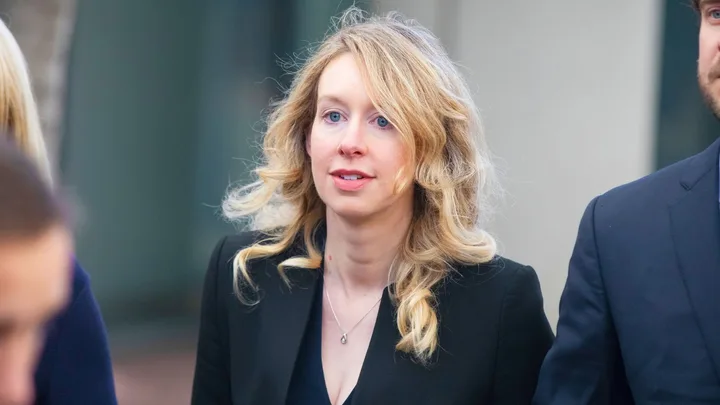
Elizabeth Holmes
Convicted of conspiracy to commit fraud and three counts of committing fraud. Sentenced to 11 years, three months in prison and ordered to pay $802 million in victim restitution.
When Elizabeth Holmes was asked as a child what she wanted to be when she grew up, the answer came easily: “I want to be a billionaire.” And her wish came true – at least for a short time.
At 19, the now-disgraced entrepreneur – the subject of a startling new documentary due to hit New Zealand cinemas on November 12 – dropped out of university with an audacious plan.

She claimed to have invented a miniature machine that, with a single drop of blood, could map out someone’s entire health profile.
She boasted that serious diseases like cancer would be prevented before they had a chance to take hold.
In 2004, Holmes set up her own Silicon Valley company, Theranos, and, using her almost messiah-like powers of persuasion, wowed some of the richest people in the world.
They happily poured hundreds of millions of dollars into her business.
So much so that by 2014, she was personally valued at $7.9 billion and lauded as the world’s youngest self-made female entrepreneur.
Comparisons to Steve Jobs flew around, which pleased Holmes no end: she idolised the Apple founder and adopted wearing his trademark black turtlenecks.
The lies
What she promised seemed almost too good to be true – just one tiny drop of blood from a finger prick could run hundreds of blood tests, and her ground-breaking technology, she said, was reliable, fast and cheap.
As it turned out, her promises really were too good to be true: her technology didn’t work.
Behind the scenes, people at Theranos noticed that what Holmes was telling the world bore no relation to the truth.
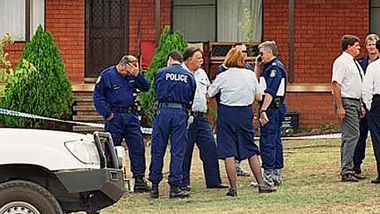


“This new revolutionary device… it wasn’t actually in existence,” says scientist Erika Cheung, who eventually blew the whistle on the fraud. “Worse, they were using a jerry-rigged version of the machine to run blood tests.
“The results were often false or misleading, and this too was hidden from an unsuspecting public… It needed to be stopped.”

Between 2013 and 2016, the company rolled out its supposedly revolutionary blood-testing machines in 40 pharmacies in Arizona and one in California, charging customers as little as $17 for a basic test and as much as $205 for more detailed analysis.
The results were wildly inaccurate, with some customers receiving incorrect information that they were having a miscarriage, had tested positive for HIV or had abnormal blood-clotting levels that led them to stop taking vital medication. Tens of thousands of patients were impacted.
Behind the scenes, to bolster its credibility, the company secretly used conventional, commercially available blood analysers for its ongoing research.
The unravelling
In public, meanwhile, Holmes was being celebrated as a superwoman scientist who’d dedicated her life to revolutionising healthcare across the globe.
Her house of cards began tumbling down in 2014 when Erika and another Theranos employee, Tyler Shultz, leaked information about the company’s failed technology and fake lab results.
The following year, The Wall Street Journal published an explosive exposé by John Carreyou.
Wealthy investors, believing they were hitched to another Silicon Valley “unicorn” company that would make them even richer, lost virtually all the money they’d poured into Theranos.
Among them were media mogul Rupert Murdoch, who lost around $220 million and the Walton family of Walmart fame, who lost $265 million.
One person, however, was never impressed by the Theranos founder’s hubris: Stanford University professor of medicine Dr Phyllis Gardner, who met Holmes during her short time at the university.
“Her ambition was over the top,” recalls Phyllis. “She had no knowledge of medicine and a rudimentary knowledge of engineering – and she really didn’t want any expertise. She thought she knew it all. Well, you don’t at 19, I’m sorry. Silicon Valley really had egg on its face over this thing.”
In 2022, Holmes was convicted on four counts of fraud for misleading investors about her technology and in 2023, the mother of two was sentenced to 11 years and three months in a federal prison. Her sentence was later shortened by a year.
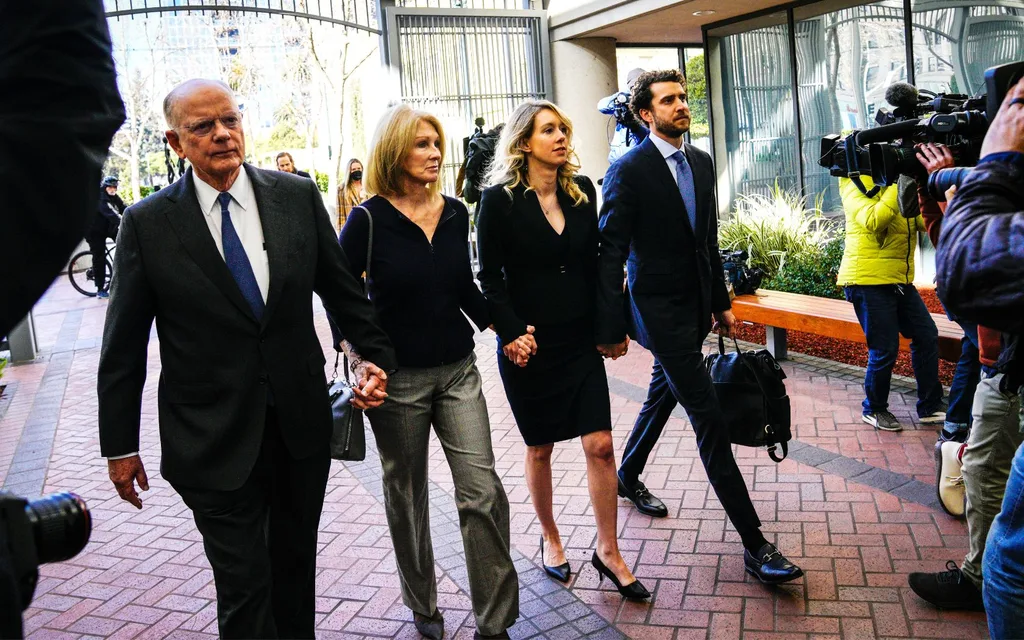
A month before she began her sentence, the entrepreneur, 42, and her fiancé Billy Evans, 34, invited a film crew into their home.
In the nearly three-hour documentary, You Can See Everything, she maintains her innocence and claims she did nothing wrong.
Pauline Parker
Served five years in prison after being found guilty of murder.
The recent death of an unassuming 88-year-old woman known as Hilary Nathan on a remote Scottish island might well have gone unnoticed by the rest of the world – except for one notable detail.
Seventy-two years earlier, as a 16-year-old New Zealand schoolgirl called Pauline Parker, she committed one of the most brutal crimes Aotearoa had ever seen.
Parker and her best friend Juliet Hulme, 15, seemed to the world like perfectly ordinary teenage girls in the lead-up to the murder they committed on June 22, 1954.
The pair had met as fellow pupils at Christchurch Girls’ High School and soon developed a deep obsession with each other.
Parker’s mother Honorah, in particular, worried that their bond was “unhealthy”.
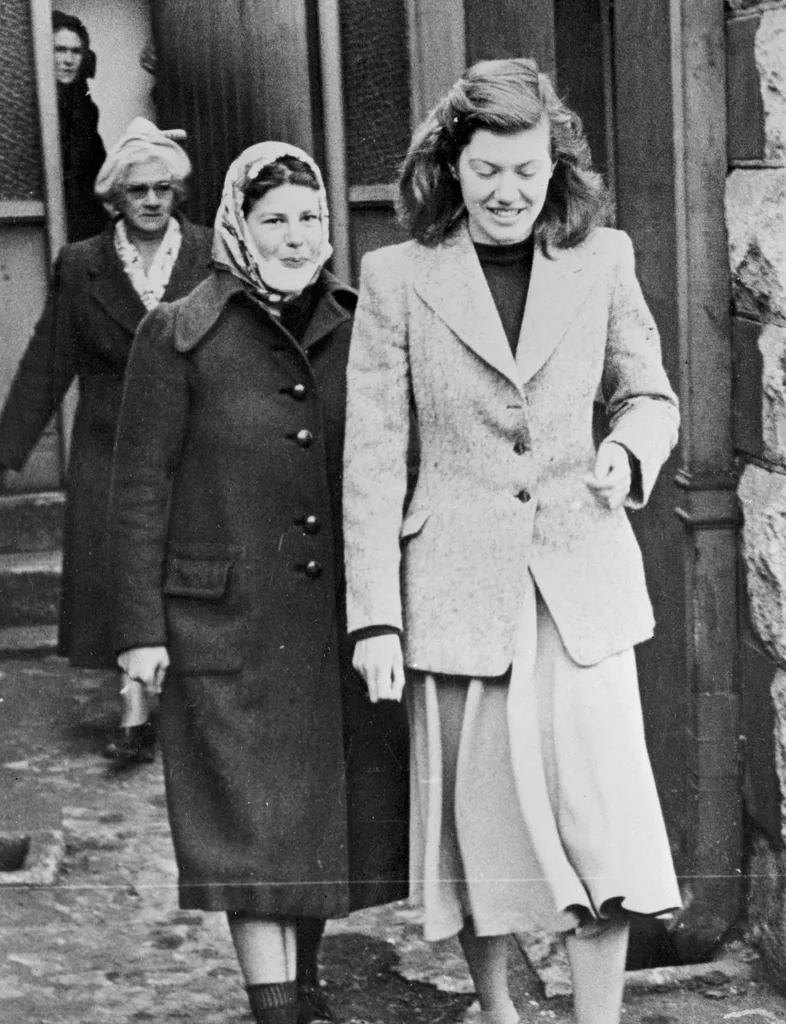
But in 1954, a solution to the girls’ obsessive behaviour presented itself: Hulme’s parents were getting divorced, and she was set to go and live with relatives in South Africa.
Not wanting to be separated, Hulme convinced her mother to allow her friend to go with them, but both girls feared Honorah would never allow it – so they hatched a plan.
“Why could Mother not die?” Parker wrote in her diary. “Dozens of people are dying all the time, thousands, so why not Mother and Father too?”
The brutal attack
On a crisp, sunny Tuesday afternoon, Parker and Hulme invited Honorah, 46, out for a walk at Victoria Park on Christchurch’s Port Hills.
On a secluded walkway, the pair bludgeoned Honorah to death with a brick wrapped in a stocking.
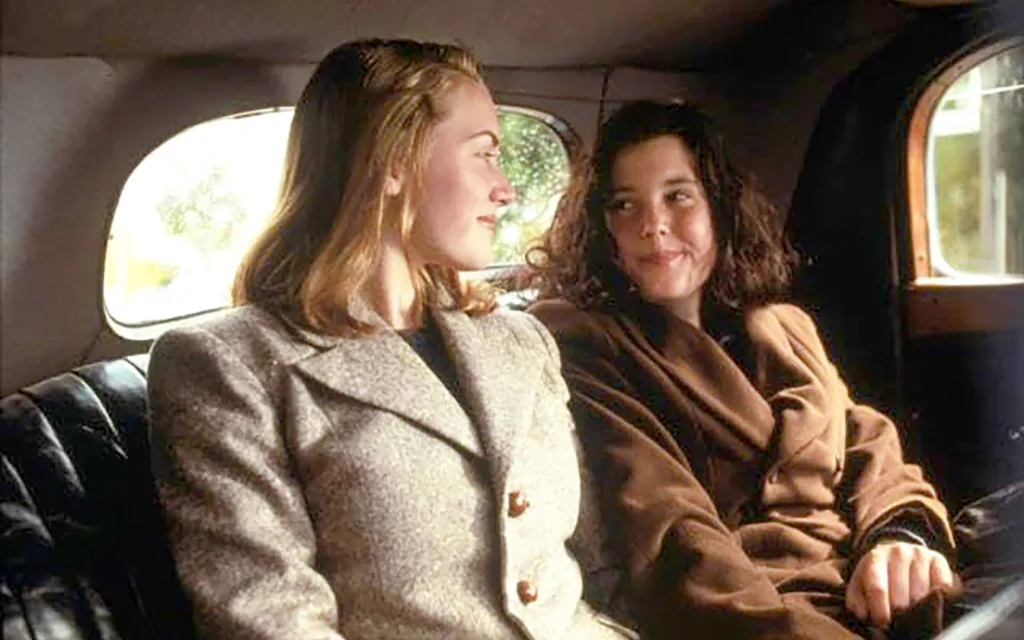
Then, covered in blood, they ran to a kiosk and told the owners Honorah had fallen and hit her head.
It soon became clear, however, that something more sinister had occurred. That evening, Parker was arrested for murder and Hulme was taken into custody the following day.
At trial, the defence argued insanity, but the girls were found guilty and only avoided the death penalty because of their age.
After serving five years in separate prisons, they were given new identities and ordered never to see each other again.
Bizarrely, for many years they both lived in Northern Scotland, just 160km apart.
Hulme hit the news again in 1994 – just before the release of Sir Peter Jackson’s film Heavenly Creatures – revealing she was bestselling crime novelist Anne Perry.
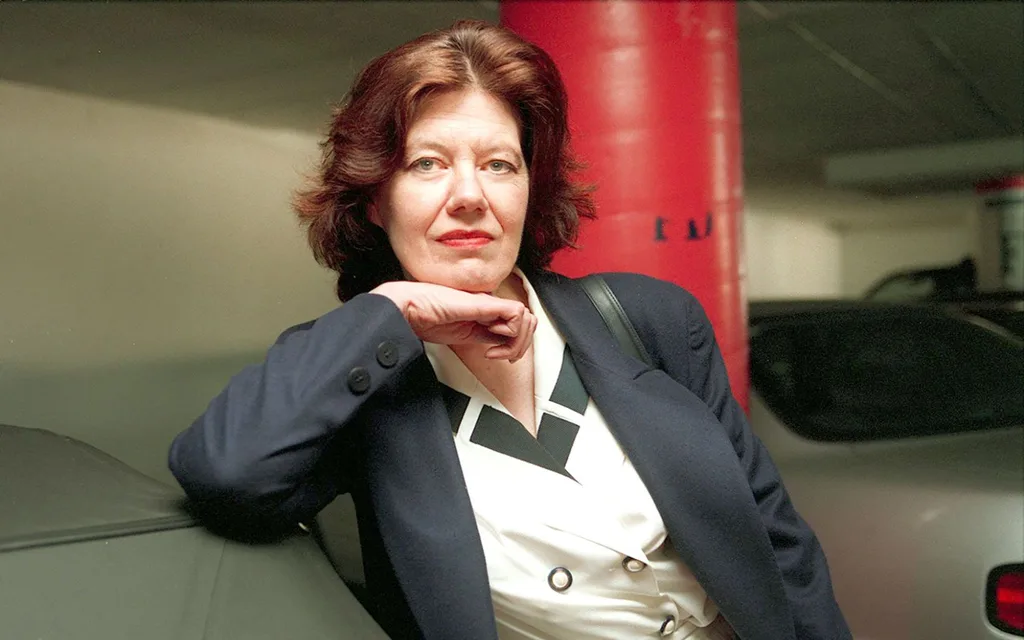
She died in 2023 at age 84.
Parker’s death on the remote Orkney Islands in October closed the final chapter of the case that shocked the world.
Christa Pike
Convicted of first-degree murder and sentenced to death.
On September 30 this year, an emergency call was made requesting medical help at an address in Tennessee. The unusual thing about the call was that the address was a maximum-security prison – and the person needing help was an inmate who’d just survived an execution attempt.
Thirty years ago, Christa Pike became one of the youngest women in the US on death row.
In January 1995, the then-18-year-old was consumed by jealousy, believing her classmate Colleen Slemmer, 19, was trying to steal her boyfriend, 17-year-old Tadaryl Shipp.
Pike, Shipp and a female friend named Shadolla Peterson, 18, lured Colleen into the woods, where they launched a brutal attack.
Pike sliced Colleen’s stomach with a box cutter, kicked her repeatedly in the face, cut her throat and finally bludgeoned her to death with a rock.
Shipp, meanwhile, carved a pentagram into Colleen’s chest – and Pike later kept a piece of Colleen’s skull as a souvenir.
After three decades on death row – during which she received an additional 25-year sentence for the attempted murder of another inmate – Pike’s last-minute appeal failed and she was injected with a fatal dose of pentobarbital.
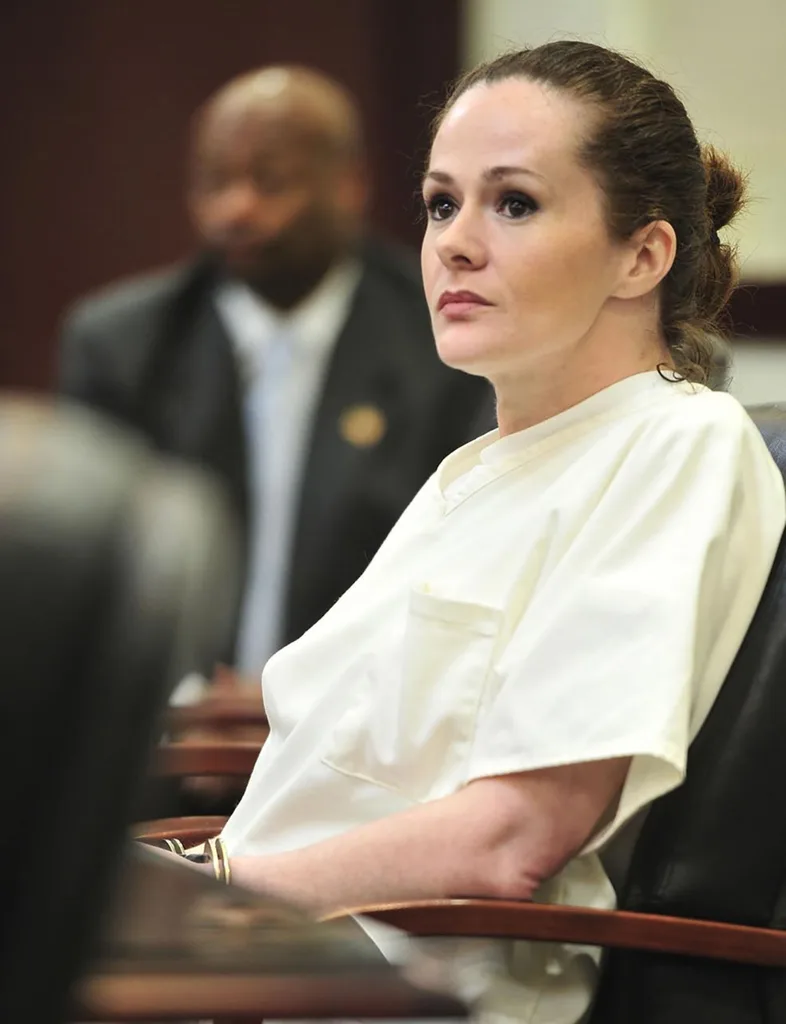
Just before the drug was administered, the 50-year-old said, “I just want to say that I’m going to leave this world the way I spent most of my life. And that is with love.”
Defying death
Instead of dying, however, over the following minutes, Pike appeared to talk, breathe, moan and snore, and 20 minutes after the first dose, she was given a second dose of pentobarbital.
While she seemed to lose consciousness, she continued to breathe and emergency services were called.
After four days lying unconscious in hospital, she was declared brain dead on October 5 – only to once again defy expectations – the next day, she regained consciousness.
Pike was discharged from hospital on October 10 and sent back to prison. In her first public statement, Pike opened up about the immense pain she is in, saying it “isn’t just physical. There is pain in my mind and in my soul”.
Pike’s legal team is calling for her death sentence to be commuted to life in prison, but the state is making no promises that it won’t attempt to execute her again.