Photography: Babiche Martens.
While many bedtime stories whisk children away to castles and fairy tales, award-winning author Qiane Matata-Sipu believes some of the most important stories are much closer to home.
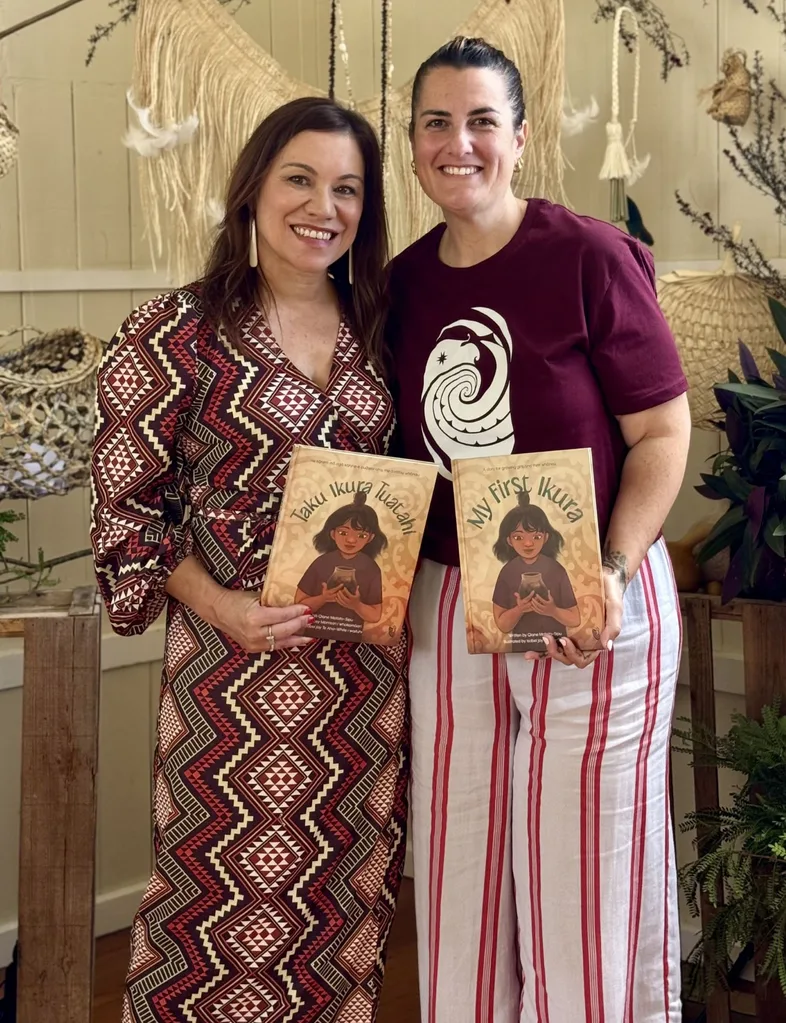
Her latest bilingual picture books open the door to conversations about first ikura [period] as a celebrated rite of passage, sharing mātauranga Māori [knowledge] to empower girls and their whānau.
“I would rather my tamariki be reading pukapuka [books] about things that they are going to experience in their lives, or something that reflects them and their culture than reading about princesses and castles,” says Qiane, 40, who is mum to daughters Haeata te Kapua, eight, and Taiariki, one.
Sharing her own experience of getting her first period, Qiane recalls that outside of the basic information shared in health class, there was very little preparation.
“There was no ceremony, there was no acknowledgement, there was no celebration.”
Raising confident daughters
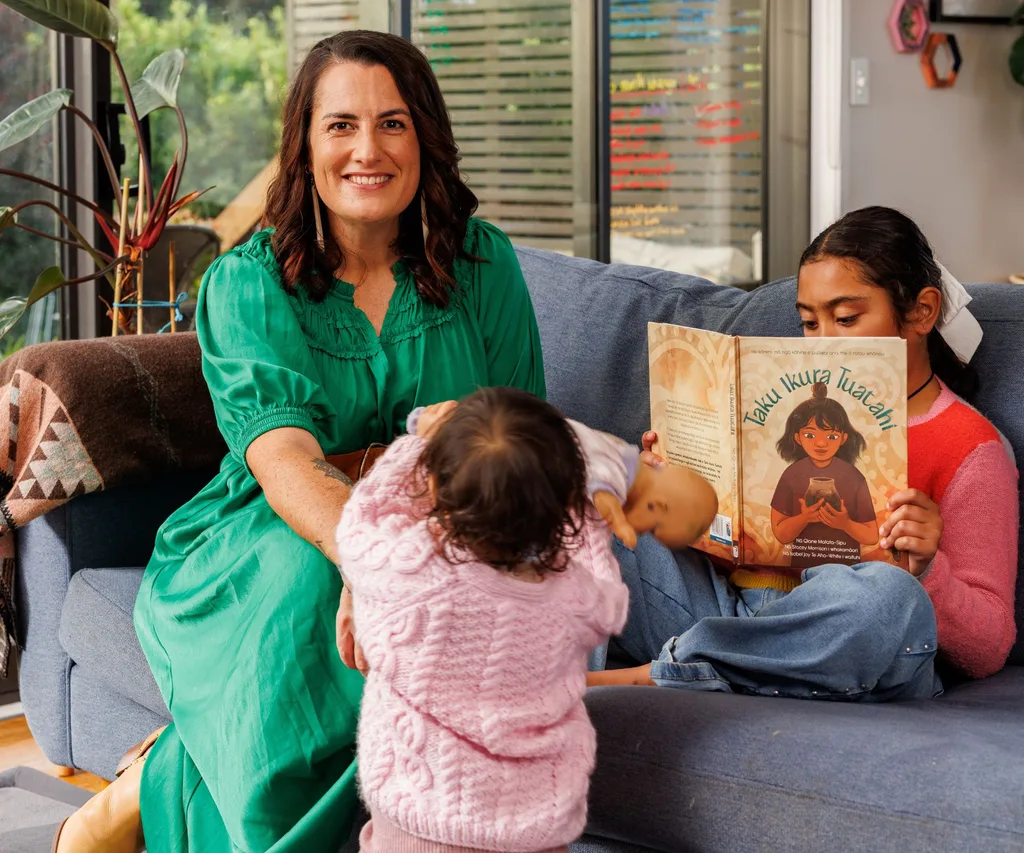
Qiane is determined to give her daughters a different experience. Qiane drew inspiration for her books, My First Ikura and its te reo Māori counterpart Taku Ikura Tuatahi, from years of open conversations with her eldest child. Since she was a toddler and first noticed her mum bleeding, Haeata te Kapua has been asking questions and Qiane has always taken the approach, “If my child asks me a question, I answer.”
Laughing, Qiane says after Haeata te Kapua proofread the books, she marched into school the next day and asked the seniors outright who’d got their period.
“They hadn’t even spoken to each other about it and here was this junior rocking up to school like, ‘What’s it like? Tell me about it,’” laughs Qiane.
“She’s not embarrassed. She’s not trying to hide things away. She talks to her uncles about it too and it’s beautiful to see her confidence.”
Breaking the taboo
Qiane hopes the project will spark open, informed conversations about a topic long considered taboo or shameful.
“I wanted to write something that makes these conversations normal and easy. Because actually, all we’re doing is reading a storybook and interwoven in that is really deep, rich mātauranga.”
That knowledge includes practices like capturing your first menstrual blood and returning it to the whenua [land] and the role whānau can play in acknowledging and celebrating this time.



Raised by her whānau
While period-specific mātauranga was missing in her youth, raised largely by her grandparents on her ancestral land where she still lives, Qiane was constantly surrounded by her culture and wider whānau.
“There were no screens, people had more time to share over kai and I always felt loved,” she says.
That upbringing supported her into a remarkable career, even when not everyone believed in her potential. Qiane still clearly recalls the sting of being underestimated as a young Māori/Cook Islands teen when she told her high school careers advisor that she wanted to be a journalist.
“She sort of looked at me and went, ‘Maybe you want to think of something else.’”
Proving them wrong
In response, Qiane won a university scholarship, joined the now-defunct Mana magazine and, by 25, had become the deputy editor of another title. Next came launching her own multimedia production company, where she has self-published multiple award-winning books. My First Ikura is a double finalist at the Publishers Association of NZ book design awards and Taku Ikura Tuatahi was a finalist at the New Zealand Book Awards for Children and Young Adults.
“What I wanted to ensure was that our tamariki and mokopuna didn’t have to get to 30, 40 years old and be looking for mātauranga. That actually, it was just part of their everyday lives, interwoven as normal with them right from childhood,” she explains.
Inspired by motherhood
Qiane wrote and published both My First Ikura and her bilingual alphabet title, W is for Wahine Toa, while on maternity leave with Taiariki.
“Babies sleep a lot,” she laughs, though she credits motherhood as a source of inspiration.
“It wasn’t about trying to be productive. It was actually just creating. I’d just created a life and I wanted to create more.”
As for her daughters’ own rites of passage, Qiane’s looking forward to the ceremony she never had. They’ll gather the first blood to return to the whenua where their placenta is buried, read a karakia written especially for the book by Stacey Morrison, and mark the occasion with loved ones.
“I’ll probably invite my whole whānau over for dinner and we will celebrate together.”
My First Ikura and Taku Ikura Tuatahi (rrp $29.99, QIANE+co).