




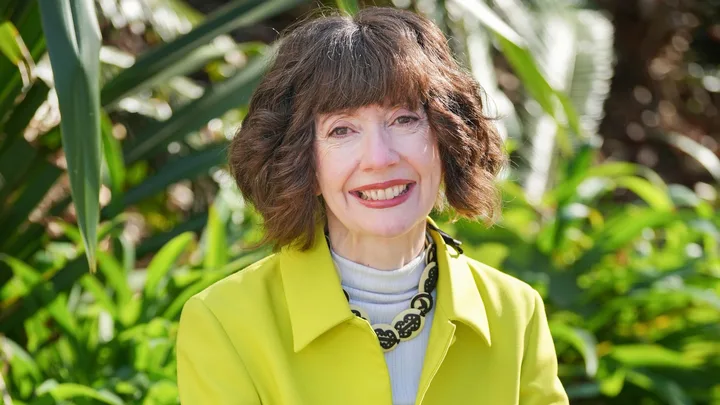
 Photography: Robert Trathen
More than 200 years after her ancestor Te Pahi tried to save four condemned Australian men from the gallows, Professor Deidre Brown stood on her ancestral land for an emotional reunion many generations in the making.
It felt, she says, like “history playing out in real time”.
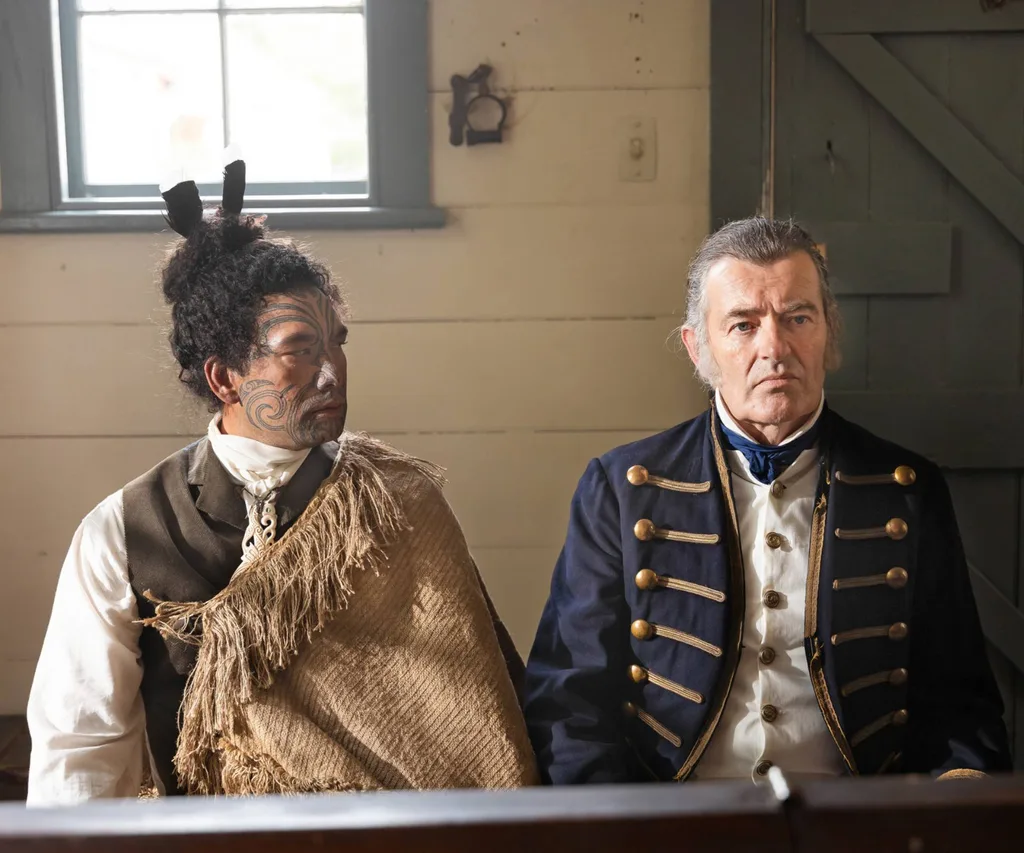
The meeting, captured in RNZ’s documentary and podcast Te Pahi: The Rangatira, the King and the Survivors, brought together descendants from opposite sides of a story that began in 1805. It was then that Te Pahi, a rangatira [leader] from the Bay of Islands travelled to Australia to meet the Governor of New South Wales, Philip Gidley King, about a trade partnership.
Intrigued by colonial justice systems, Te Pahi attended a court case where four men were convicted and sentenced to death for stealing pork. Shocked by the outcome, Te Pahi attempted to save their lives, asking to take them back to Aotearoa with him. His request was declined.
Fast-forward to September 2025. As Deidre stood on the Far North land where Te Pahi’s pā once stood, she paused to consider how incredible it was that she was about to meet the descendants of James Keating, one of the men her ancestor tried to save.
“Part of bringing them back and describing them as whānau was that if their ancestor and the other men had come back with him, they would have married into our whānau and been our whānau,” shares Deidre.
The gathering was momentous for everyone.
“I think they were quite struck by the warmth and aroha of the pōhiri [traditional Māori welcome], and I was very struck by their emotional response.”
Bringing a treasured taonga home
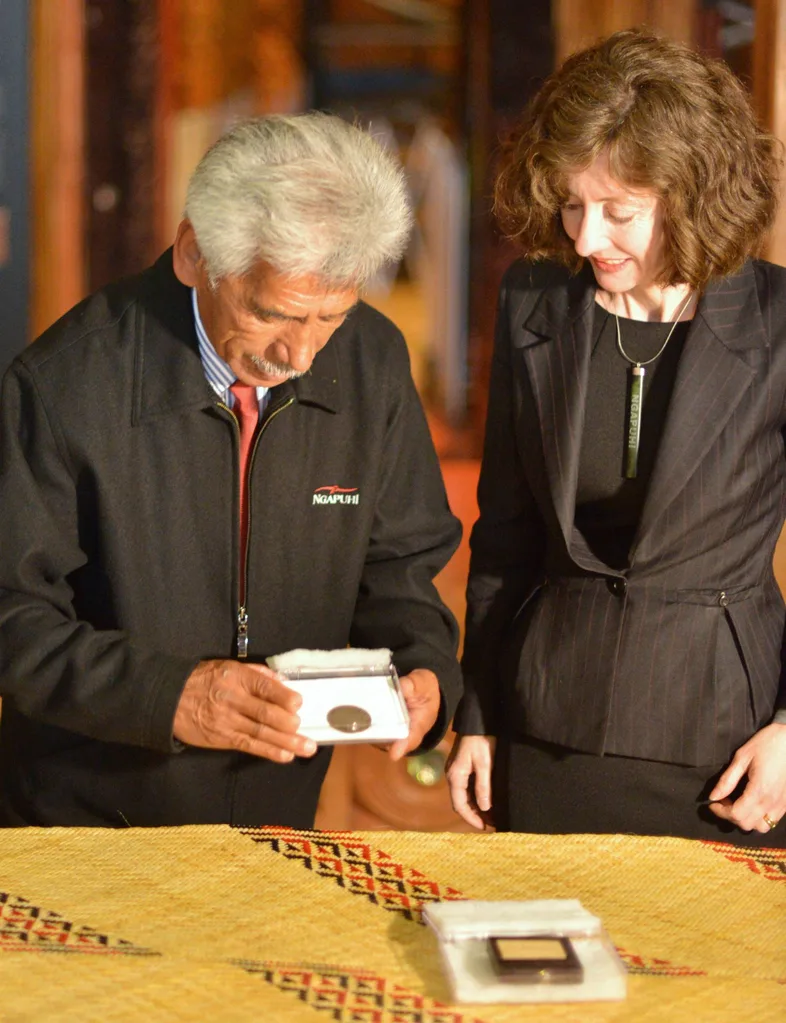
Deidre is one of New Zealand’s most respected architectural historians and has spent decades researching her ancestor. She also played a key role in repatriating a silver medal gifted to Te Pahi by Governor King.
It surfaced unexpectedly at a Sydney auction house in 2015 and was set to be sold to the highest bidder.
“We had two of what [Ngāti Torehina kaumatua/elder] Hugh Rihari described as the wildest weeks of our lives trying to see how we could have this taonga [treasure] returned to us,” she remembers.
Deidre and Hugh assisted in Auckland Museum and Te Papa joining forces to purchase the medal for AU$300,000. Seeing the artefact returned home was a life highlight for Deidre. Brought up in a working-class family in West Auckland but always knew of her whakapapa [ancestral lineage] to the north. Her mother Rosine Brown made sure of that.

“She made it very clear to me, ‘You will always tell people that you are Māori and you should be very proud.’”
Embracing her whakapapa
But Deidre’s fair skin sometimes led others to question her identity.
She explains, “I really don’t care what other people think. I’ve had to learn that to be a wahine Māori, you’re on your own journey and you can’t let others stop you doing what you need to do.”
Determined to see Deidre succeed, her parents also fostered her interest in architecture from a young age.
“There wasn’t a lot of money in the house, but there was a lot of aroha,” she smiles.
“My parents were set on the idea of me becoming an architect. My mother used to work extra jobs, cleaning and sewing, to pay for me to have extra maths tuition.”
Creating a legacy for future generations
Their sacrifices and support have contributed to a remarkable career. In 2023, Deidre was the first wahine Māori to be awarded the Te Kāhui Whaihanga gold medal, the New Zealand Institute of Architects’ highest honour. She’s a professor at the University of Auckland and the deputy dean of the Faculty of Engineering and Design. She takes great joy in mentoring students.
She’s also deeply devoted to improving the quality of housing for Māori and Pasifika people. She co-founded the Māori and Pacific Housing Research Centre to help achieve that goal. Just as Te Pahi believed in collective responsibility for his people’s wellbeing, Deidre does too.
She enthuses, “It’s the idea of curiosity and using that to find opportunity, not just for yourself, but for your whānau and for your community.”
As Deirdre looks to the future, she hopes one day her own descendants will remember her as a “wahine who helped to share kōrero tuku iho [passed down histories] and whakapapa through her research and also used that to contribute to our understandings of Aotearoa New Zealand today”.
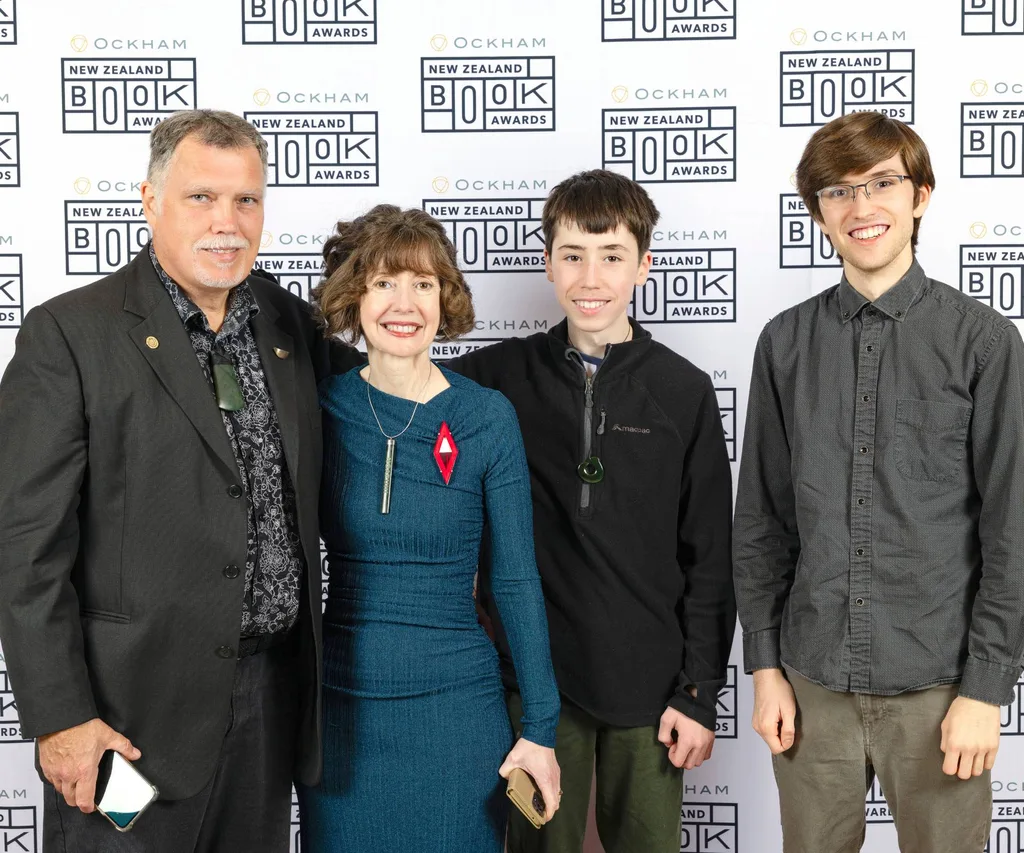
Then, after a pause, Deidre, who has two sons, Max, 19, and Oscar, 16, with her architect husband Grant, adds, “And I’d like to be remembered for being a good mum.”
Te Pahi: The Rangatira, the King and the Survivors is available at rnz.co.nz and on podcast apps.