



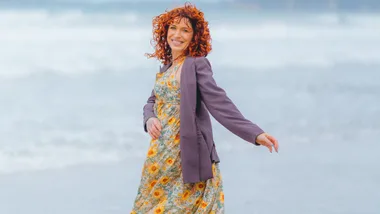
For months this winter, busy mum of six Casie Blakelock was feeling unwell with chest pains, shortness of breath and tingly hands. Repeated trips to the doctors saw her prescribed three rounds of antibiotics for chest infections, then she was told it was likely panic attacks and stress.
It reached the point she had to quit her job as an executive assistant to three business managers, and even supporting her kids on the sidelines at sport was getting harder and harder.
“I like to be really present, but it was having an impact on my ability to show up,” remembers Casie, 37.
“I couldn’t even walk from the car to the kids’ training fields without feeling dizzy. “I would get up in the morning to make a coffee and have this overwhelming shortness of breath, but mentally I felt fine. It was purely physical.”
On July 30, she went back to the doctors with the same symptoms.

Misdiagnosed as a panic attack
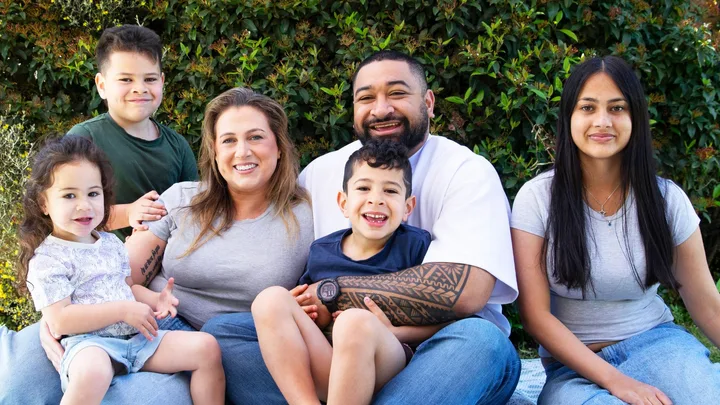
“The first person I saw there said she thought I was having a panic attack,” says Casie, who is mum to Kazahna, 19, Jaedyn, 18, Izzy, 17, Malakai, seven, Roman, five, and Lola, two.
“It didn’t make sense because my mind was clear.”
It felt off to Casie, but she thought, “I do have a very busy life,” and if medical professionals were saying it, then perhaps mental health was behind everything she was experiencing. The next morning as she was getting four of her children ready for school – the eldest two live in Auckland with their dad – Casie wound up fighting for her life on the bathroom floor.
Collapsing without warning
Casie recalls, “I told my husband, ‘Go to work early, I might need you to pick the kids up after school. I’m really not feeling well.’ “At 8.30am, my neighbour’s kids walked in the door to come to school with us. Then the panic thing happened again, but I couldn’t catch my breath or feel normal. I called out to my 16-year-old, ‘Can you get the kids in the car?’”
Moments later, Casie was unconscious.
A terrifying moment at home
“Izzy came back and I wasn’t doing good,” she shares.

“I don’t remember anything past that point, but she told me I collapsed down the wall, my lips turning blue. “She called an ambulance and told them, ‘Mum’s been having panic attacks.’ They were here in five minutes. I had a blood pressure of 15 beats per minute and knocking on death’s door.”
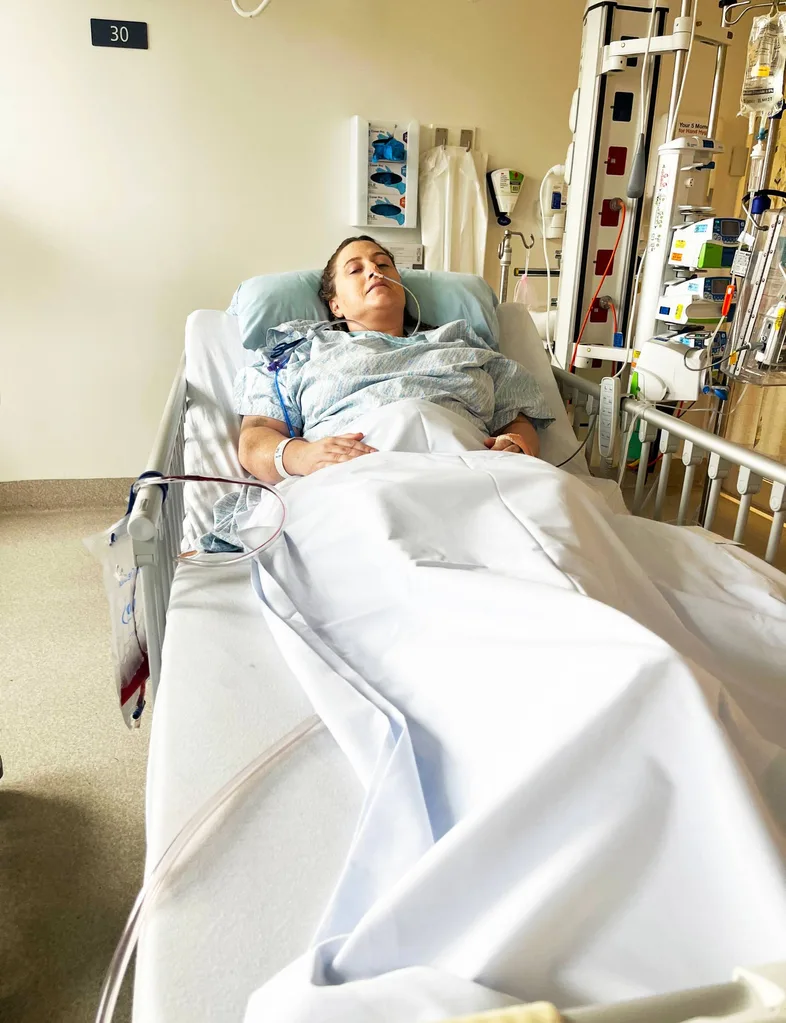
The paramedics performed CPR, saving her life. Paramedics then rushed Casie to the hospital, where doctors diagnosed her with a sub-massive bilateral pulmonary embolism – blood clots in both lungs. Doctors administered blood thinners to treat the blood clots. However, the CPR that saved her life had also broken ribs and lacerated her liver, causing her to bleed out internally.
On the edge of death
“My understanding is that within 30 minutes, I was circling the drain again,” she explains.
“I was taken in for an emergency laparotomy with a 30cm incision from under my ribcage to my belly button. The surgeon repaired my liver and made the decision that I was going to be in a coma until I stabilised.”
Doctors warned her husband Lafaele, 29, to prepare for the worst.
“He said he was trying to work out how to tell our two-year-old that Mummy is gone.”
Beating the odds
But Casie survived, waking up from the coma eight days later.
“Seeing my husband for the first time, I didn’t know what was happening,” she says.
“I didn’t know what year it was. “He was by my bedside every day through my coma, playing the guitar and singing to me. Then he would go home and put the kids to bed, then do some work. He’s a social worker, so he’s needed by the community so much.”
Gratitude for the heroes who saved her
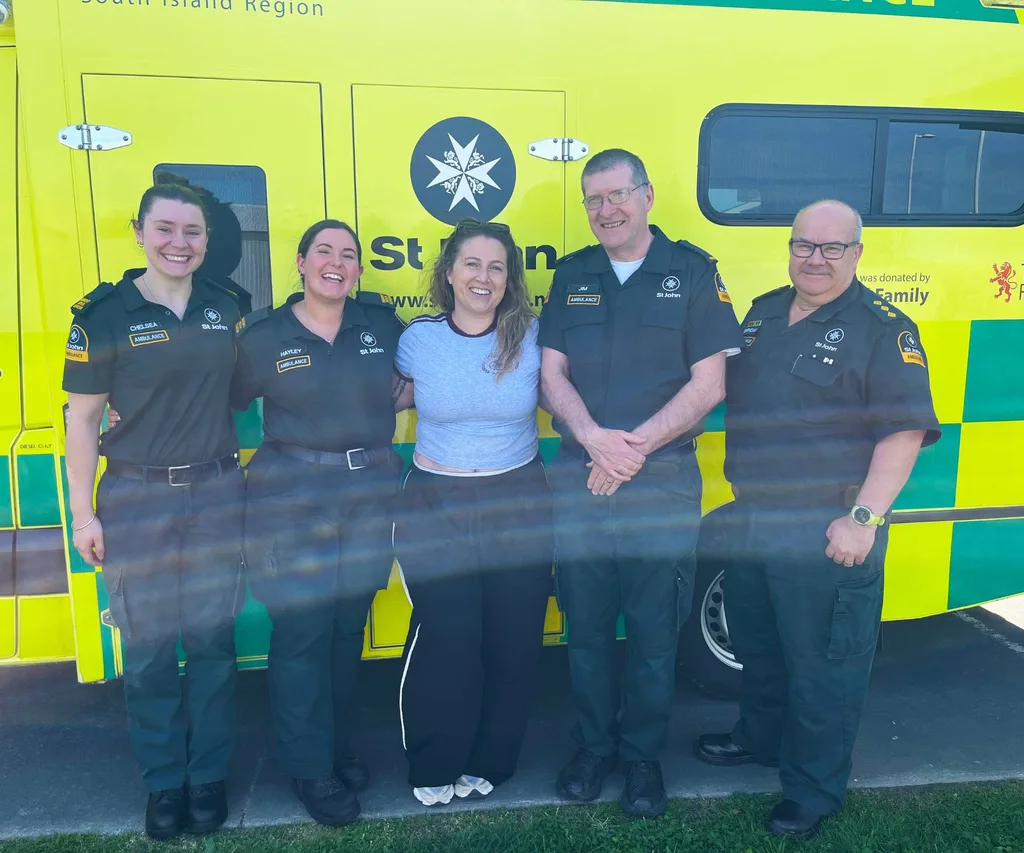
She’ll never forget the efforts of those who cared for her and her family. When she was well enough, Casie returned to thank the paramedics and ICU team, taking them sweet treats and home baking.
“Going in standing on my own two feet to thank them and give them a hug was huge,” she enthuses.
“They saved my life.”

Raising awareness for women’s heart health
New Hato Hone St John statistics show that women are 60 percent less likely than men to receive defibrillation from a member of the public. Even though there’s still a long recovery road ahead, both physically and mentally, as Casie and her family struggle with PTSD. She wants to speak out about women’s heart health. She’s also raising awareness about the importance of emergency first-aid skills.
“For us wāhine, everyone thinks it could be emotional or overreacting,” she says.
“Just because we’re women doesn’t mean we’re being dramatic. We should be listened to and taken seriously, and we should always listen to ourselves.”
To find out more about free Hato Hone St John CPR and defibrillation workshops, visit 3stepsforlife.stjohn.org.nz/locations