




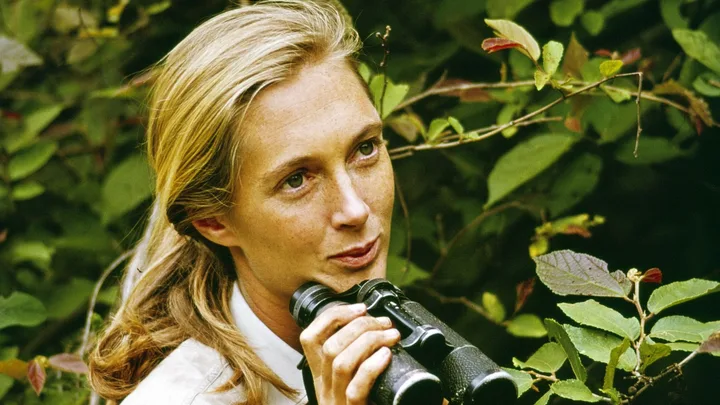
At the age of 10 Jane Goodall dreamed of living with wild animals and writing books about them. Most people just threw back their heads in mirth.
“People said, ‘You’re just a girl. Africa’s a dangerous place,” the world-famous primatologist recalls.
Her mother, however, gave her different advice.
A mother’s guidance
“Mum said, ‘If you want to do something like this, you’re going to have to take advantage of every opportunity, work hard and maybe, if you don’t give up, you’ll find a way.’”
Last April, Jane celebrated her 90th birthday, and it’s safe to say she did, indeed, find a way to make her dreams come true.
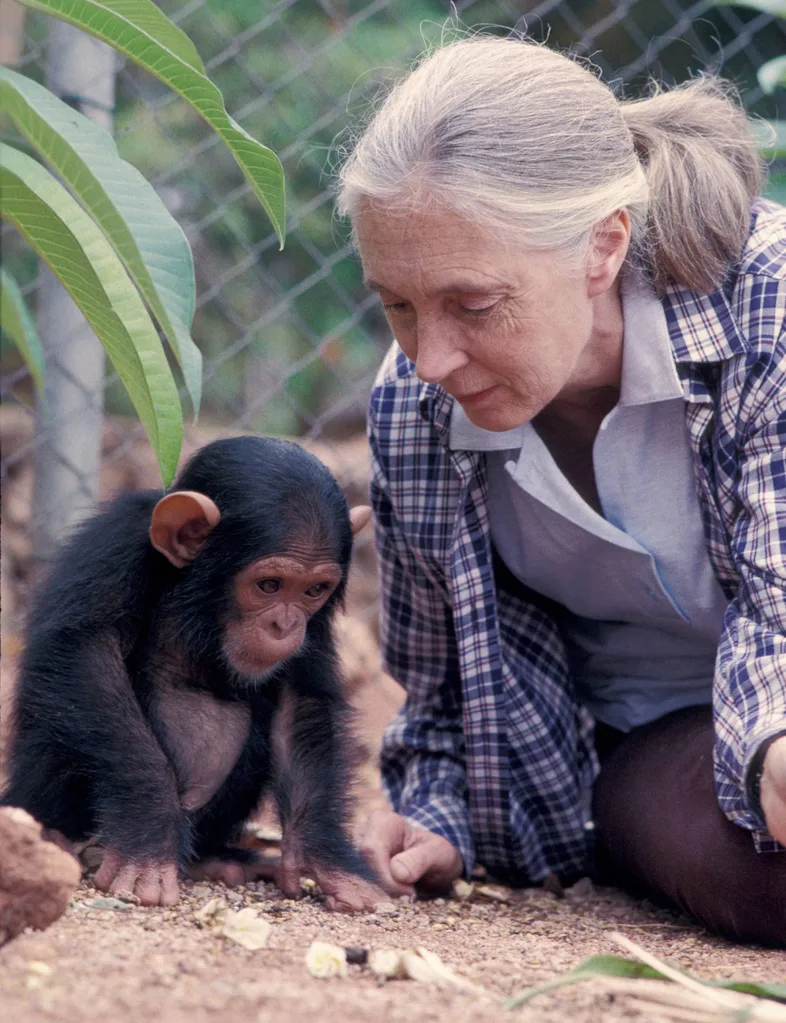
As the first – and only – human to be accepted into a chimpanzee community, her decades of work in Africa have changed the way we view not just our closest evolutionary relatives but the animal world in general.
A leap into the unknown
It’s a valuable legacy for anyone, let alone a woman who stepped off a ship in Mombasa, Kenya, back in 1956 with only a secretarial qualification to her name.
Having grown up in the British seaside town of Bournemouth during the war, there was no money in the family coffers for Jane to go to university after school. Instead, she completed a “boring old” typing course and got an office job.
But fate came knocking when a letter arrived from a school friend, Clo, whose parents had moved to Kenya, inviting her to stay.
“I thought, ‘This is my opportunity,’” she recalls.
Funding a dream
She saved every spare penny until she had enough for a ship passage to East Africa. On her first night on her friend’s farm, 23-year-old Jane “saw an aardvark and a beautiful giraffe with long eyelashes, looking down its nose. The next morning, Clo rushed into my room saying, ‘Come quickly, there’s a leopard outside,’ and I knew I’d arrived. This was the Africa I’d dreamed of.”
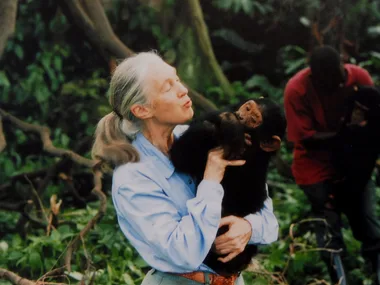
A couple of months later, she landed a secretarial job with famous paleoanthropologist Louis Leakey. It changed the course of her life.
Sensing his young employee’s passion for wildlife, it wasn’t long before Leakey asked if she’d be interested in studying chimpanzees in the wild – something no one had attempted.
She set up camp in the Gombe Stream National Park in Tanzania. It was exhausting work, taking four months to gain the trust of the colony of chimps living close by.
A moment that changed science
First breakthrough came with a male she’d named David Greybeard: she offered him a red palm nut, a favourite chimp delicacy. He took the nut from her, then dropped it and gently squeezed her hand.
Says Jane, “In that moment, we were communicating in a way that must predate human words. We understood each other perfectly. I knew he didn’t want the nut but that he understood my motive was good.”
Not long after, she observed David Greybeard stripping a leaf and using the stem to scare termites out of a nest.
It was an observation that changed everything because, up until then, scientists believed only humans made and used tools.