




 Photography: Emily Chalk.
Listen to the radio, turn on the television, scroll social media or open any news website and it won’t be long before the name Erica Stanford pops up. Over the past few years, the mother of two has taken on a big ‘to do’ list, and become one of the most talked-about and debated members in public office. Whether you agree with her decisions or not, one aspect is clear: Erica is a woman committed to change.
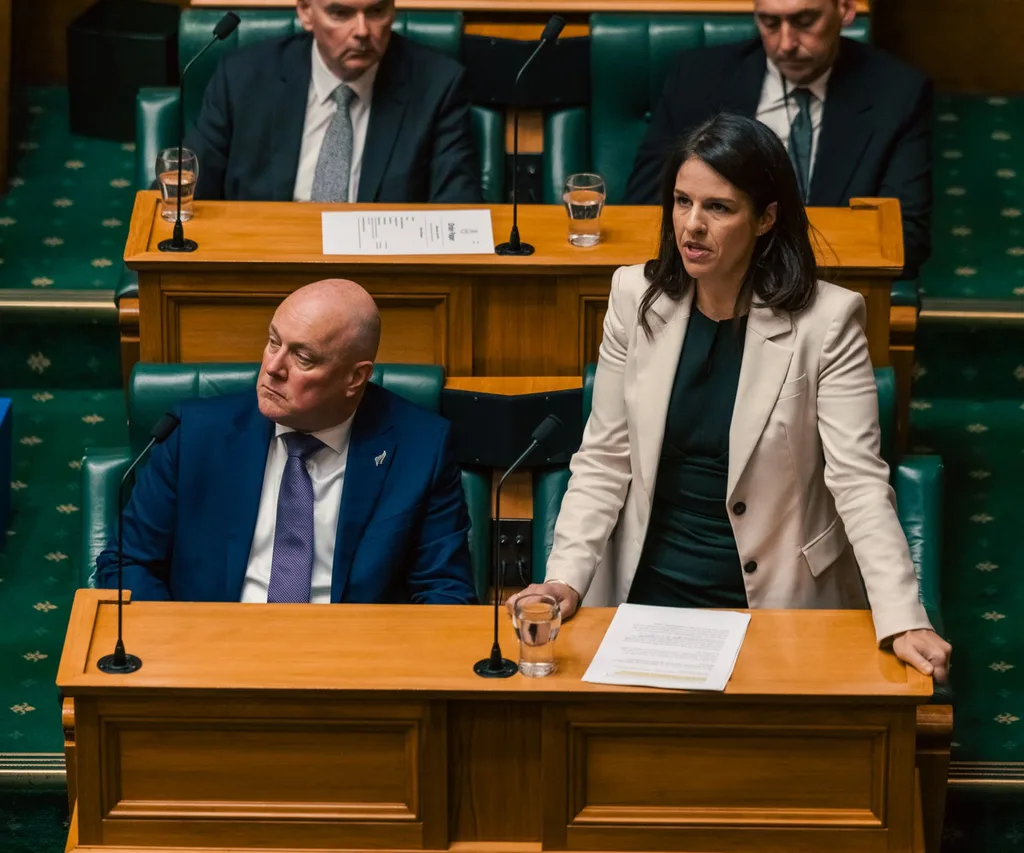
She holds two of the most demanding and polarising portfolios in government – Education and Immigration. She has also overseen the Crown’s response to the Abuse in Care Royal Commission of Inquiry and she’s the minister charged with overseeing the pending legislation around restricting social media for under-16s.
It’s a colossal load; one that dominates her life and means the ‘to do’ list is never complete. Erica says she has the most selfish and most selfless job on the planet.
“I say that because it feels like the whole world revolves around you. It is such a huge honour and a privilege to be able to do this role. But what you give up to do that is also extraordinary.”
She is quick to credit her husband Kane for enabling her to make it work.
“He is an absolute rock star. You can’t do this job without someone who is at home doing everything and not resenting you for it.”
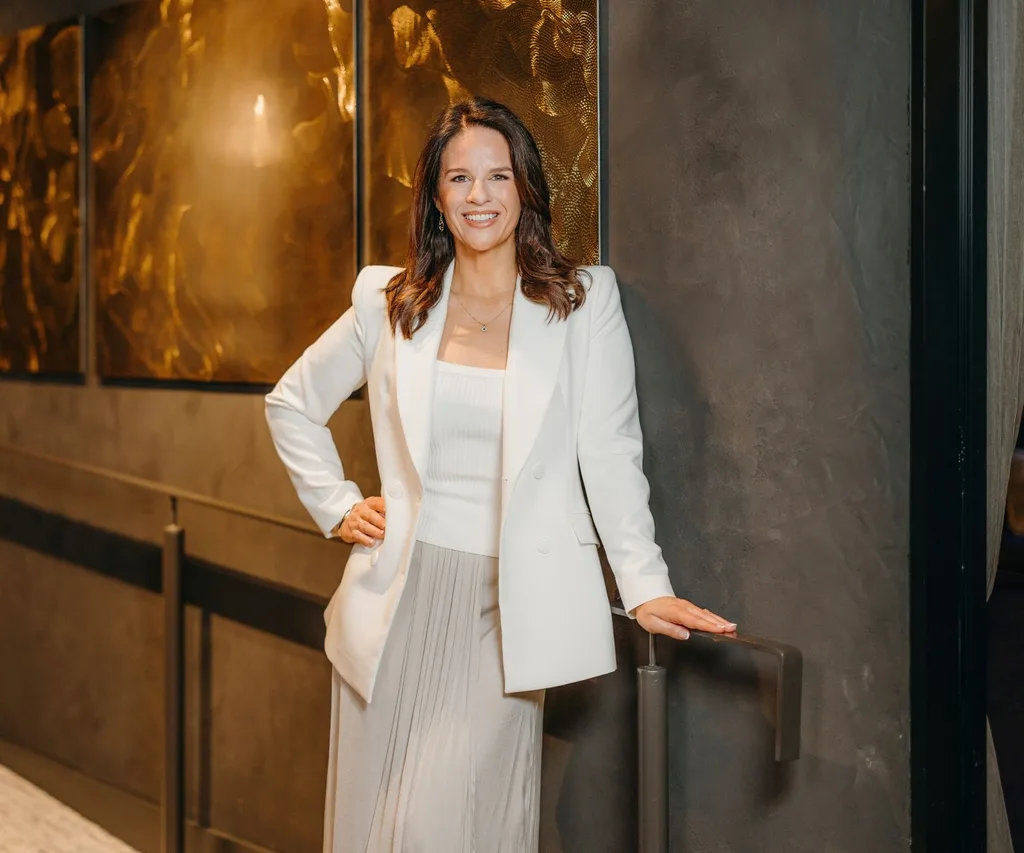
Working around the clock
She works an 80-hour week, but tries to leave Saturdays for her husband and two children. While in Wellington, she lives alone in what Kane calls “a disgusting student flat”, she says with a laugh.
“It’s literally a tiny studio unit. It has a window that looks right out onto the building next door and it gets no sun. But that’s okay because I’m only there between 11pm and 7am, and I’m either reading Cabinet papers or asleep.”
The upside? “It’s only a three-minute walk to work – absolutely perfect,” she says.
“I suppose you could call it a lonely existence, but there is just no time to think about it. The days go really quickly. The diary is completely full from 8am till 11pm and then there’s probably a couple of hours reading papers before it all starts again the next day.”
Erica is driven by a commitment to deliver change at pace.
“We’re running an enormous reform programme in Education; we’re running at 10,000 miles an hour,” she says.
There’s no chance for any exercise or mental downtime.


“I bring my gym gear every week … I’ve used the gym once since I became a minister.”
Family roots run deep
That was almost three years ago. At 48, Erica is the eldest of three children born to Alexander and Karen Poppelbaum. Her dad came to New Zealand as a five-year-old with his family in 1952, on an immigrant ship from the Netherlands. His father died here when he was young and his mother brought up her four boys on her own, far from her homeland.
“Dad often tells me about turning up for school, not speaking a word of English and having to learn quite quickly. But being Dutch, he had that sort of Dutch pragmatism and he also had a strong work ethic.”
Those values served him well. Her father put himself through aviation school while labouring at the freezing works and went on to have a long career as a pilot for Air New Zealand, flying 747s on his retirement. He is known fondly by Erica and the rest of the family as ‘Captain Lex’. Even though he flew internationally, he remained an involved family man.
“Dad came on every single one of our school camps,” recalls Erica.
“We had lots of class parties at our house. I couldn’t have asked for a better childhood.”
Her mother Karen is a Kiwi.
“She had extraordinarily high expectations of all of us,” tells Erica.
Raise to aim high
“She always said, ‘I don’t care what you do in life, as long as you are the best at it.’ There was always just an acknowledgement that we would go to university; there was no other option. They worked hard to help us through. “Mum sat with me every night and helped me with my homework in primary school through into intermediate,” says Erica.
“She got me into debating, helping me with my arguments and playing devil’s advocate. She instilled into us how important education was, getting good marks, working hard and doing your homework. It never felt like a chore. It was just a thing you did. And if we didn’t have homework, she would ask what we had done during the day, and go over it with us and ask questions. “Both of my parents, but especially my mother, knew the value of education, and that’s what’s helped drive where I’ve been and where I am now.”
Erica’s family was close-knit then and remains so today. The three siblings have all settled near the home they grew up in, built by their dad, on a four-hectare block at Redvale, on Auckland’s North Shore.
“A lot of time was spent at home,” says Erica.
“I had a rabbit and we had a dog, 10 sheep and a cat. There was a 10,000-square foot glasshouse where we grew grapes for export. The whole family was involved with picking the grapes, packing them and taking them to market. I still have these dreams where I wake up really upset that I’m not in the house I grew up in.”
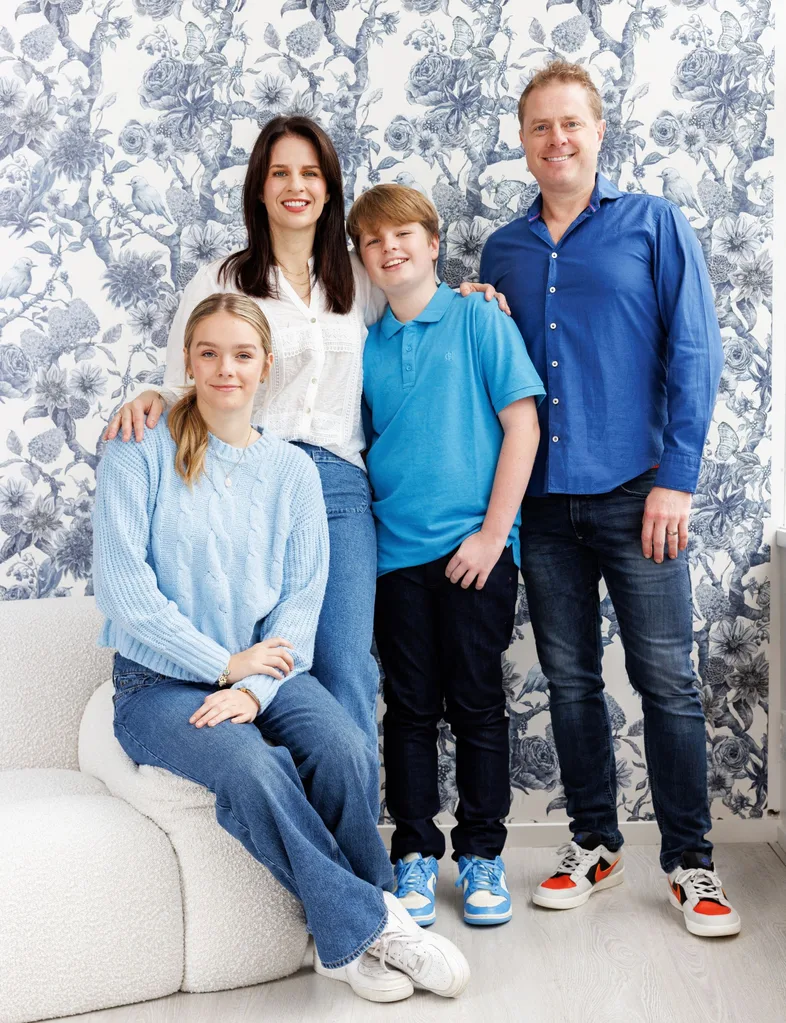
A family affair
Both her parents were deeply enmeshed in the local community. They were part of the school PTA, and ran fundraisers and sausage sizzles. Her mother helped build the local kindy. Dedicated conservationists, they fought long and hard to save the Ōkura estuary from becoming a rubbish tip. Today, the Long Bay O¯kura marine reserve is a protected stretch of sandy beaches and rocky reefs that hosts a wide variety of shore birds and marine life.
“Mum made us watch the 6 o’clock news every night,” reveals Erica.
“She would clip things out of the paper. We would always talk about current events and debate. She loved politics, and so did my dad and grandfather. We always talked about it.”
Erica comes from a staunch National background – her parents and grandparents all National supporters. Her parents are still closely involved in Erica’s electorate of East Coast Bays.
“Mum still bakes all the sweets for my Super Blues meeting [a monthly gathering of retirees who come to listen to various political speakers]. She and Dad do the sandwiches, and Dad does the coffee.”
Erica’s sister Alexis is 10 years younger and the two are very close.
“My kids babysit her kids,” Erica tells.
“She’s constantly giving me clothes she doesn’t want and I’m giving her clothes I don’t want any more. Alexis is now chair of a local board, so she’s in local politics as well.”
High-school sweethearts
Her brother Jared, two years younger than Erica, also lives close by and his daughter is in the same class as Erica’s son Alex, now 14, at Rangitoto College – New Zealand’s largest secondary school.
Erica also attended Rangitoto College. It was there she met the boy who would become her husband.
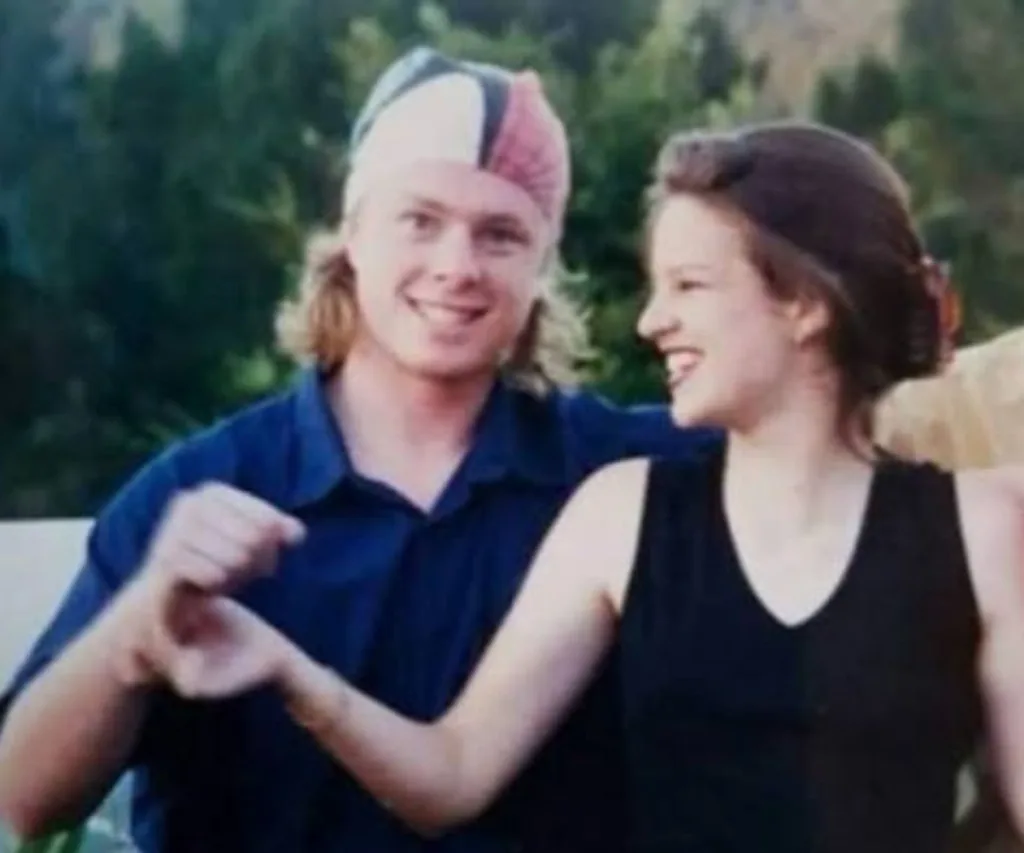
“We were high-school sweethearts.”
Their names are engraved a year apart on the school’s debating cup. Her brother also met his wife there. Erica and Kane’s romance blossomed at university, where they became inseparable.
She grins, “He was the weird sort of drama kid; slightly unusual, crazy sense of humour. He does this giant ginger beard that I give him a bit of stick about. He never has a bad word to say about anybody. He’s very calm, never gets angry or upset. He’s the sea of calm to my life, which even prior to politics was that A-type pocket rocket, girly swot, go, go, go. My sister was only seven when we got together, so he’s like a brother to her. He is just a very lovely human being. The whole family absolutely adores him.”
This, despite what could well have been a rocky introduction to her parents. When they first met Kane, he was sporting dreadlocks.
“He was unusual,” admits Erica.
“He used to dye his hair all different colours and wore a blanket with a hole cut in the middle because he was cold. He’d also shaved half his beard off – apparently he was off to a party where you had to dress as your favourite drink. He’d written ‘Vodka’ on half his face… and the beard was, of course, orange. That was probably quite confronting, but they never said a thing. I think they quickly saw what I saw – he was just a really beautiful human being. He was decent, he was smart, and he was hard-working and he loved me. I think that’s all that mattered to them.”
A plan for love and life
At the University of Auckland, Erica and Kane were on the student politics council together, plus they ran clubs.
“I went to Christchurch for a year and we stayed together during that,” she shares.
“ He tells a great story about how I had a plan and worked backwards from that plan. I wanted to be pregnant before I was 30, so we had to be married two years before that. I wanted to get married at home by the estuary, so it had to be full tide and I wanted a full moon, so basically it had to be January 14 2006, and then I needed 18 months prior to do the wedding stuff. So I planned it back and informed him of that date! “I think I might have said to him on the day he proposed, ‘This is the date. Oh, and there’s a sale on at Michael Hill!’”
She grins happily at the memory.
“We were so young and we didn’t have any money. He bought me a beautiful, very little diamond, but I love it. I love it so much.”
It was also at university that Erica would meet the man who would well and truly light the political fire inside her.
“It was day one, my first lecture of Introduction to New Zealand Politics,” she tells.
“Ray Miller was the lecturer. And from that moment, I was like, ‘All I want to do is politics.’ It was fascinating; he is such an engaging man. I never knew his politics. You couldn’t tell which way he voted, but he was just a brilliant lecturer. Everybody loved him. From that moment, I did as many political packages as I possibly could. I did a minor in Māori Studies because they had a really good politics department and I could do politics from a completely different angle.”

Then came motherhood
Following university, like many young Kiwis, Erica wanted to travel. She needed a job that involved work overseas. Her first was a placement as an export cadet at Jason Placemats.
“At my interview, the CE asked me, ‘Where do you want to be? What does your future hold?’”
He was probably thinking she’d say, “I’d like to be export manager one day.”
But no. “I told him, ‘I’d like to be the chief advisor to the prime minister.’”
She laughs about it now and thinks it was the weirdest, out-of-left-field answer. Erica travelled for the next few years, spending as much as six months away from home, and then along came her first child. Holly is now 18 and studying chemical engineering at the University of Canterbury.
A surprising chapter
She shares, “The travel wasn’t sustainable with children, so I took a bit of time off to be a mum. Then about a year later, a girl in my baby coffee group who was writing scripts for [reality TV show] Piha Rescue told me her boss was doing a new show called Noise Control and he needed someone to work nights. And I’m
like, ‘Well, I’ve got nights, you know. I can work till 4am and still operate the next day. That will be fine.’ “I was a story producer, which essentially meant going into rowdy parties, directing a cameraman and interviewing people about their noisy parties. I loved it. It was quite confronting. A couple of people quit on the first night because they ended up at gang houses. But I loved it. I love people. “It was fascinating –people from all walks of life, getting them to open up about their lives. Then there was another show, Last Chance Dogs. It was less about dogs and more about people – what they’d been through.”
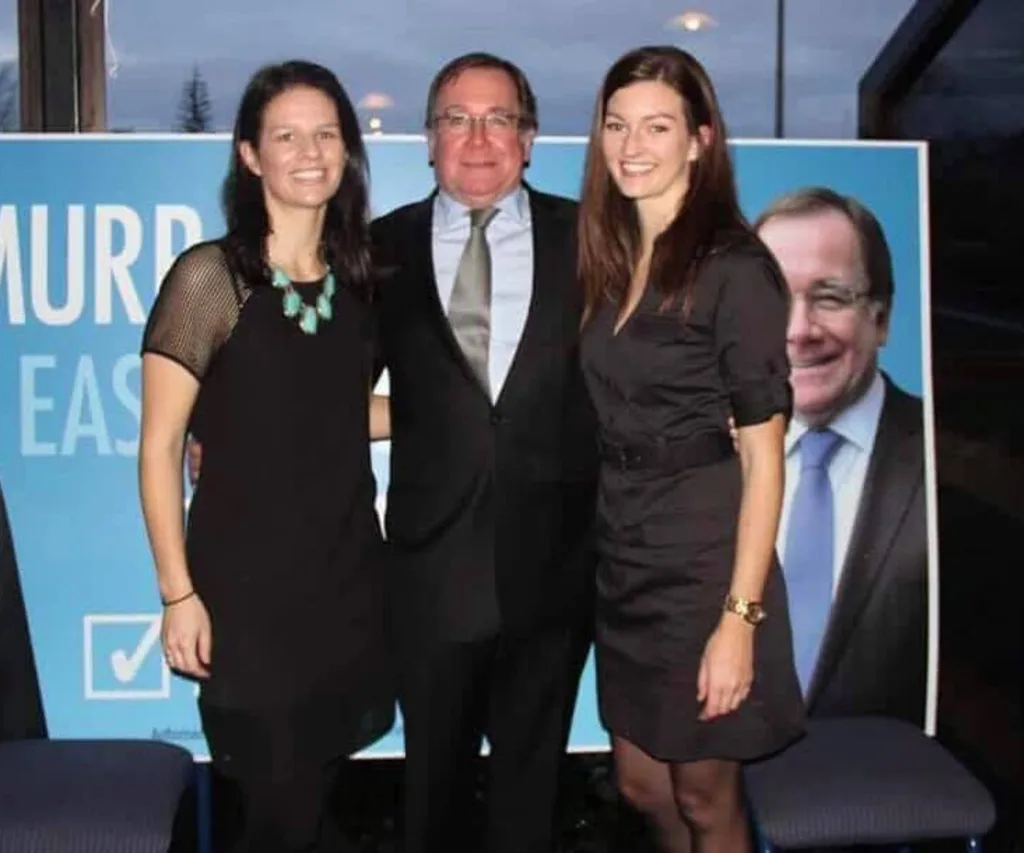
It was her sister Alexis who finally set Erica back on the path to politics. Alexis had been working for East Coast Bays MP Murray McCully’s electorate office and she left to follow her now-husband to medical school in Otago. Erica took her place.
“I ran his 2013 electoral campaign with my sister, who’d come back to help,” she explains.
“I fell back in love with politics. Because he was so busy getting us a seat on the [United Nations] Security Council [Murray was Foreign Minister at the time], he wasn’t around a lot, so I got to represent him in the electorate. In 2017, I was not expecting him to stand down. It was a shock to everyone.”
A leap of faith
It was early in the election cycle, so there was plenty of time to choose a new candidate. Erica sat down with her now right-hand man, fundraising maestro and consultant Tony Hannifin, to plan her run for selection. She calls Tony her ‘Fairy Godfather’. It was a success and she has held the seat of East Coast Bays ever since. Erica’s majority in the last election was more than 20,000 votes.
It was a tough decision to run that first time. Her son Alex was just four.
“I used to wake up having panic attacks in the middle of the night,” she shares.
“I thought, ‘When he’s sick, he lies on my chest. If I’m not there, who will do it?’ Obviously, Kane would do it, but it’s really hard when you’re holding your little four-year-old, going, ‘What am I doing?’ You just have to go into this really big trust model of handing over the parenting duties that you’ve been doing to someone else. Kane’s been amazing. He learned to cook, did the school runs and the after-school activities.”
Erica entered Parliament in 2017 on the Opposition benches. In a way, it was a blessing. It gave her time to learn more about how to be an effective politician. She credits Judith Collins, who recently stepped away from Parliament after 24 years, for seeing her potential.
“Judith was wonderful to me,” says Erica.
“In 2020, I asked for the immigration portfolio and she gave it to me. It was during Covid that I started to make my mark.”
Giving people a voice
Erica successfully advocated for migrant nurses to be reunited with their families following border restrictions.
She says her time working in reality TV taught her the value of connecting with people through stories of personal experience and real-life impact.
“Reality TV is not much different to the news in some instances,” she tells.
“You have to connect with the public with those individual stories and that’s what politics is about, connecting with the public with stories.”
And it was a story that led to a law change after the Abuse in Care Royal Commission of Inquiry. It involved young people who’d been abused in mental-health facilities who were slipping through the cracks in the system. Erica was able to get these young people heard and obtain redress because of a young woman called Charlotte.
“I met her at an event,” Erica says.
“She waited, and came up to me shaking and crying. She came up to my office and laid this terrible story out for me, and we changed the law. We called it ‘Charlotte’s Change’ because it led to so many more people coming forward and being able to get redress. Because we connected it to the person.”
Erica lists the biggest challenges of her political career as, firstly, having to be away from her family and friends. But she’s philosophical about it.
“One day, the big black bag of reading [about 10 or 12 hours’ worth that arrives every Friday night] will stop coming and this immense privilege will be over.”
Living under the spotlight
Her second biggest challenge is the intense scrutiny.
“You know the media is gunning for you all the time. An entire opposition are going for you all the time. Half, at best, of the population are never going to agree with anything you say and are very vocal on social media. My husband used to say to me, ‘Don’t go on. You don’t need to read the comments’, but it’s important to read the comments because you want to answer people’s questions and get a gauge for how things are going.”
While social media can often provide the loudest and most intense feedback, Erica says results and outcomes are always her indicators of whether something is working or not.
On the controversial issue of charter schools, she says many young people need something different and it’s hard to offer them that, especially in a large school.
“We talk about inclusion a lot,” she says.
“If you go and look at initial teacher education and see how much training they do on neurodiversity, or special needs or trauma, it’s very little. So we’re not setting our teachers up for success at all. That’s next on my list of things to do, to overhaul initial teacher education because it’s not in great shape. “The reason charter schools do so well is that they can set up for exactly these children. If you could offer something different that works well for children, why would you not do that? We have contracts with them that say you must meet these benchmarks. We don’t have that in the state system. We’ve got failing schools that have been failing for decades and nothing ever happens. I’m trying to turn that around. With a charter school, if you don’t meet your contractual obligations, you can be closed down, so they have every reason to make sure they’re doing the very best for their children.”
Her annual reset
While education might be Erica’s passion, her family is always top of mind. She misses her daughter immensely now she is studying away from home and it won’t be until Christmas that they’ll get any decent time together. The family will head to the Coromandel as usual and Erica will catch up on life for a short while.
“That’s where I do my exercise for the year,” she says.
“Every morning, I walk about 15 kilometres, every single morning.”
Because before she knows it, she’ll be back into the 80-hour work weeks and the gym bag will be a distant memory once again.