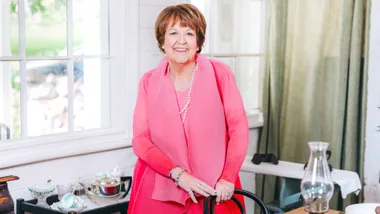




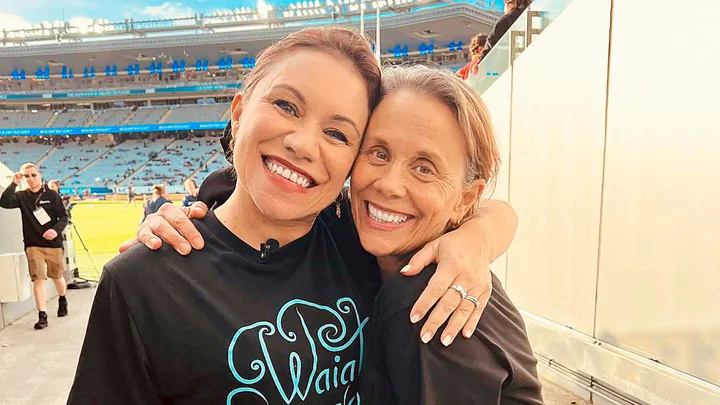
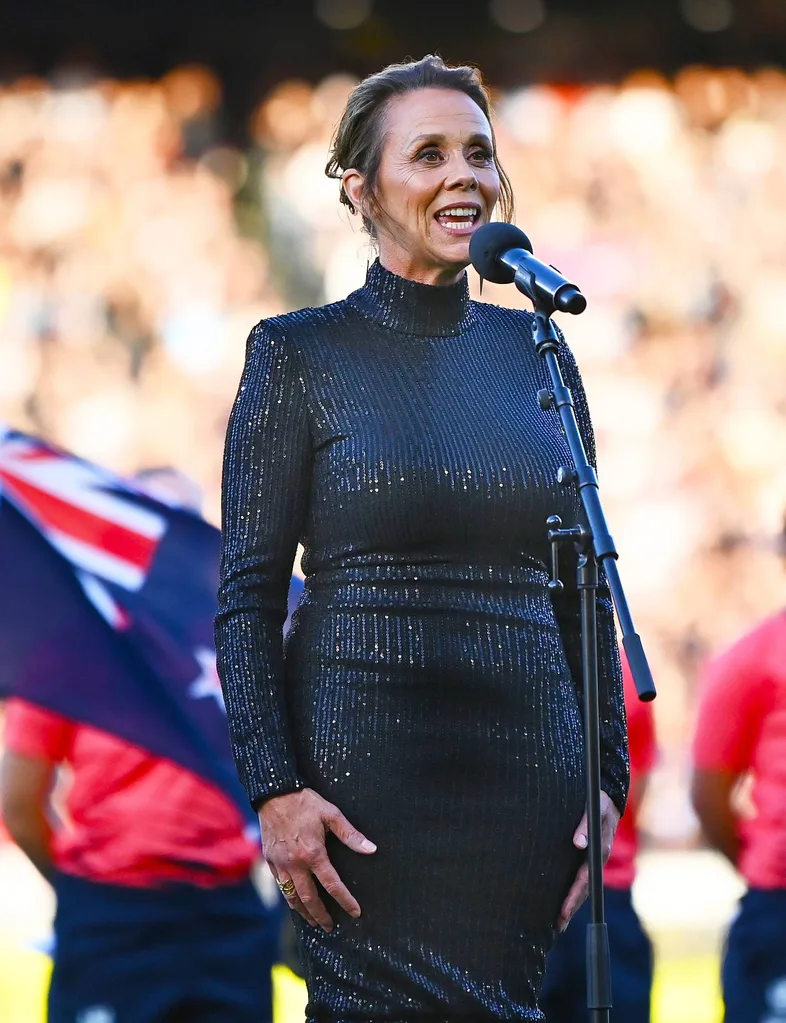
Whether she’s performing the national anthem in a packed stadium, championing music therapy or working behind the scenes supporting other musicians, Dame Hinewehi Mohi has a gift for bringing people together through music.
Now, alongside close friend Stacey Morrison, she’s on a mission to unite Kiwis everywhere through joyful, waiata singalongs.
“It’s kind of been an obsession of mine for a few decades, how the impact of waiata and in particular singing together is so glorious,” explains Hinewehi, 60.
Uniting Kiwis through stadium sing-alongs
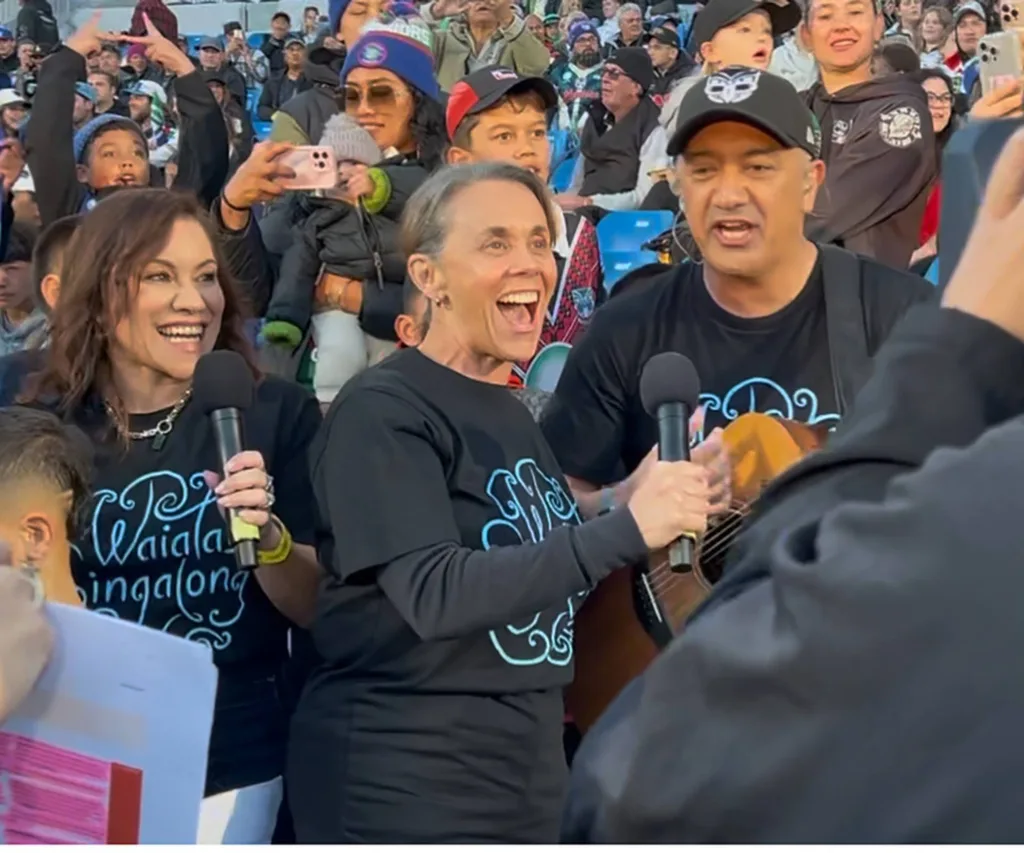
This year, the Māori mavens have been organising and leading singalongs at stadiums and sports games around the country. While waiata are an integral custom on the marae and in many Māori settings, they say singing in a group in public is something many adults rarely get the opportunity to do.
“Music brings us together and is the perfect vehicle for accessing te reo Māori, and better understanding the culture and ourselves as New Zealanders,” says Hinewehi.
So far this year, they’ve united thousands in waiata at games for the Blues, Warriors, Black Ferns, Māori All Blacks and the Mystics versus Tactix netball final.
Says Stacey, “I had some cool feedback at the netball when an older woman said, ‘I can’t believe I still remember Tūtira Mai Ngā Iwi from primary school.’ We’re activating memories.”
The project comes off the back of the successful 2024 Guinness World Record for the largest haka in the world, where almost 6500 New Zealanders joined Hinewehi and Stacey for Te Rauparaha’s iconic haka Ka Mate at Auckland’s Eden Park. For broadcaster, author and te reo Māori advocate Stacey, getting involved in the singalong kaupapa was a no-brainer.
“It’s Whaea [aunty] Hins! When she asks, I say yes,” laughs Stacey, 52.
“Our relationship is such that it’s always just a privilege to be involved in anything she does.”
From marae auditions to lifelong friendships
Since leaving Flava radio at the end of last year, Stacey has been relishing the chance to get amongst initiatives like this. She’s also been busy with book translations, working on a new TV special called I’m Not Racist, But.., and is studying for her Masters of Technological Futures.
“I’m really treasuring flexibility and lots of different gigs, and feeling energised,” she admits.
The close-knit pair first met when Stacey was in her early twenties and went for a job on the TV show Marae. At the time, Hinewehi was the producer interviewing Stacey. They’ve been friends ever since, even standing beside each other as bridesmaids at their respective weddings.
“We’ve been besties since way back,” smiles Hinewehi.
Bonded by kindness and kaupapa
They make a formidable but humble pair, each warmly praising the other.
“Hinewehi is one of the strongest people I know – an incredible mother first and foremost to her daughter Hineraukatauri, but to a lot of other people too,” shares Stacey.
“She’s so passionate and she loves our country and our people. She understands waiata have the power to unite and ignite us, and has utilised all the gifts she has.”
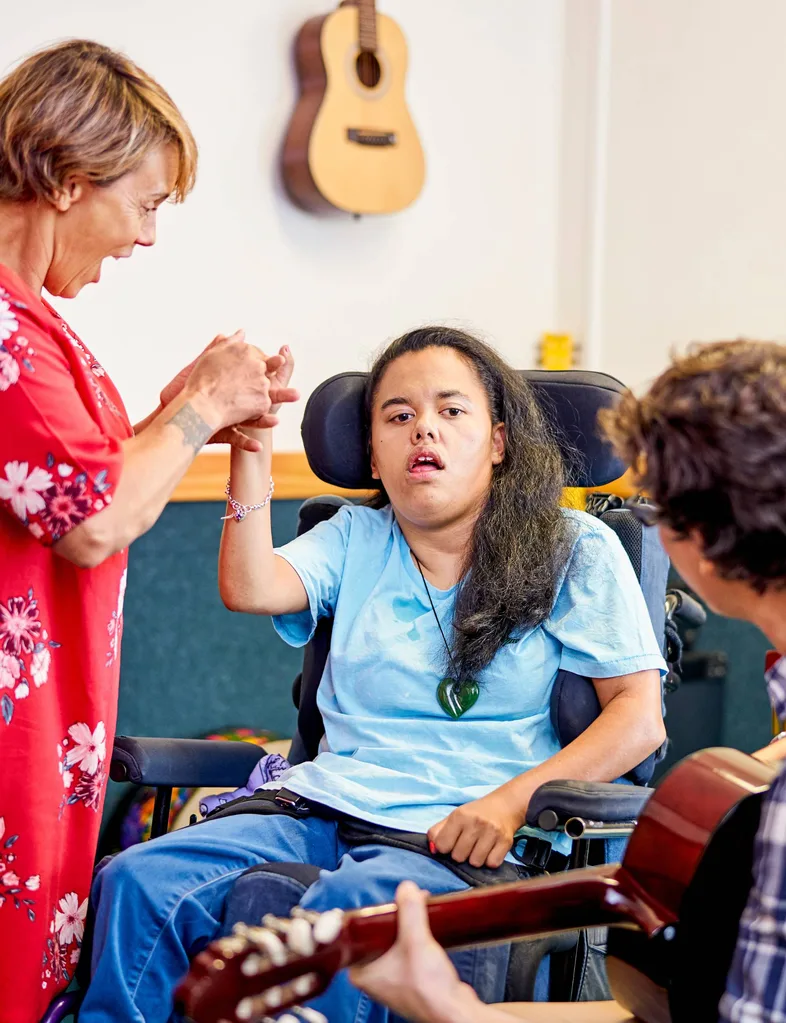
True to form, Hinewehi, who also founded the Raukatauri Music Therapy Centre in honour of her daughter, who lives with cerebral palsy, responds with kindness and grace.
“Stace has been such a champion of te reo Māori for everyone. As a second language learner like me, she knows the challenges of learning the language. That’s why she fully appreciates the accessibility to the language through waiata.”
Making waiata accessible to all
For the past six years, through her work at music rights organisation APRA AM COS, Hinewehi has also been integral in the development of Māori music. This month celebrates 50 years of Te Wiki o Te Reo Māori (Māori Language Week), and Hinewehi is excited to also be working on a new campaign with the Waiata Anthems team called Waiata in Our Whare.
“It focuses on accessibility for everyone, everywhere to enjoy and share in waiata,” says Hinewehi. “We want to showcase that ability for anyone to be a part of our choir and kapa haka of five million.”
They acknowledge singing can be intimidating but say it’s not about how skilled you are.
“We’re not all Hinewehi,” laughs Stacey.
“But it’s just a chance to get amongst it. We’ll bring the lyrics and waiata – you bring the vibes.”
Singing our way closer together
The dream for them both is that one day there won’t be a need for scheduled singalongs as it will be such a regular part of our Kiwi culture.
“I would love for singalongs to happen spontaneously,” enthuses Stacey.
Hinewehi agrees, “If we can try and form something so it comes naturally to be singing in stadiums or concerts, or together in celebration of someone or something, I think we’ll feel much closer and the world will seem a lot more intimate.”
To celebrate 50 years of Te Wiki o te Reo Māori, visit waiataanthems.co.nz

Related stories
Native ad body.

Native ad body.

Native ad body.