




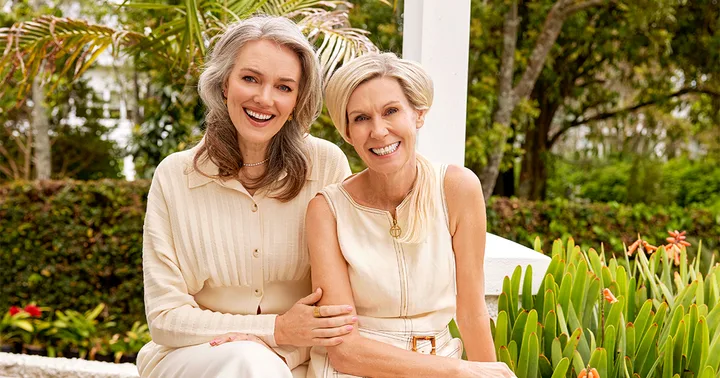
It was a stifling 32 degrees and 97 percent humidity in Thailand when Petra Bagust sat down with three teen girls while they shared personal tales of horror, hope and survival after being freed from human trafficking.
“They were so young when they were trafficked, just 14 or 15, and ended up working in a karaoke bar where the owner was violent,” shares TV presenter Petra. “A police inspector told us about seeing a motorbike driver, who was essentially a human courier, show up and take girls away. These are children being taken away and sold.”
Petra is visibily moved as she recounts the experience, telling the Weekly just how much the girls want a better life and future.
“One of the girls, Miu, said to me, ‘Don’t see us as bad children because what we need is the same as other children in this world. We want to be good children. We are like normal people who would like the chance to start again.'”
While Petra, 50, and the girls talked, their powerful exchange was being filmed by award-winning photographer Nikki Denholm, 55.
The images and stories will be used in campaigns for Tearfund NZ and at Trafficking Unlocked, their upcoming November charity evenings in Auckland and Tauranga.
Tearfund NZ assists police investigations into the criminal networks behind trafficking and slavery, and works with local law enforcement to prosecute traffickers and prevent more people becoming enslaved.
Petra and Nikki are passionate ambassadors for the organisation, and have been friends for 20 years after first bonding as new mothers with a deep desire to effect change in the world.
“While our friendship blossomed, and our daughters also became friends, we did have this bigger conversation happening outside of dance class and school lunches,” recalls Petra, who credits Nikki for inspiring her to volunteer in the fight against human trafficking.
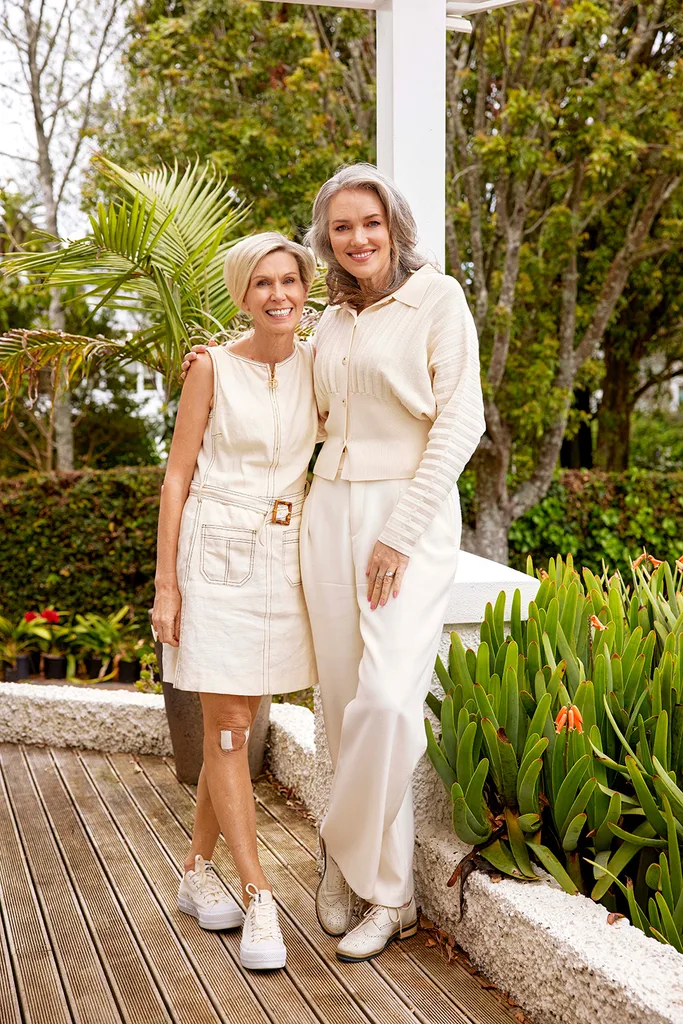
“I just feel like it’s worth the risk,” says Petra of her and Nikki’s brave work.
“I was sitting in the caravan over summer reading this book Half the Sky [about the oppression of women in the developing world] that Nikki gave me,” tells Petra, saying it made her think, “We have to take action!”
The last two decades have seen the talented friends do just that, travelling the world to bring awareness to the big humanitarian issues while juggling busy careers and lives as mums-of-three.
“Initially, it was at a time when no one was talking about it” tells Nikki, adding 4.5 million women and girls worldwide are trafficked, and only one percent are rescued. “We went to Tearfund and said, ‘Why don’t you let us go to Nepal and see the work that you’re doing in the human trafficking space?’
“That was nearly 10 years ago. The two of us jumped on a plane, pretty much on our own, and tripped around different parts of Nepal meeting women. For us, that was a really personal trip.”
They’ve now been on five trips throughout South East Asia, where they work with local partner organisations, like LIFT and Hagar. The most recent trip was to Cambodia and Thailand in August.
“We haven’t been in the field for a few years because of Covid,” says Nikki, who this year was awarded an MNZM order of merit for humanitarian advocacy and photography. “There’s been a really big shift to online grooming and trafficking, and newer trends like brides being sent to China.”
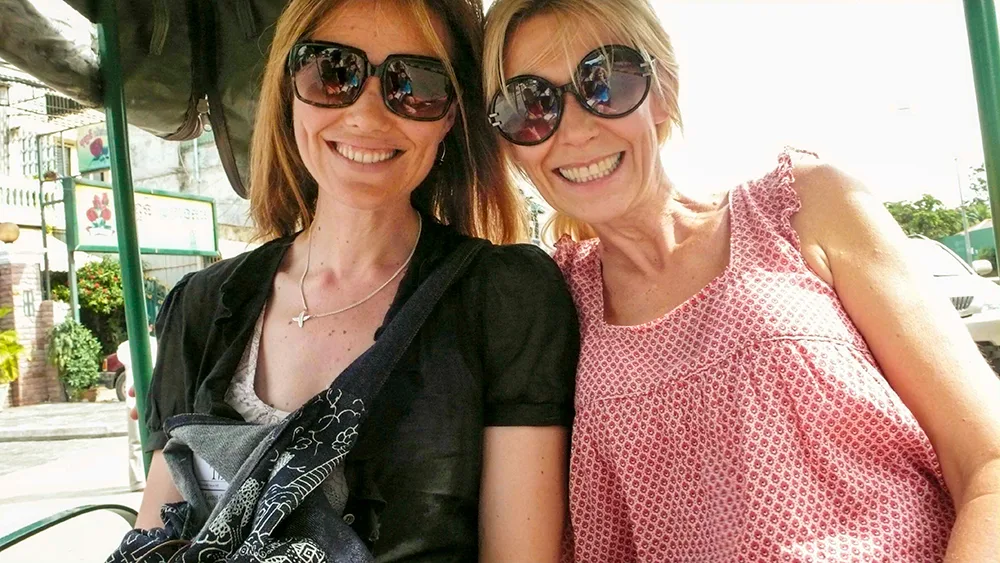
The friends in Phnom Penh in 2009.
The resilient friends have seen and experienced the unthinkable, including girls being drugged and sent by train to brothels in India, sometimes so desperate to escape, they try to jump out of the windows.
They explain that trafficking or modern slavery has many faces. Sometimes the girls are outright taken, but in other cases it’s more covert. They may be offered waitressing jobs at karaoke bars and often have struggling families to support, so the work is desperately needed. Once working, the women can become quickly trapped, either in a violent cycle where they are abused and forced into sex trafficking, bribed to pay back family debt faster or bonded to keep working to pay off a piece of jewellery.
“Gold is highly valued in Thailand and some of these women own nothing, so the idea of owning something precious and therefore becoming precious themselves makes them so vulnerable,” shares Petra.
While it can take a toll, both Petra and Nikki are committed to the cause.
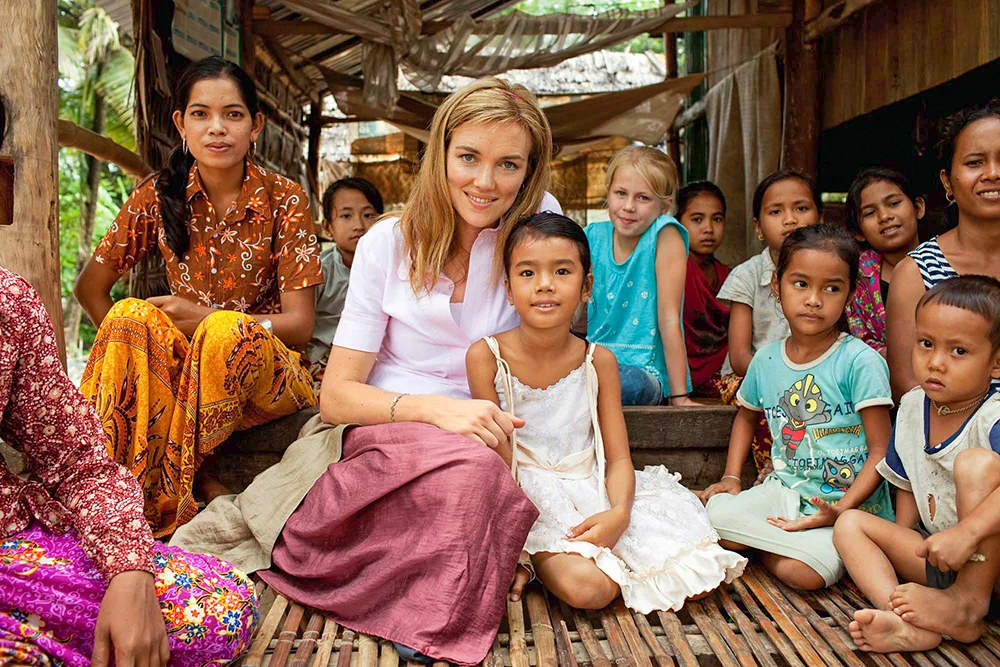
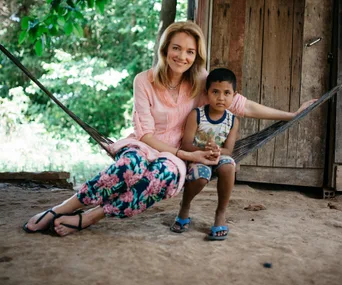
Petra in Cambodia for a child sponsorship campaign with Nikki’s daughter (in blue).
“I just feel like it’s worth the risk,” says Petra, who also hosts popular podcast Grey Areas, talking about topics that don’t get enough coverage. “We’re carrying these incredible, powerful, vulnerable brave stories back to a Kiwi audience that is brave enough to receive them.
“People have asked how I cope. Do I compartmentalise? But it’s more than that. In being willing to share some of the pain and suffering, you’re expanding yourself as a human being, extending the borders of our own lives and the boundaries of our own humanity to include the suffering of other people in other nations.”
For Nikki, it’s been a lifetime of work, using her gifts as a photographer and an activist.
“We see death, rape and horrific human trafficking, but we’re doing it because we can give a voice to people who often don’t have one,” says Nikki, who takes great comfort in sharing this journey with Petra. “And in turn, to help create funding, resources and volunteers that can prevent this happening to other people.
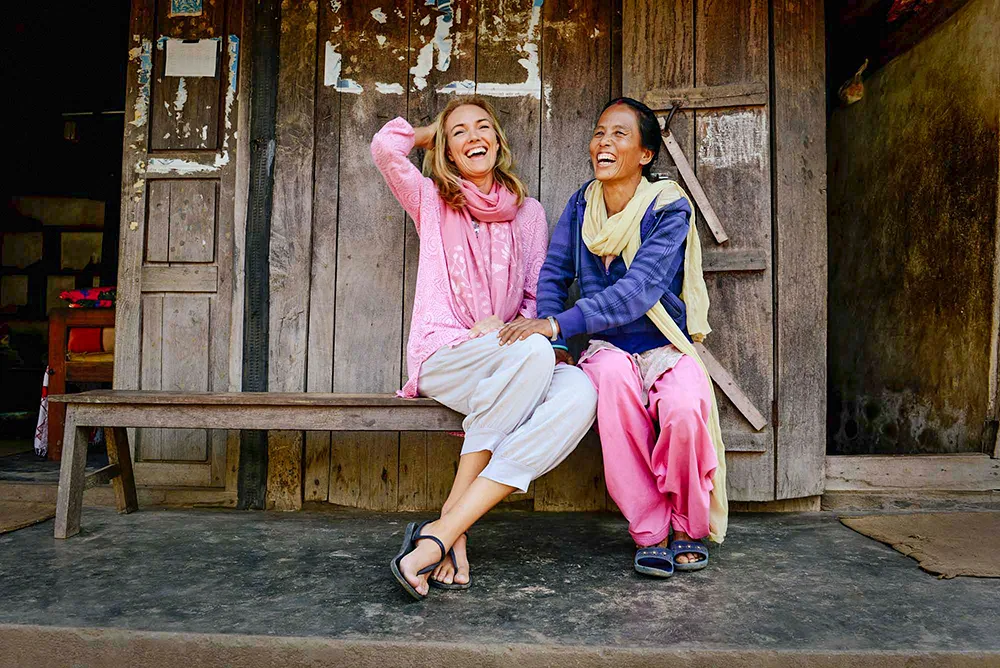
Joy amongst the pain in a village in Cambodia in 2014.
“Sometimes, I’d come home and not even want to show people photos because it can be hard and sad, and no one particularly gets it. So, to have a friend that has travelled and also seen, touched and smelt the suffering is actually just really wonderful for me.
“Petra, as the Mt Albert mum, TV presenter and podcaster extraordinaire, sitting in the slum, holding a beautiful girl’s hand while she’s telling her story of trafficking, makes these issues more personal to the New Zealand public, because they see Petra, and possibly a little bit of themselves there.”
As mothers, Nikki and Petra have made the conscious choice to share their volunteer work with their children, even taking them overseas to witness it first-hand.
“It’s been a considered part of our parenting, exposing them to a world bigger than our own,” tells Nikki, explaining her approach with children Isabella, 23, Lulu, 19, and Mia, 14. “We consider ourselves global citizens, and really important issues like poverty, refugee crisis and sex trafficking have always been part of family conversation growing up.
“Yes, it has been hard for them, and all of our kids have found it really upsetting and confronting at times, but we don’t shy away from that because it’s an important part of living in a big world.
“I think it’s made parenting easier because it’s given them a much bigger perspective, like, ‘Can I get a new pair of Converse’, versus, ‘I’ve seen a 14-year-old trafficked.'”
These pivotal experiences growing up have had such an impact on them that Isabella is studying law and focusing her honours thesis on modern slavery, and Lulu is training to be a nurse, hoping to work in the fight against human trafficking.
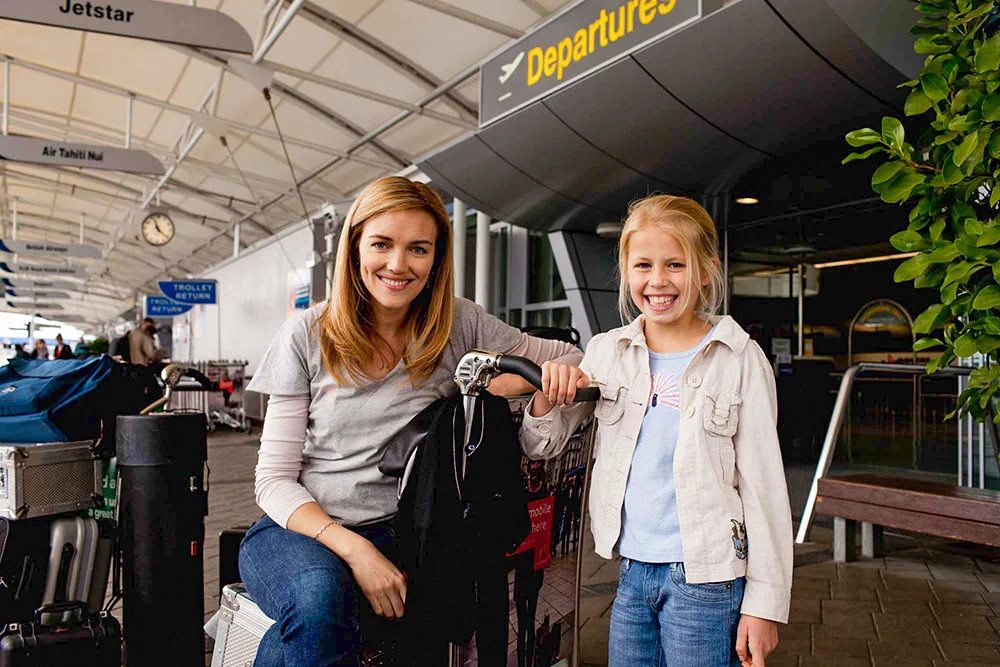
Leaving for Cambodia with 10-year-old Isabella in 2009.
Petra has taken a similar path with her kids Venetia, 19, Jude, 17, and Teddy, 15.
“In 2019, Nikki and I took our youngest children to the Philippines for a couple of weeks. We spent time living close to a slum with families that we sponsor and just being with them. Our kids helped at a preschool every day to get a sense of a world other than themselves.
“It’s easy to get into a habit of avoiding discomfort, but discomfort doesn’t reduce your life. It usually expands it. I have a very soft-hearted son and seeing children with nothing didn’t make him hard-hearted or close him up. If he sees someone in the street, he’ll still ask if we can help in some way and it draws the best out of me.”
While the work they’re doing is extraordinary, both Nikki and Petra are adamant they don’t see themselves as saviours.
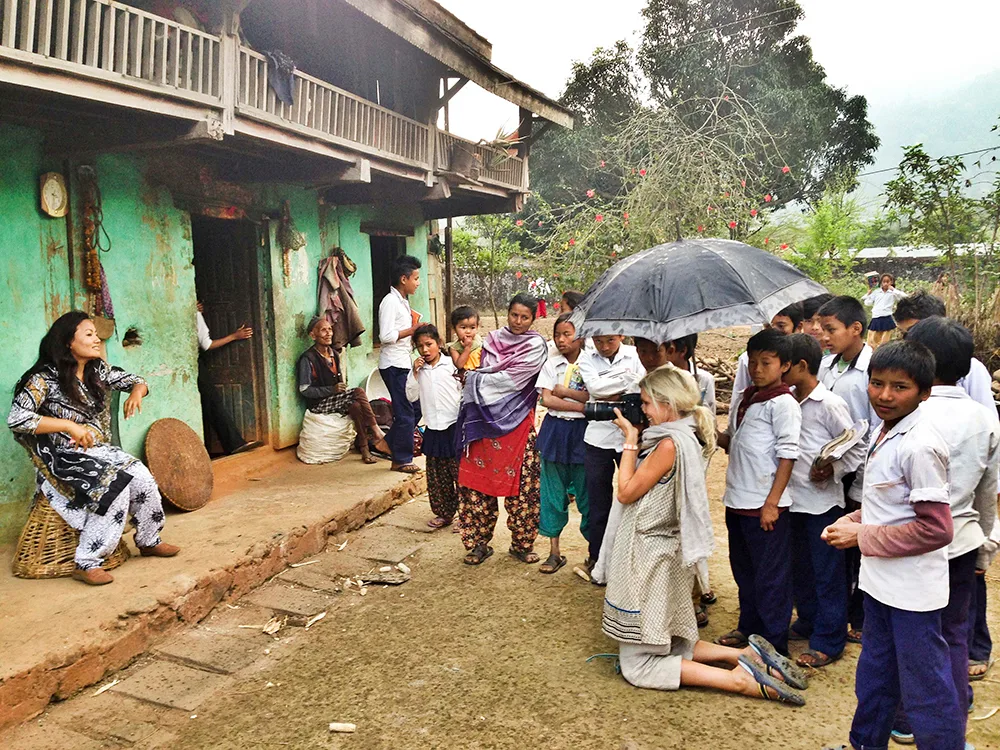
Nikki capturing her images in Southern Nepal in 2014.
“We don’t want to come across as Western women going to rescue people,” asserts Nikki, explaining charities like LIFT and Hagar support the girls into foster homes, social services and continued education and training. “Our posture is not one of fixing, but working alongside local organisations who are running ethical, community-led, best-practise programmes for the country they’re in. “We’re just a small part.”
For info on Tearfund NZ or to donate or buy tickets to Trafficking Unlocked, visit tearfund.org.nz