




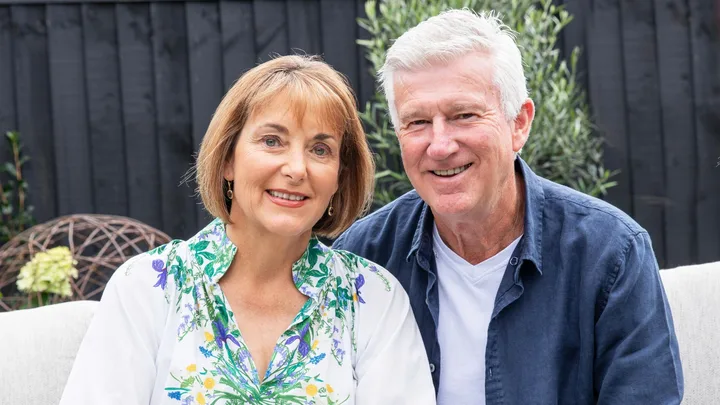
When Julie Walker stepped into her GP’s office in June 2023, she believed she was a fit and active 60-year-old, thinking about early retirement.
“I simply asked to be checked for everything while I still had medical insurance,” remembers Julie, now 63.
Instead, a series of unexpected blood test results led to a shocking cancer diagnosis that would eventually see her use her savings on potentially life-extending CAR T-cell therapy in China.
“I had no symptoms and no warning signs when I went to the doctor,” says Julie.
“Yet one month later, I was having a CT scan, bone biopsy and on my birthday, a chemo-training session, having just been diagnosed with stage one multiple myeloma [a blood cancer that develops from abnormal plasma cells in the bone marrow]. “The pace from there was relentless,” she tells.


“I was immediately put onto chemotherapy pills and injections, plus steroids for six months, in preparation for a stem cell transplant in February 2024. “I expected, like most patients, that this [stem cell transplant] would buy me roughly three years of remission. Instead, I got six months.”
Trying Daratumumab
The next option was trying Daratumumab. While the drug is free in 49 other countries, it is not funded in New Zealand.
“Six months of treatment cost us $80,000 – money that wiped away any hope of retiring early at the end of 2023,” Julie explains.
Once again, the results weren’t as good as hoped and it felt like her options were running out. That’s when she heard about CAR T. The therapy treats cancer by extracting a patient’s own immune cells, also called T-cells, from their blood, genetically modifying them to identify, attack and destroy cancer cells, then returning them to the patient.
Funding the treatment
Initial research suggested it would cost upwards of $380,000 to access in China. So Julie set up a Givealittle page to raise funds and withdrew savings. Friends also helped with fundraising.
“I did worry about the money,” she admits.
“If I died, I still wanted my husband to have enough for a good retirement. But I asked my specialist at the time, ‘If I do nothing and take nothing, how long have I got?’ And he said, ‘Possibly, 12 months.’ I felt too young to die. I have a lot more I still want to do, so that was our decision to carry on.”
Several Kiwis who had already travelled overseas for treatment reached out to share their experiences.
“Their reassurance made an enormous difference,” says Julie.
CAR T trial in China
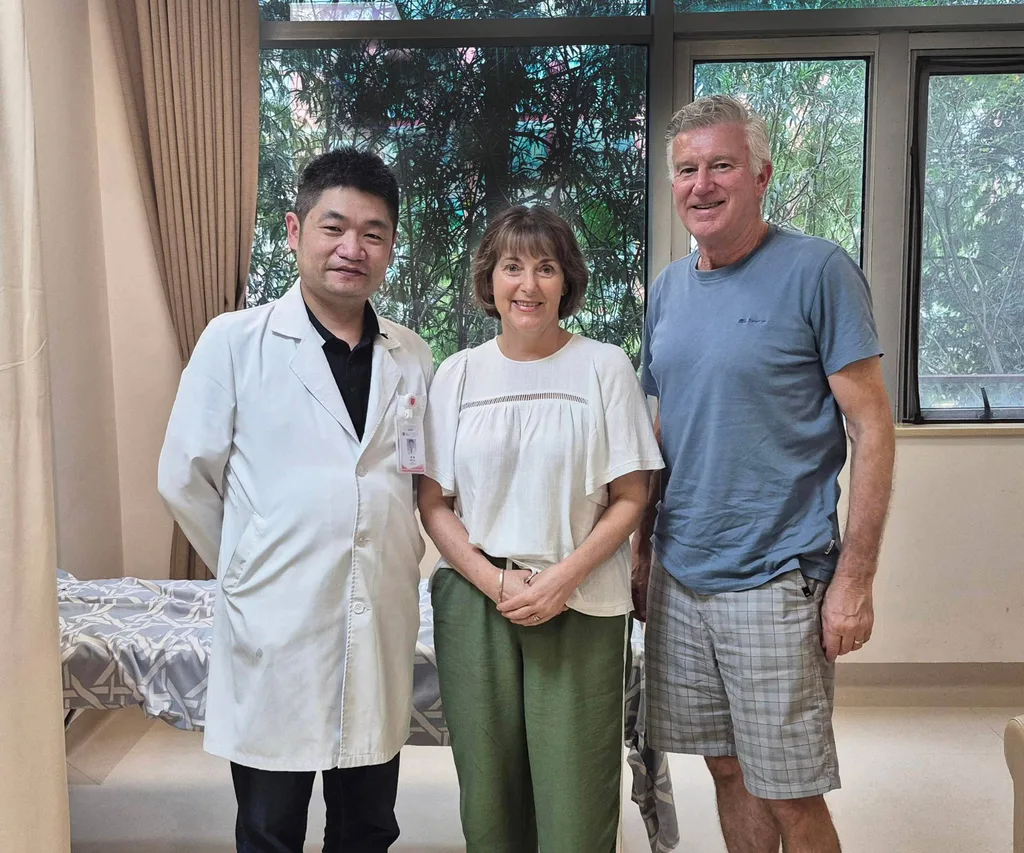
One former patient alerted Julie to a specific CAR T trial in China, which cost significantly less. After being accepted into this trial, she arrived in Shanghai in August 2025.
“I had an overwhelming blur of tests and the harvesting of my T-cells, which were then sent to Beijing for modification,” she says.
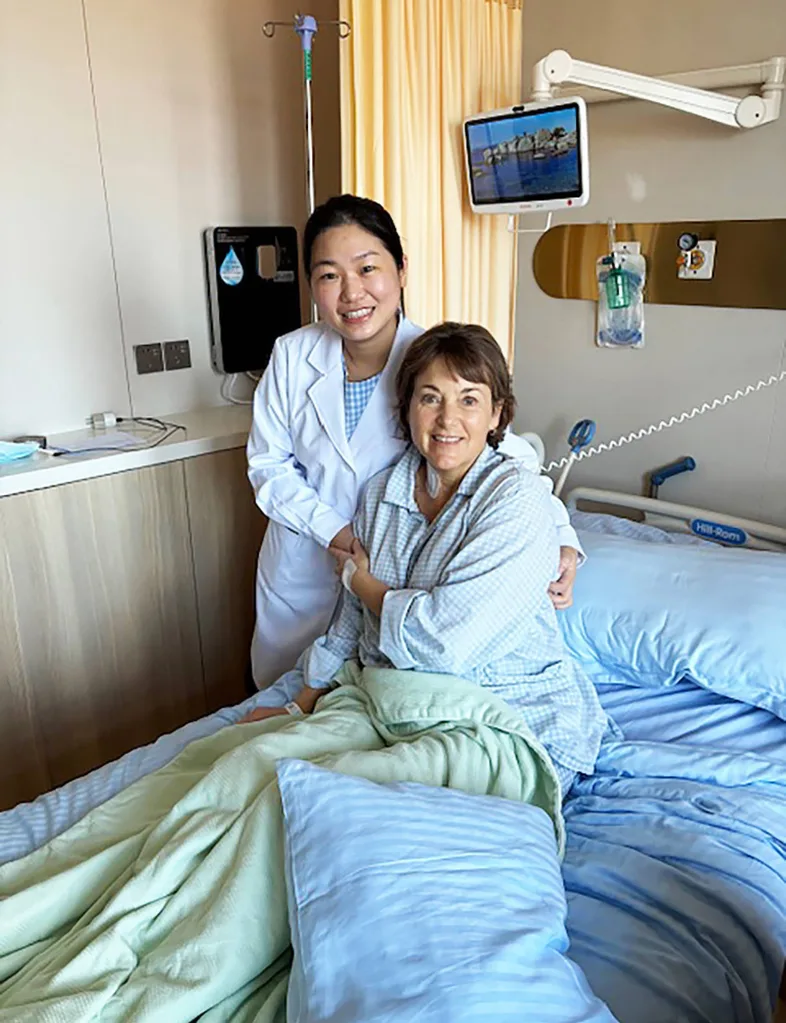
Receiving the CAR T infusion
The following week, she received the infusion of her engineered T-cells. Julie remembers being constantly monitored as she experienced side effects, like fevers post-infusion. But the results were remarkable, with her light chain numbers – the cancer marker used to track multiple myeloma – dramatically dropping with each blood test.
“By day 30, they were 0.63,” shares Julie, who is still incredulous.
“I was in deep remission.”
Throughout treatment in China, Julie’s husband Craig, 64, was always by her side.
She enthuses, “He became my everything – the bill payer, clothes washer, food maker, advocate, watcher, encourager and comforter. The experience took just as much out of him as it did me. He was my lifeline.”
Life after CAR T
Julie has more engineered T-cells stored in China, but is hopeful the treatment will give her three or more years of remission. Multiple myeloma is currently considered incurable but treatable.
“I’m back playing tennis and walking again,” she shares.
“I enjoy spending time with family and friends, and some days I don’t even think about it. My quality of life is pretty damn good.”
For Julie, the message is simple.
Advocating for CAR T access in NZ
“CAR T has given me more time,” she reflects.
“Every New Zealand multiple myeloma patient deserves the same chance. But a lot of people can’t afford to go – that door is shut and their lives are shortened.”
The Malaghan Institute of Medical Research is working to change that. The Wellington-based charitable organisation is running a CAR T clinical trial for B-cell non-Hodgkin lymphoma, another type of blood cancer. The goal is for CAR T therapy to be funded through the public system in the future.
This April, the Go The Distance campaign encourages people to walk, run, cycle or swim to raise funds for the Malaghan Institute’s research and clinical trial. It’s an initiative Julie wholeheartedly backs.
“If CAR T were available as part of New Zealand’s public health system, Kiwis wouldn’t be dying early because they can’t afford to go overseas,” she says.
To donate or get involved, visit donate.malaghan.org.nz/event/go-the-distance/home