




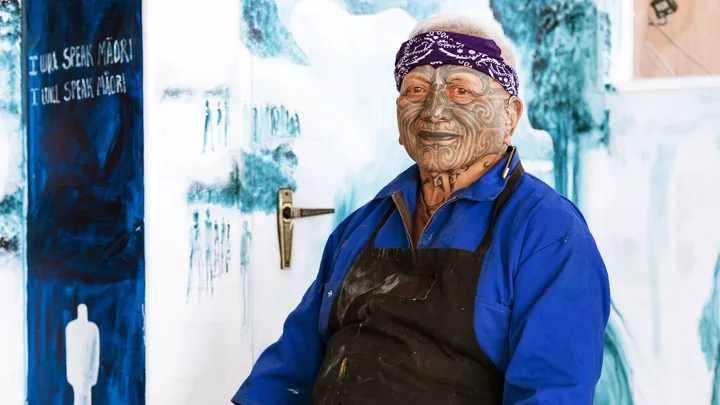
 Photography: Alice Veysey
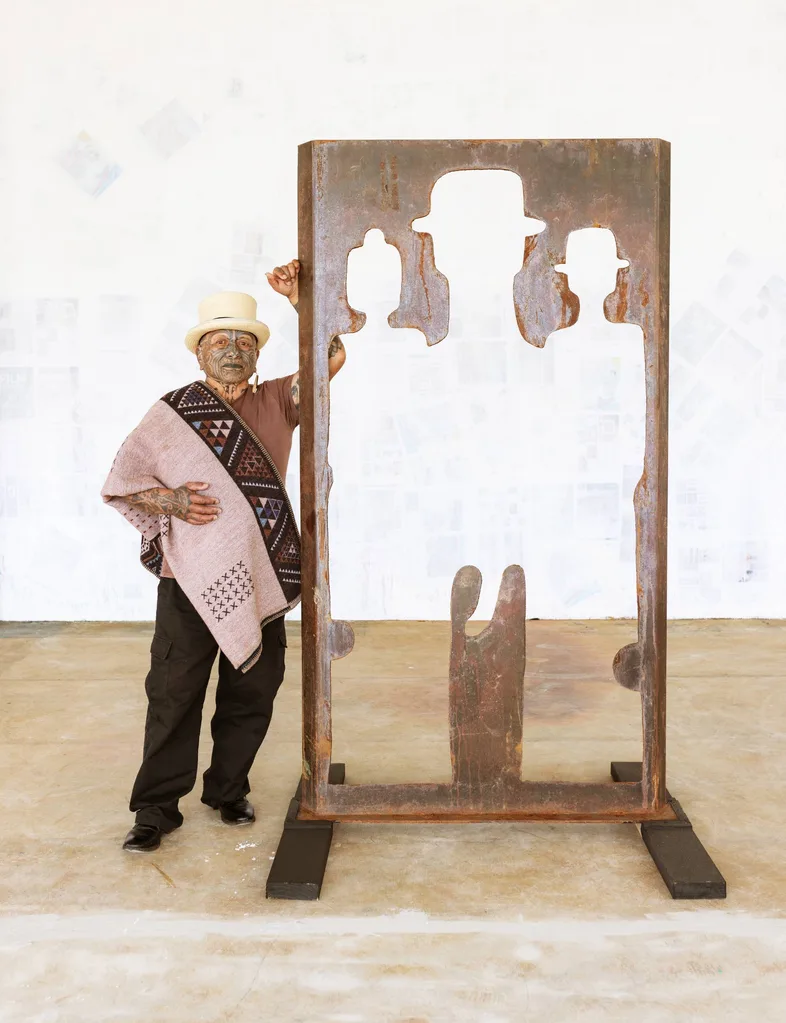
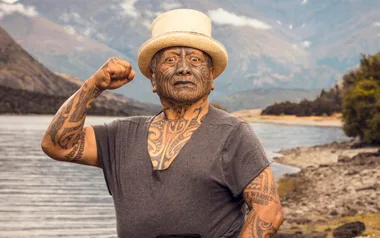
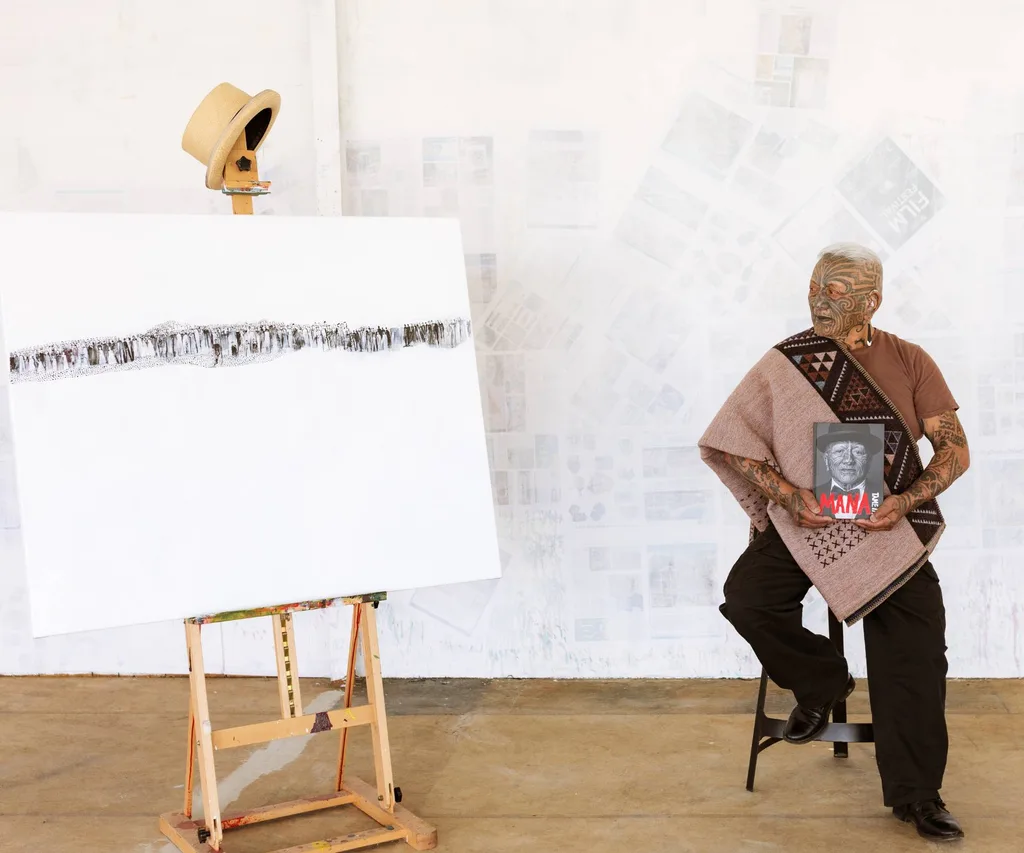
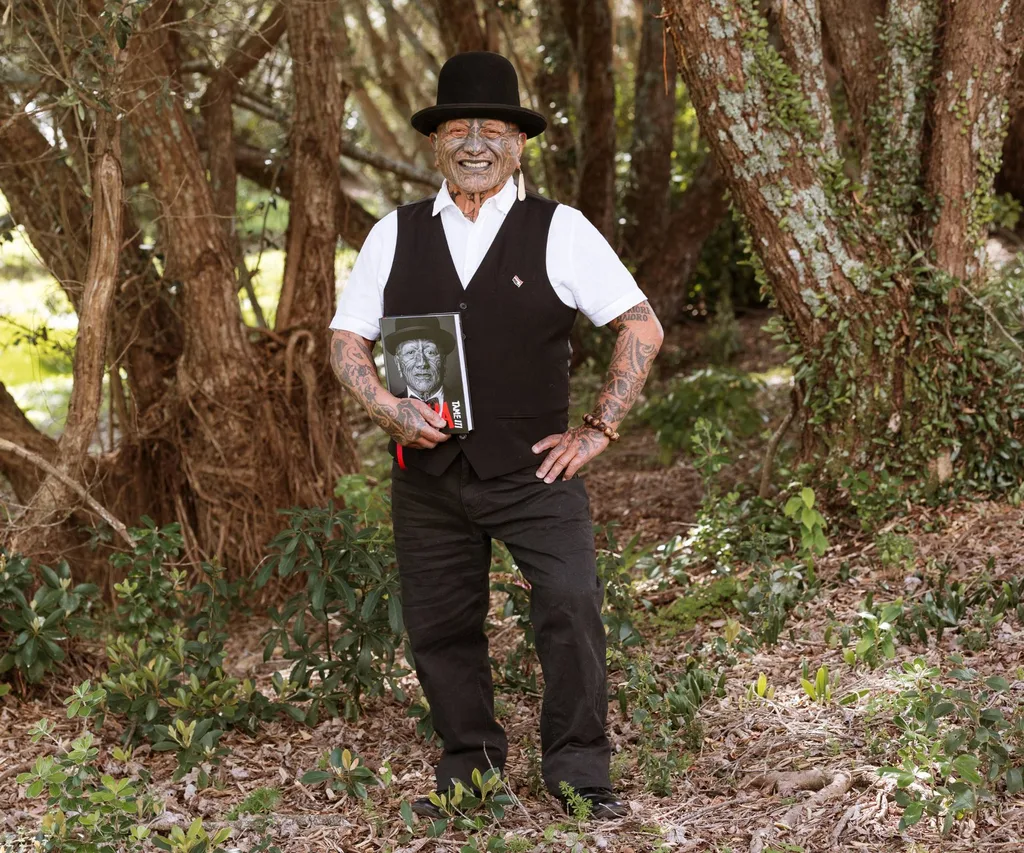
Tāme Iti (Ngāi Tūhoe) is an activist, an artist and an icon. To reflect on his rich life, Tāme has written his long-awaited memoir. With tales of growing up in Te Uruwera, of being barred from speaking te reo Māori at school, and his evolution as an activist and an artist, he writes of marching in support of land rights in the 1970s, to protesting against war, apartheid and colonisation. Mana is a wise, dignified meditation on identity and the quest for justice.
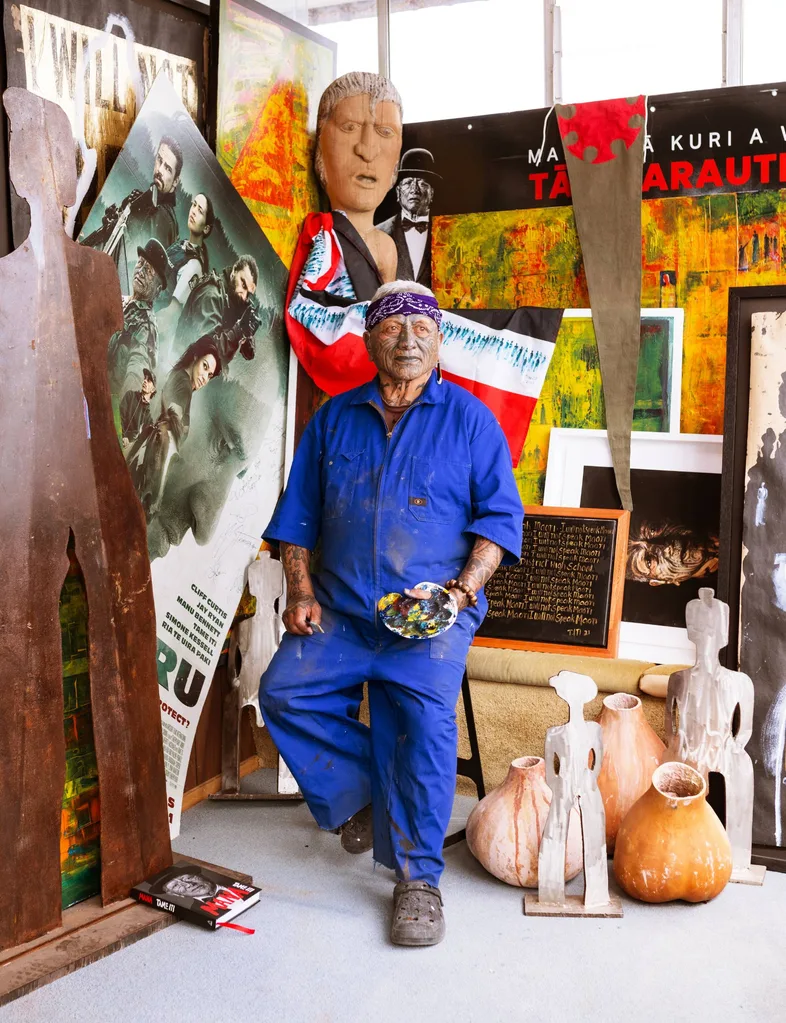
I was two when I was left at the house of the old couple who brought me up.
It was 1954 and Te Pēku and Hukarere Purewa found me on the table in a nail box when they came in from milking. That’s how my koro, my nanny, and I came to raise me, and they were my Mum and Dad until they passed.
I’ve known all the nooks and crannies of Ruatoki since I was a boy.
I know where the eels are and the eggs, and where to graze horses and cows. More than just hills and farmland, the marae and the maunga [mountain] – this landscape is an intricate, intimate part of me.

Even though our principal was Māori and a relation, he told us we couldn’t speak te reo Māori at school.
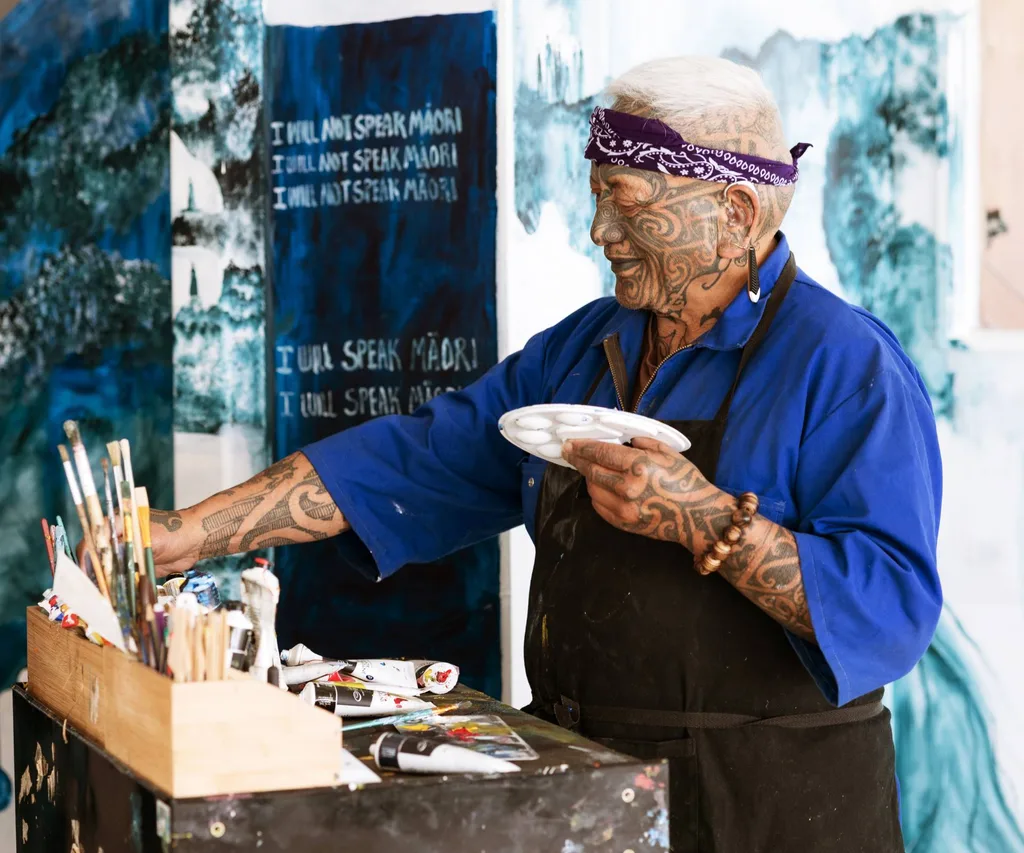
But a small group of us decided to talk about Peyton Place in te reo because television had just come to Ruatoki. For our punishment, we were given two choices: to pick up horse and cow manure or write 100 lines on the blackboard: ‘I will not speak Māori’. Which was the punishment I chose. When I told the old man what happened at school that day, Dad just said the teacher was the rangatira [chief] and we had to do what he said.
Years later, when I thought about writing those lines on the blackboard
I will not speak Māori – that’s when I got canvas and paper, and started writing those words again. I realised that was going to be my artwork. That I would share my experiences and by telling that story, I could process things. You could say art saved my life.
I was the old fella Te Pēku’s tonotono.
Like his errand boy or messenger. He was tough on me too, and he could be ferocious and violent, but there were elements in him I really admired, so I learned some of his ways, and some of them I gave away.
Te Pēku sometimes took me to the confiscation line.
He’d sit and have a cigarette and talk to me. One kōrero was about how my great- uncle Ben was murdered on the confiscation line. It was around the time of the First World War and Ben was just a boy. He’d gone to the water trough for a drink and the farmer shot him. Back in those days, a Pākehā could shoot a Māori kid and get away with it by saying it was an accident.
When I was 15, some characters from the Second World War came to our school.
They worked for Māori Affairs and told us about job opportunities. This is back when you could leave school after fourth form. I knew I wanted to get away from getting up early to milk cows, so I put my name down for forestry and panel-beating, but I was selected to go to Christchurch to do interior decorating. I didn’t even know what interior decorating was, but I knew it wasn’t milking cows.

In Christchurch, my brain got hungry.
I didn’t sleep because I couldn’t wait to go to school and learn everything there was to know about interior decorating. The history, the background, the chemistry and science. We learned how paint was made. The first 15 years of my life I’d learned how to fish and catch eels, how to kill chickens and pigs, but this was another layer and it opened a new part of my brain.
The book isn’t just my life – it’s the story of so many others.
From living in the village, to all the people I hung out with over the years. Like Dick Smith, the Pākehā I ended up flatting with. Dick got our lease so the landlord didn’t know there were brown people moving into his house. Dick was the face of our flat and he was the best Pākehā.
I was 21 when I decided to hang out with my dad.
It didn’t last two weeks, but I had a go. I see now he was afraid and at the time it made me angry with him. Years later, I realised it was the effects of colonisation. How the subtleness of colonialism fell upon people like my father. My father was scared as hell of Pākehā ways. He didn’t want to cause trouble and that was the big conflict between me and my dad.
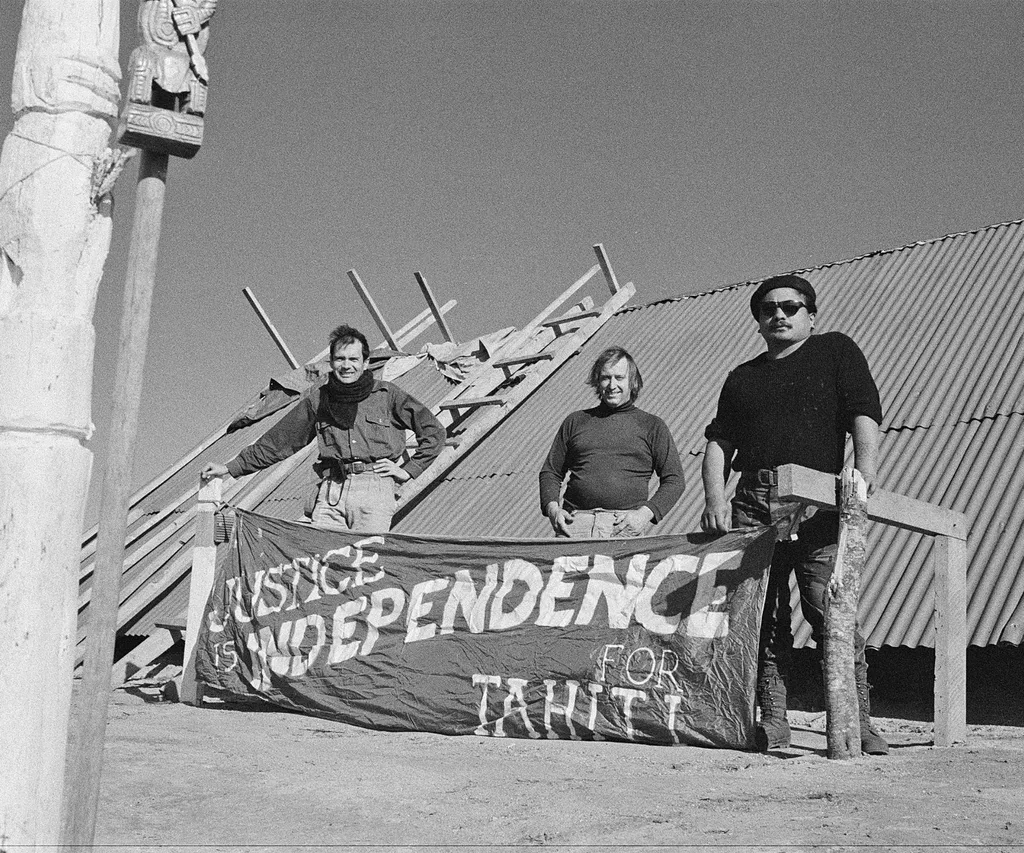
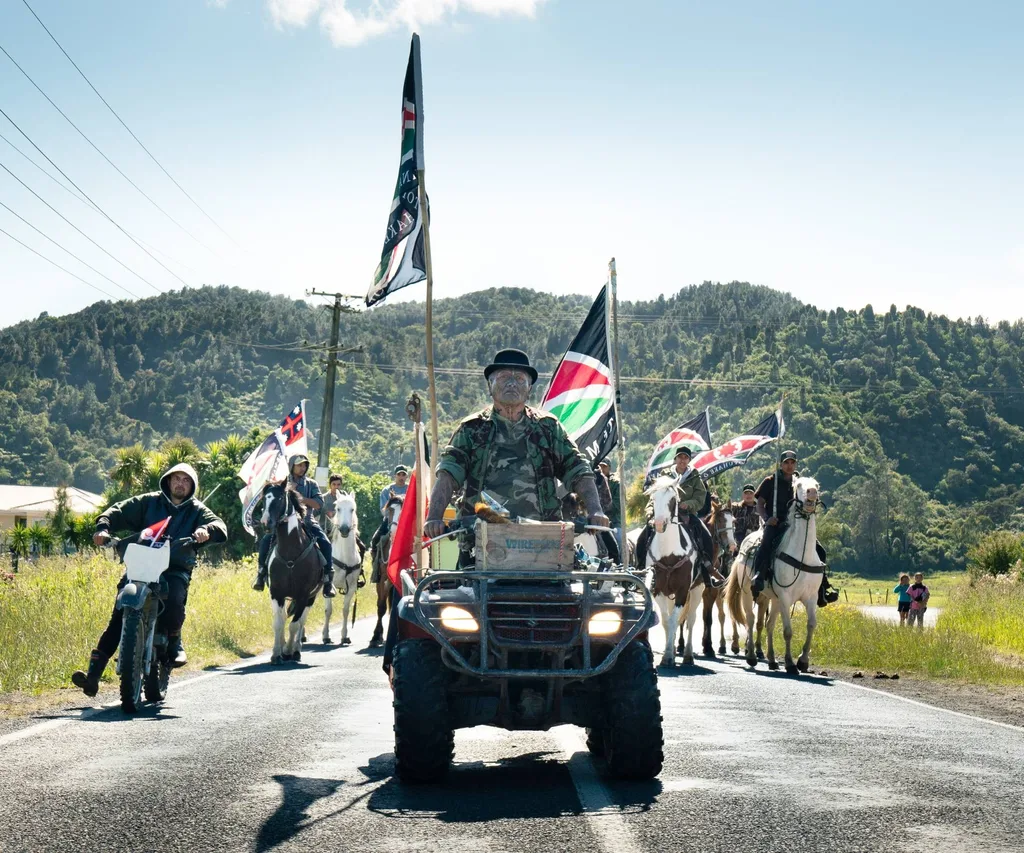
In the early 1970s – back when I pitched my tent at Parliament – I also hung out with James K. Baxter.
I first saw him at an anti-Vietnam War rally in Christchurch. He had long hair, a long beard and he was very dirty. He looked like he hadn’t washed for days, but when I heard his kōrero, what he said was profound. I really liked how he spoke about war, killing and imperialism. The way he talked felt like a whole new language because by that time, I really understood English and I loved it.
James K. liked his whiskey and women, but he also looked after a lot of old Pākehā guys – street people.
I learned a lot about giving support from him. I also came to believe in all of us pulling together for the benefit of the human race. We’re all part of it. Which is why I’m very much a socialist today, whatever that means.
I had a go at politics in my younger days.
We had a small group around the motu [country] called Ngā Tamatoa and the most interesting kaupapa [topic]for us was the reo, and the return of the stolen land. But politics isn’t me any more. It takes a lot of energy. Now I just want to have space to do beautiful things and I wish people wouldn’t be arseholes to each other when we have different opinions or do things differently.
I’ve dealt with various addictions.
I didn’t drink for years and to deal with my addiction to cigarettes, I bought my last packet in 1982. I used to smoke menthol and I bought a pack of 25. Then I went to the confiscation line and I had a good talk to myself, then I threw that packet away. That was my way of letting go of a bad colonial habit.
Prison is a very inhuman place where people are locked up in cages like animals.
Every day they touch you. They feel you. They take off your pants to see if you’ve got anything hidden. It’s pretty out of it. It took me a while to breathe in and breathe out, and to go through that process. But it was an interesting period where I learned to navigate their system. To work for them, for it to work for me. So when the screws asked, ‘Can you do this or do that?’ I’d say, ‘Yes, I will go talk to those fellas if I can have some canvas and paint,’ because I wanted to paint at night. Painting was my escape and with each stroke of the brush, I could breathe a little better. I was given two and a half years for the Tūhoe raids, but in the end, I only did nine months. Some of those guys I was in with in 2012, they’re still inside today.
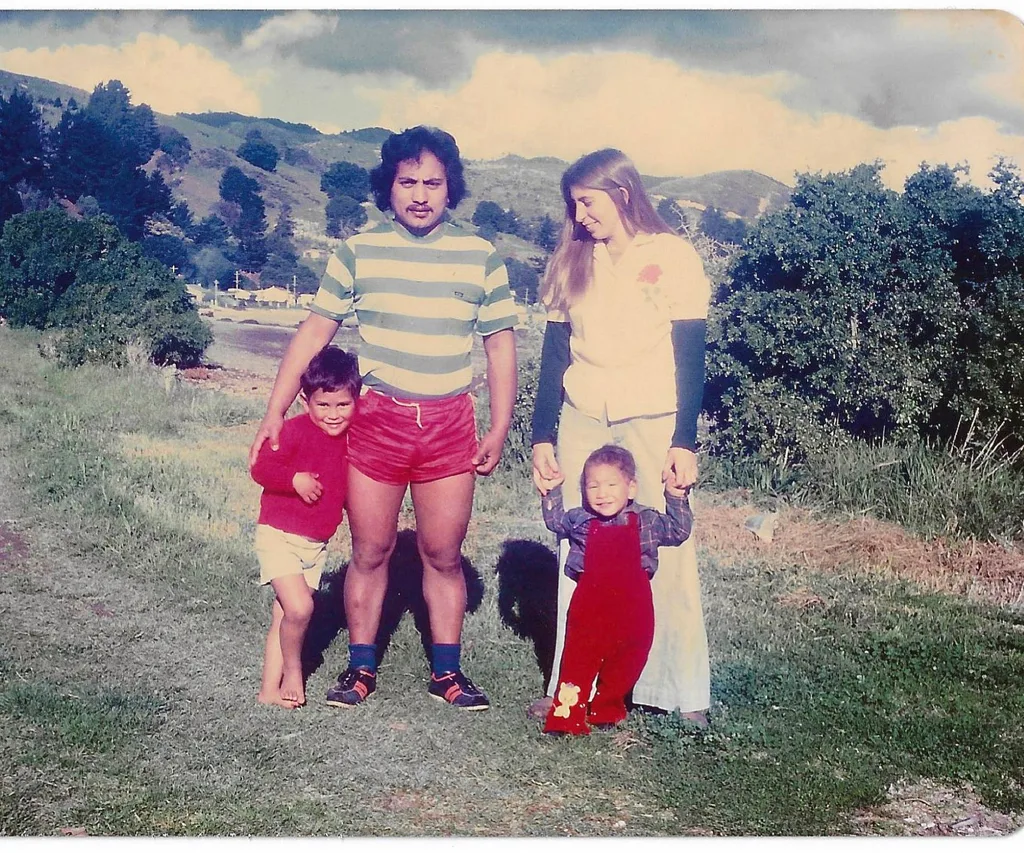
There are many layers to my life, but what I find most magical is the next generation.
My children, Toi, Wairere and Ikaroa, my mokopuna and all my nephews and nieces. They’re all amazing and having that relationship with whānau is massive for me. It’s interesting, too, to be back living in the village where I grew up and going through to Ātea in Whakatāne to do my artistic mahi [work].
You get to 50 and think ‘Yeah, I’ve got it.’
Then you get to 60 and say, ‘Ah, now I know.’ Then you reach 70 and you really think you’ve got it. I can be quite hard on myself, but now I know what freedom is. It’s being able to do the things you want to do because we all spend so much of our lives doing everything for everybody else, we often don’t put enough time into ourselves. That’s where I am now and still so much I want to do.”
To order a signed copy of Mana with a personalised message directly from Tāme, visit tameiti.co.nz