




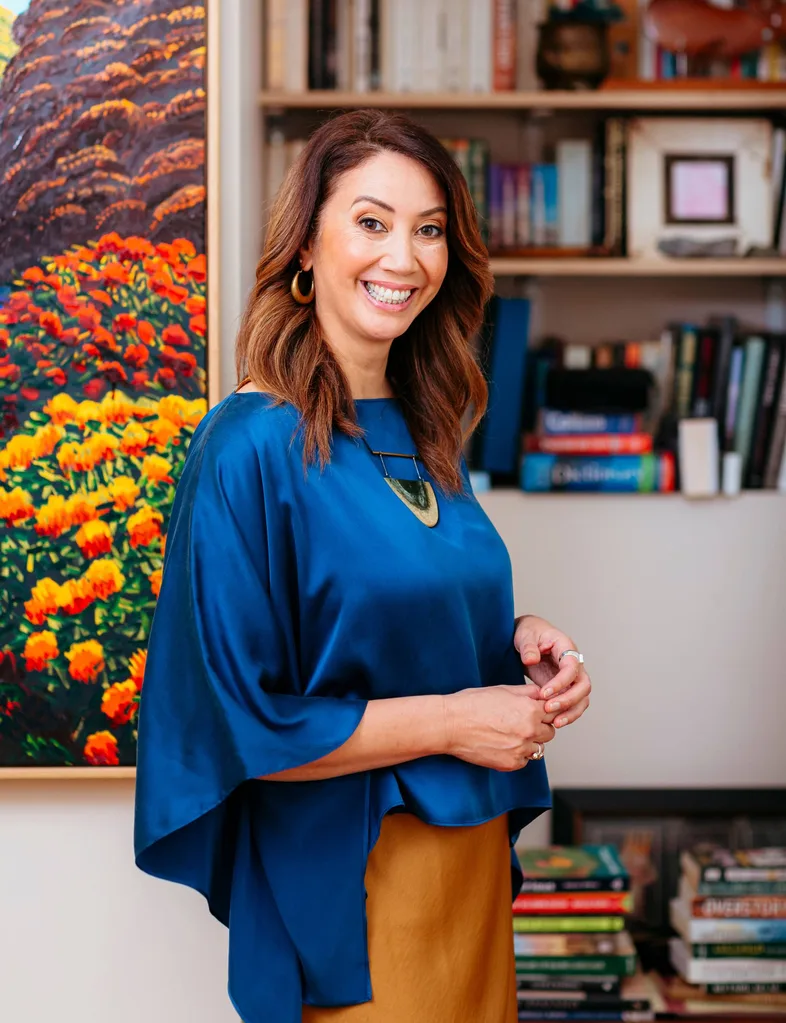
As Matariki returns, Miriama Kamo has plenty to reflect on and celebrate. She’s releasing a documentary and a book, and in the middle of writing another one. There’s a podcast in the works, and in the pursuit of health and wellbeing for her fifties and beyond, she’s signing up for her first duathlon.
It’s also a time of year when her late father Raynol is top of mind.
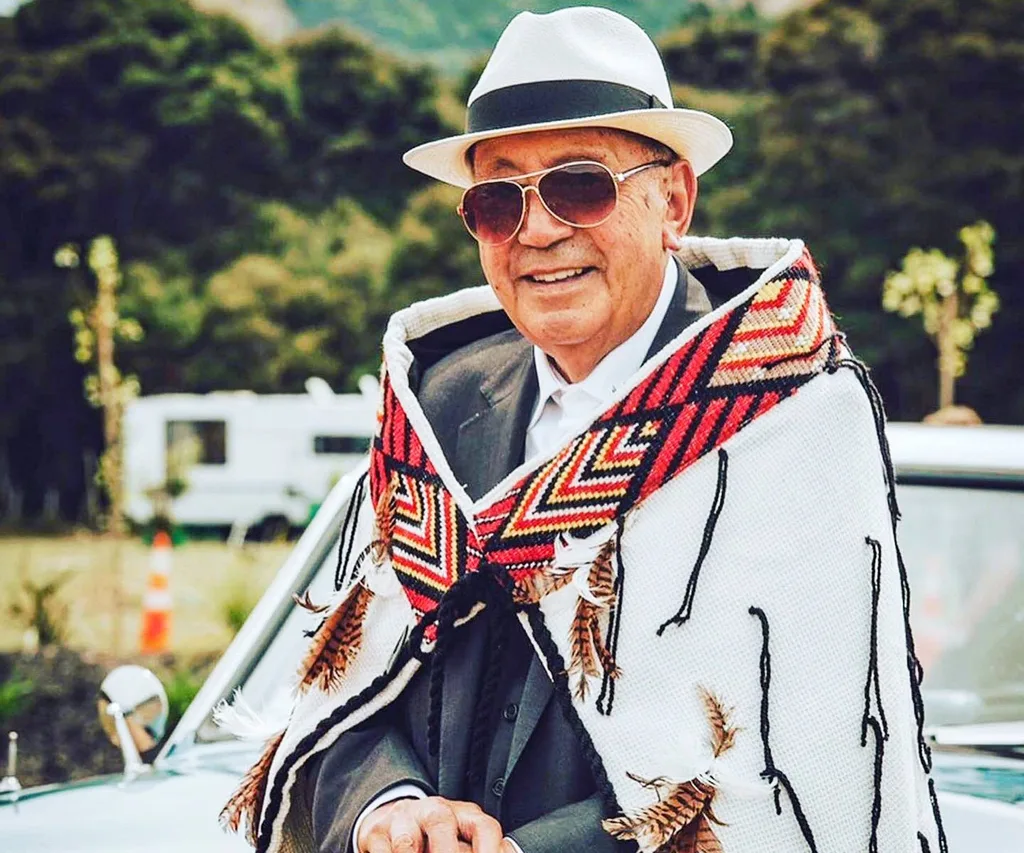
“He was a real gentleman, but he also loved to be funny, put on silly voices and dances,” recalls Miriama. “This was a side of him that really only his kids, and his nephews and nieces, got to see. He loved to crack us up.”
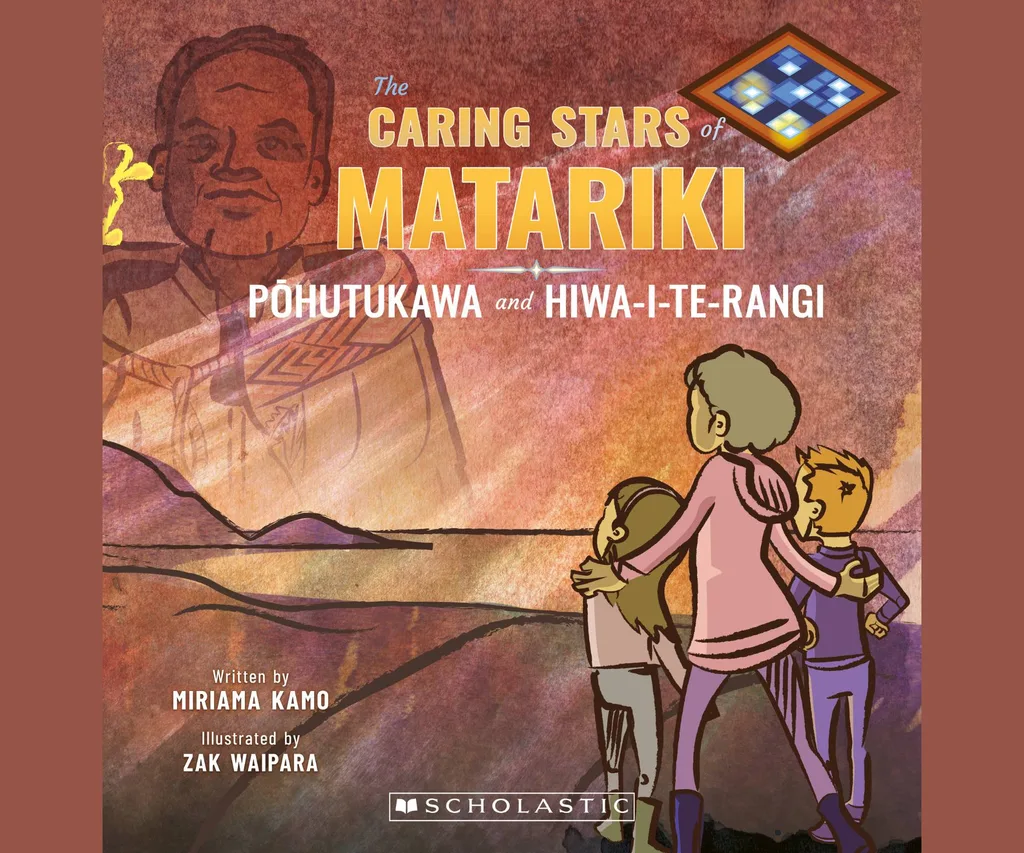
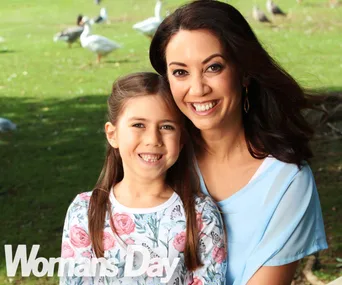
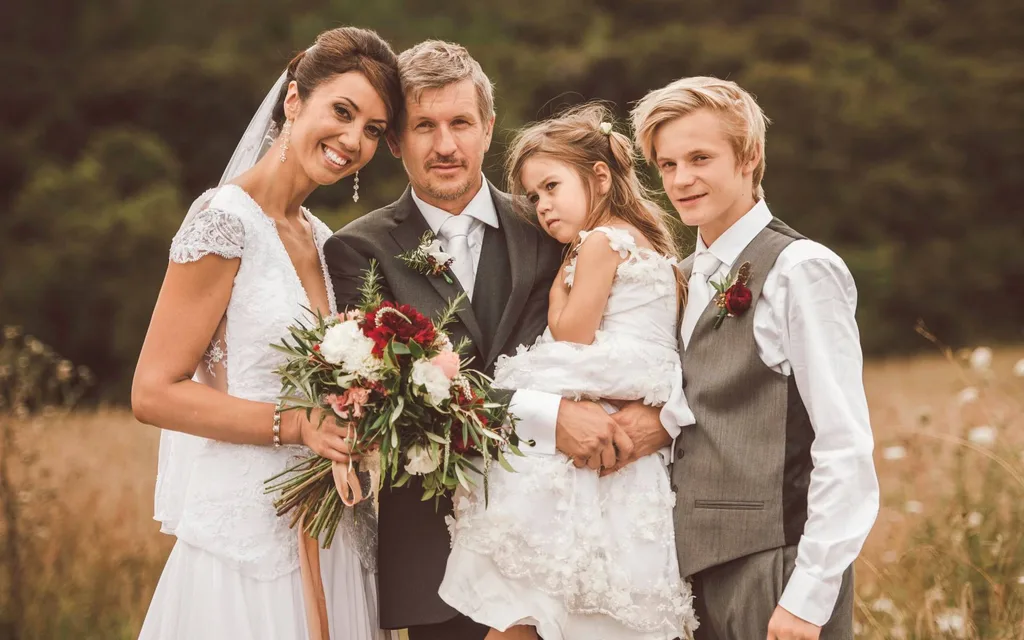
The final book in her children’s Matariki series, The Caring Stars of Matariki: Pōhutukawa and Hiwa-i-te-rangi, is in many ways a love letter to her father and family. The characters depicted are based on her parents Mary and Raynol, and her children, daughter Te Rerehua, 14, and stepson Sam, 25.
A love letter to family
Raynol passed away in 2021, aged 88, during a level-four lockdown. At the time, restrictions severely limited funeral and tangi proceedings. Not being able to grieve her dad with the wider whānau and hold a tangihanga took a real toll on Miriama.
“I was thinking a lot about my own dad as I wrote it,” she shares. “I wanted to write about something real and what is as real as life is death… Because my dad had passed, it made sense to me that Pōua [the grandfather in the story] should pass as well.
“My mother, who is still very much with us, is a stoic and loving person. In the book, you see her sharing the mātauranga [knowledge] she knows to help the kids move through that sense of loss and grief.”

Every year during hautapu, a traditional Matariki dawn ceremony offering kai and karakia to the stars, people call out the names of loved ones who’ve passed during the year to Pōhutukawa, the star responsible for looking after the dead.
It’s a ritual that brings Miriama great comfort.
“In remembering my dad, it’s not about saying I’ve lost him. It’s about saying I’m still connected to him.”
She hopes her latest book will offer others gentle ways to navigate grief through an ao Māori lens.
“I wanted to provide a reminder for every kid who reads this, and every whānau member who reads it, that we have this beautiful framework we can use when someone passes that helps keep us connected to that person forever.”
Learning from the land
Set at Te Mata Hāpuku, or Birdlings Flat in Canterbury, the story draws on memories of Miriama’s childhood summers spent there learning to read the land and sea. After the Christchurch earthquakes, her parents moved to the tiny settlement full-time.
“When we were growing up, there wasn’t even a TV – just a radio – so we were always running around outside, playing and getting in rhythm with the environment,” reflects Miriama. “My dad was the teacher who wanted to make sure we knew how to fish and go eeling. He wanted us to know the mātauranga he’d been raised with around mahinga kai [gathering food].”
Her children have also spent time there, though Miriama says their bond with the place doesn’t yet run as deep as her own.
It’s something she hopes to change.
“I really feel the call of home very strongly,” admits Miriama. “Part of that call is making sure my children deepen their connection to the whenua [land] and to their whānau. At some point, we want to move back down or at least have a place near our marae.”
Growing older, living better
In thinking about death, Miriama is also more aware than ever about how she wants to live.
“I’m 52 and I’m so incredibly lucky to have gotten this old,” she smiles. “Now I want to honour the body I’ve been given for the rest of my life.”
So, despite being a self-proclaimed exercise hater, she’s determined to discover the most well and healthy version of herself, even if that means leaving the comfort of her beloved bed to literally walk the talk.
“One of the best things my doctor said was, ‘Okay, you hate exercise, fine, stop trying to enjoy it and just do it anyway.’”
Laughing, Miriama concedes, “I don’t like that advice, but she’s right.”
Rising to the challenge
Somehow, she’s even found herself agreeing to compete in Iron Māori in Napier this November. The multisport event offers triathlon, duathlon and AquaBike (swim and bike) options.
For her first outing, Miriama has chosen the duathlon, where she will bike 50km, followed immediately by a 10.5km run.
“Truthfully, I was in bed when I got that wero [challenge] and decided to accept,” tells Miriama.
“I’m realising the older I get, how fun ageing is. You stop caring about what anyone else thinks, and start really caring about the fun and opportunities in life.”
So far, Miriama has started walking regularly, is attending F45 group fitness classes and is planning to work with a personal trainer.
She’s always accepted her body at every size and weight loss doesn’t motivate her, so in the past, Miriama shares it’s been hard to really commit to health goals.
“I can’t be bothered losing weight and I don’t really care whether I’m fat or skinny.”
But the idea of embracing life to the fullest at every age in a strong body, that’s something she can get right behind.
“For as long as I get the privilege to be alive, I would like to live with some clarity, health and well-being. I’d like the opportunity to be able to run around with my mokopuna one day, cuddle them and be a wise pou [pillar] for them. The way that I currently live, that is less likely to happen, so I’ve got to get off my butt and actually make some changes.”

A story worth sharing
With her characteristic honesty, Miriama is sharing the ins and outs of this journey on her social media.
“I don’t want it to begin and end with me,” she muses. “I want it to actually be of some use – that’s the way I was raised. We were brought up to be of service. It’s a core value for me. I think about it all the time. How can I be of service? How can I be useful? That drives my entire life.”
As she chats to the Woman’s Weekly, Miriama realises that up until now, she’s been driven by creative and intellectual aspirations as a storyteller and broadcaster. But she’s curious what she could be capable of physically, not just now but into her sixties, seventies and beyond.
Miriama remembers attending the 2017 World Masters Games and seeing 101-year-old woman Man Kaur from India win gold in her age group’s 200m race.
“I feel emotional thinking about it now,” she shares. “She travelled across the world to take part in this race with her walker. The whole stadium was on their feet and I was bawling my eyes out. It was one of the most inspiring things I’d ever seen. I’ve never thought about it before, but could that be me? Could I do that?”
Alongside her wellness goals, Miriama is also working on a women’s health podcast she hopes to release later this year.
“It’s separate from what I’m sharing on socials, but I want to connect wāhine, in particular, with useful, evidence-based strategies for living well in middle age,” explains Miriama.

New projects ahead
She’s also excited about the release of the documentary she co-produced with her friend and business partner Julia Sartorio during a trip to Antarctica.
Ranginui: Call of the Ice follows celebrated Māori astronomer Rangi Matamua and language expert Mataia Keepa as they observe the stars, and apply mātauranga Māori to the southernmost place on Earth.
It premieres this July at the Doc Edge festival and will also be screened by TVNZ, RNZ and Whakaata Māori.
“Every single person that’s been involved has imbued themselves in the documentary and we just feel so incredibly honoured by having been able to be on this journey,” says Miriama.
Then there’s the new book she’s in the middle of writing – working title Wāhinetanga – about what Miriama calls the four Ms: menstruation, motherhood, miscarriage and menopause from a Māori perspective.
The research has been both illuminating and at times painful, uncovering how much wisdom around women was lost during colonisation. But the overarching feeling, she says, is one of excitement and reclamation.
“For me, it’s a reminder of who I am and what we are entitled to, and what should never have been taken away,” shares Miriama.
“The mātauranga is coming back and it is safe now. In fact, it’s more than safe, it’s necessary now to connect with it… It needs to be shared and celebrated, and lived with determination and joy.”
From grief to reclamation, Antarctica to Iron Māori and whatever comes next, Miriama’s ready to welcome it all with open arms.
She enthuses, “The older I get, the more I feel like actually just enjoying it all, every emotion and every experience of this ride we’re on, of this human experience.”