



 Photography: Babiche Martens.
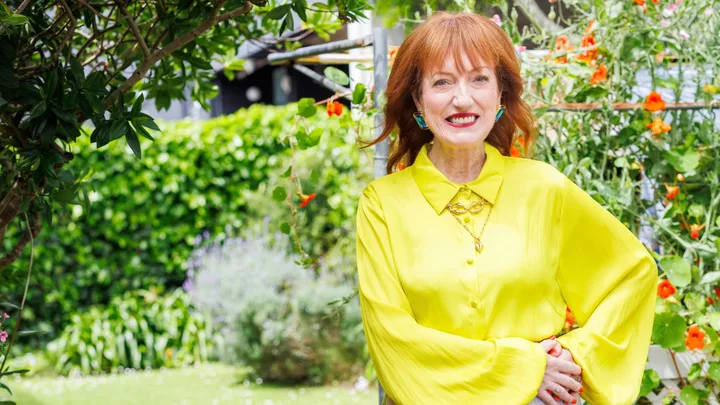
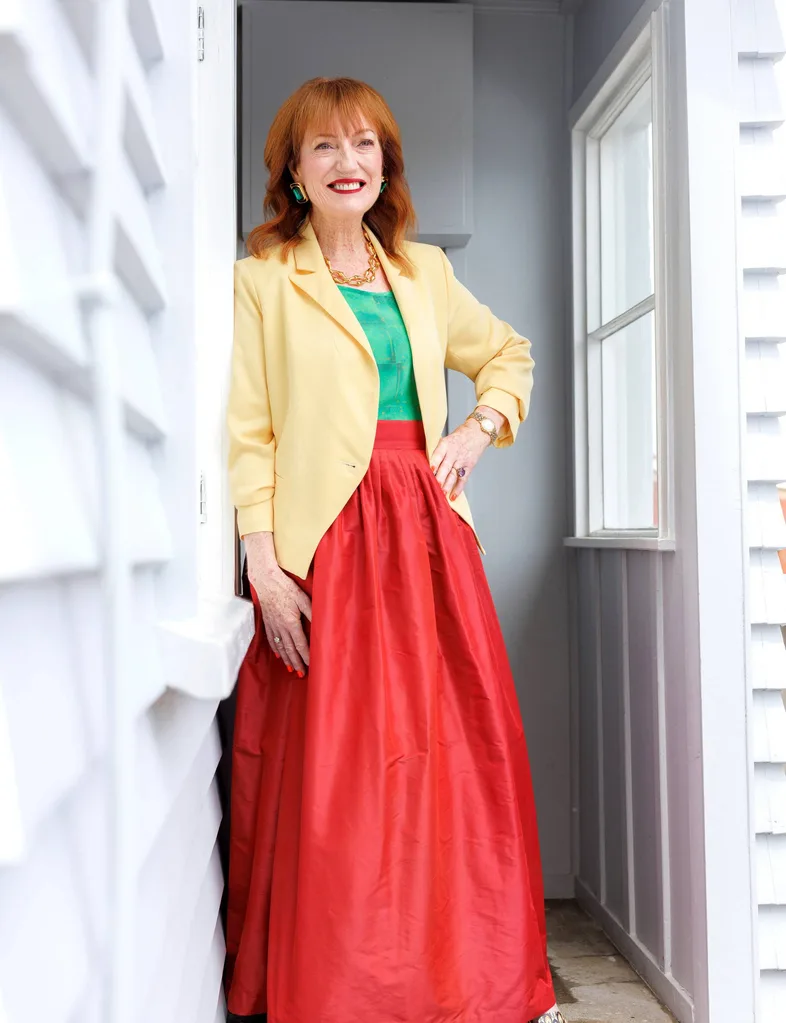
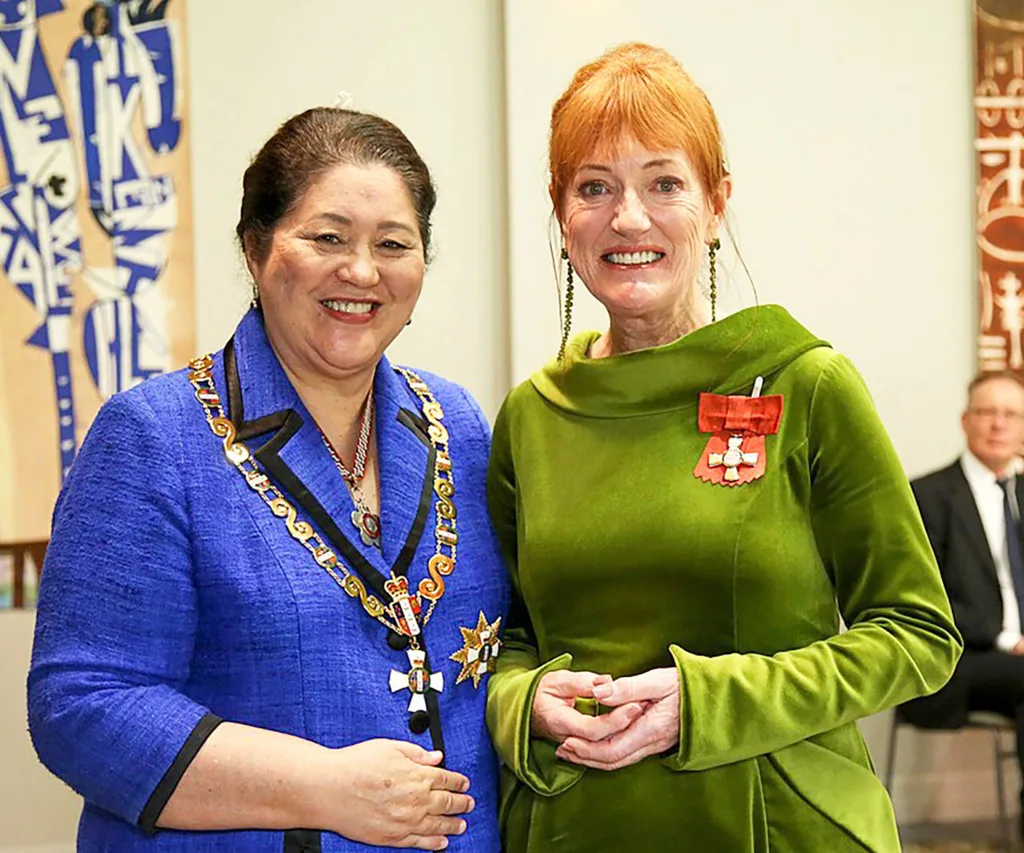
When Dame Cindy Kiro pinned an MNZM medal on Maggie Eyre’s apple-green velvet gown for services to business and the community, the Governor-General whispered, “You are the best-dressed person here.”
It was a compliment to someone who, after a traumatic childhood and struggle with depression, has proudly built her own personal style while helping others to also navigate the precarious terrain of managing how the world perceives them. Through her business Fresh Eyre, Maggie’s job is to inspire confidence and transform people’s fears with self-belief. Even top performers, like the indomitable former prime minister Helen Clark “reluctantly” needed her help.
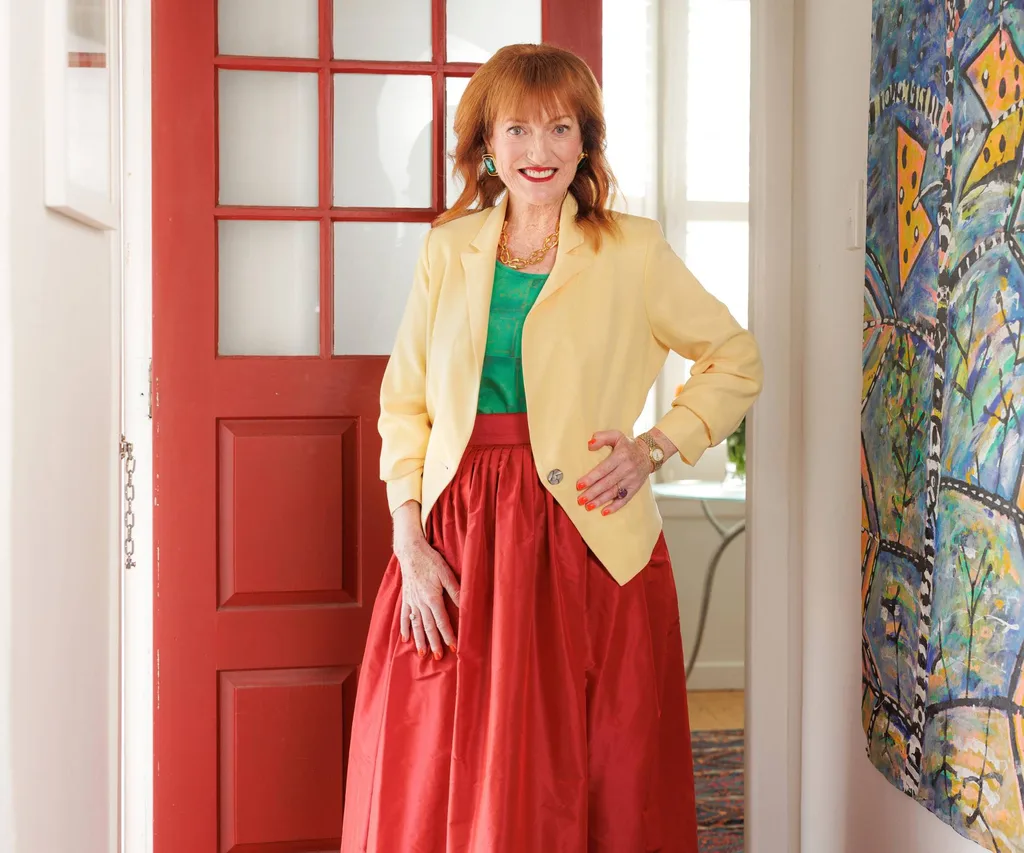
During the PM’s leadership, media coach Maggie was brought in to “soften Helen’s public image”, resulting in the two women becoming trusted friends. But for the former actor – who has starred in Marlin Bay and Shortland Street – business is her stage now.
She overcame her fear of public speaking, wrote three books on it, and spent years on the boards of Star Jam and TYLA Youth Development Trust, helping disadvantaged youth and people with disabilities. Over a cuppa from her apartment in Auckland, Maggie shares her life-changing moments with the Weekly.
You grew up in a devout Roman Catholic household, the only daughter with four brothers. Who were your role models?
The nuns at Marist College in Mount Albert! They were feminists, highly educated, strong women who were radical for their time. They were my angels and beacons of hope really after a traumatic childhood. I had three nuns who made a difference in my life: Sister Campion, Sister Roger and Sister Basil. These women believed in me, gave me counsel, and stood by me whenever I felt depressed. People often talk about nuns being cruel. Well, my Catholic education was the best thing that ever happened to me.
How was your childhood traumatic?
I was 12 when I was raped by my friend’s older brother. I was staying the night at her place when her brother arrived home drunk. I always remember him saying, “You want this.” I went to school the next morning and told a nun. Eventually, I shared it with my parents. Those were the days when you didn’t tell the police – I was young, ashamed and blamed myself. I forgave my rapist. Now I want to speak out to help other women.
How did that experience change you?
I became rebellious and got into a gang in Kingsland who were doing bad things. We didn’t wear patches or anything like that, but the guys carried knives. It was exciting for a good little Catholic girl who wanted a sense of belonging. Then one day, I thought, “This is not healthy,” and got out. I’ve never told people that!
What was your first job?
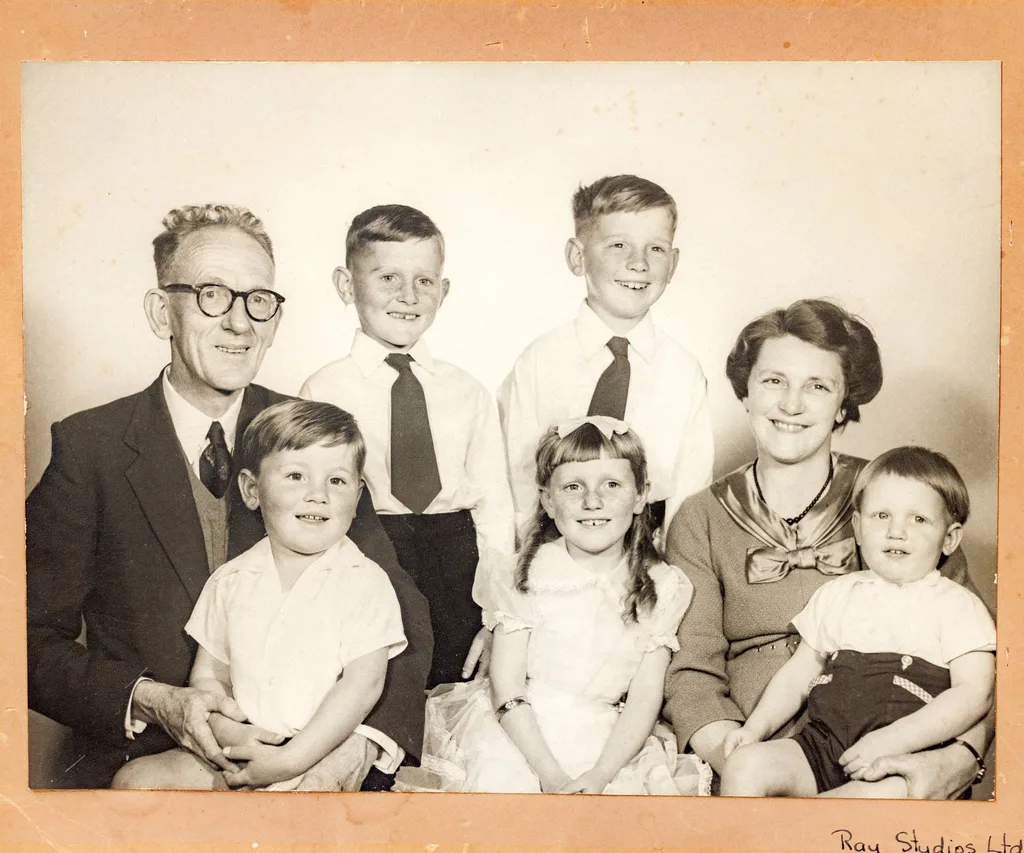
At 14, while I was at school, I got a job folding Simplicity sewing patterns. I was one of the fastest, so I got bonuses in my pay. Then I trained as a school teacher and taught for a year before following my dreams to be an actor.
Tell us your favourite acting role.
Playing the widow in Katherine Mansfield’s The Garden Party. The funny thing is, the widow has no lines, so you had to convey everything through body language. The last TV role I did was also enjoyable. I played a character called Verity, who died in Shortland Street. I’ve always loved television more than the stage.
How did it come about that you were asked to bring out a softer side of former Prime Minister Helen Clark?
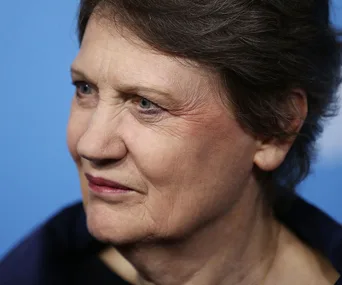
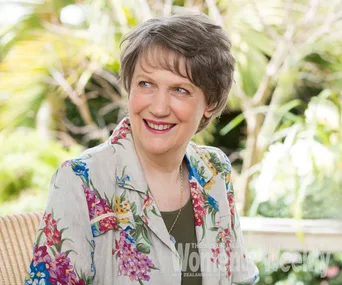
I met Helen through Judith Tizard. She’d had a conversation with her mother Dame Cath, who was the Governor-General at the time, about Helen Clark and her clothing. Judith told her mum, “Maggie Eyre loves styling people, plus she loves fashion and politics. I think she’d be really good.” Finally, Judith convinced Helen to see me. Helen didn’t want to have a makeover! She wasn’t interested in clothes or make-up! She was interested in political content, science and facts. But they had told her I taught presentation skills and could help with her speeches. The day I went to Helen’s house to work on a speech, I was so scared. I filmed her, played it back and repeated it. She told me, “I don’t want to be an actor,” so I had to explain the distinction and how to make your performance larger than life.
So changing her sartorial style came later?
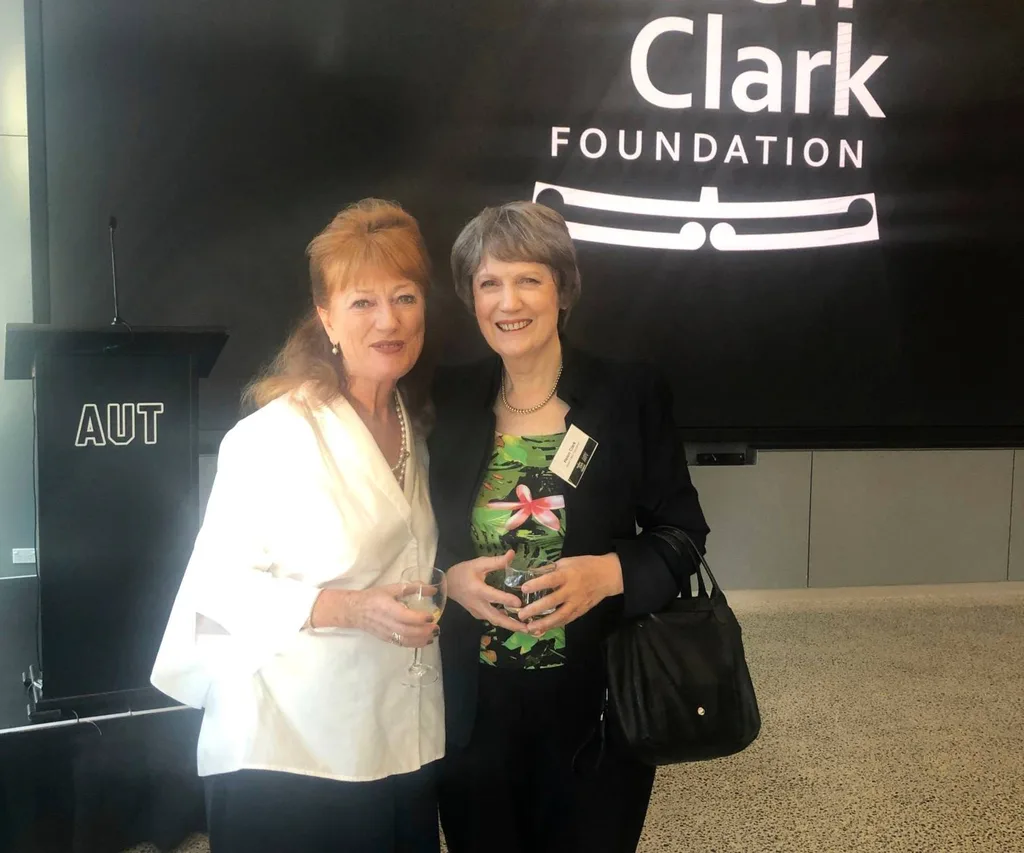
Yes, Helen could see that the constant talk about her appearance was distracting from the talented person she was. So I took her to Kiwi designer Jane Daniels and Paul Seville did her hair. Helen got it – to win votes you had to look the part as well because people measure you by how you look. It makes an impact. Someone in Parliament had said, “What Helen needs is a softer image,” so I would go to magazines to pitch her and they would say, “No, we don’t like her teeth.” Finally, we got Helen on the cover of Style magazine wearing a Liz Mitchell soft-blue suit. At another shoot for this magazine, we got her wearing jeans on the back of a Harley motorbike with actor Mark Hadlow for a cancer fundraiser.
And you became firm friends?
Oh, meeting Helen changed my life. I ended up in Time magazine because of her. She wanted me to do an interview with Metro magazine about our work together, but I said, “No, I like being behind the scenes.”
In her deep voice, Helen said, “Maybe this will be good for your career.”
And it was. She’s been one of my biggest advocates. But we’re friends too. When her mum was dying, I was on the phone to her from London. When my mum was dying, she was texting me and telling me to be strong. I got to see a Helen that most people don’t see.
Is there anything people might be surprised to know about her away from Parliament?
She was a pianist and used to play at her grandmother’s church. In her fifties, she decided to learn Spanish and become a mountain climber.
What’s the bravest thing you’ve ever done?
Trek the Himalayas in my fifties. I hadn’t planned to ever visit Everest, but after a boyfriend dumped me, my girlfriend Stephanie Overton – who had done Everest a lot – thought it would be good for me to join her there. I was so scared and tried to get out of going! It was a private trek and Dame Marilyn Waring joined us. It was two little tents, three determined women.
I worked out for a year to train for it and it was the hardest thing I’ve ever done. There was such beauty in the mountains with children rushing up to ask you for pens. We had tea with Buddhist nuns who couldn’t speak English but invited us into their cave. I remember coming down from the mountain and sobbing. It changes your life to do something you didn’t think you could. Sir Edmund Hilary’s quote, “It’s not the mountain you conquer, but ourselves” rang so true for me.
Is choosing not to have children something you’ve had to constantly defend?
Yes. When I was younger, I always told people, “Oh, I can’t have kids because I have endometriosis,” simply because I didn’t want them to pressure me. But the truth is I didn’t want children. I’ve always loved babies and children, and feel lucky to have enough of them in my life.
Have you embraced or struggled with ageing?
I see ageing as a privilege. Even though I’ve recently had a cancerous tumour taken out of my face and I need shoulder surgery because I can’t lift my arm, I feel so grateful to be alive. I’ve lost so many friends – two to suicide and former broadcaster Kerry Smith was one of my best friends. She died of melanoma in her fifties. Kerry always wanted to be a grandmother more than anything – her poor daughter was pregnant at her mum’s funeral. It’s such a shame. I want to be 90, still walking along Ponsonby Rd, wearing purple and yellow, with a very elegant walking stick and dyed short hair!
Have you experienced ageism?
Yes, I see it all the time in business, where there is huge discrimination towards women over 50. I don’t tell people my age because I still need to work! I feel that if I do, they’ll go, “She should be retired now.”
What are you most proud of?
Taking care of my mother when she had terminal breast cancer, then she died of a stroke.
Name a book you always recommend to others…
The Three Laws of Performance. It’s the best business book I’ve ever read. My business coach put me onto it.
Who do you think have the best “personal brands” in the world?
Oprah Winfrey is known for her knowledge, wisdom, transformation and bravery. And the Dalai Lama – I have seen him in action on a stage in New Zealand. I was mesmerised by his humour and compassion. He lost his country and he still smiles! Overcoming adversity with a sparkle in his eyes is remarkable.
For more info, visit maggieeyre.com.