





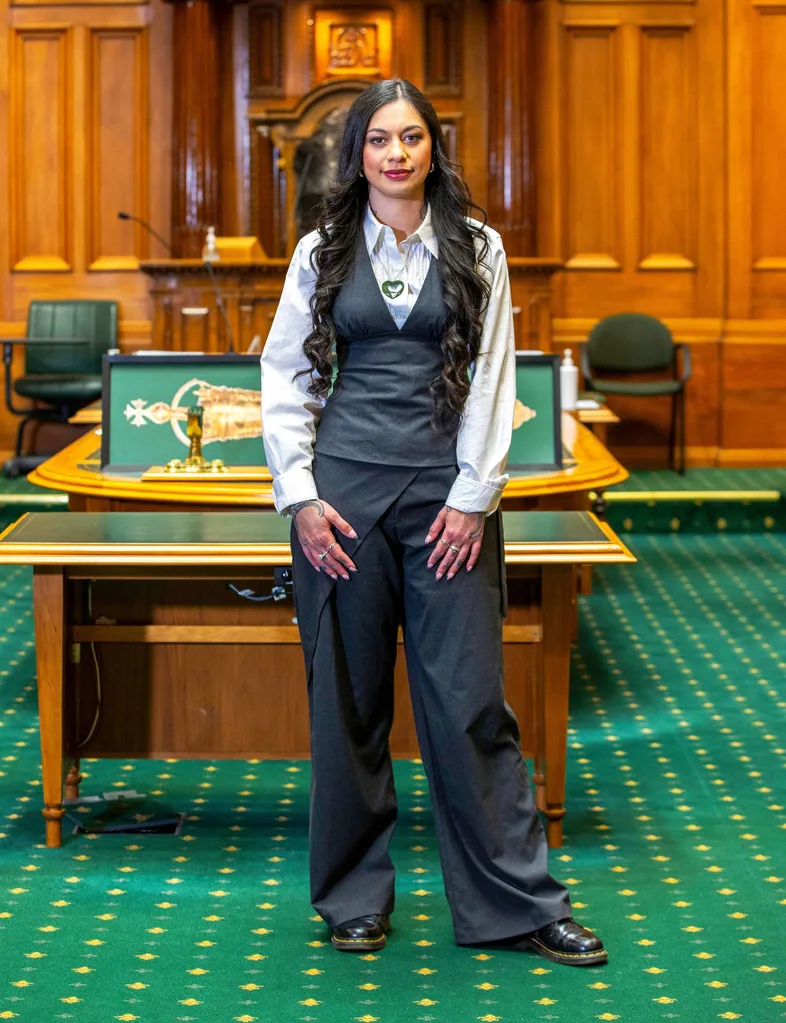
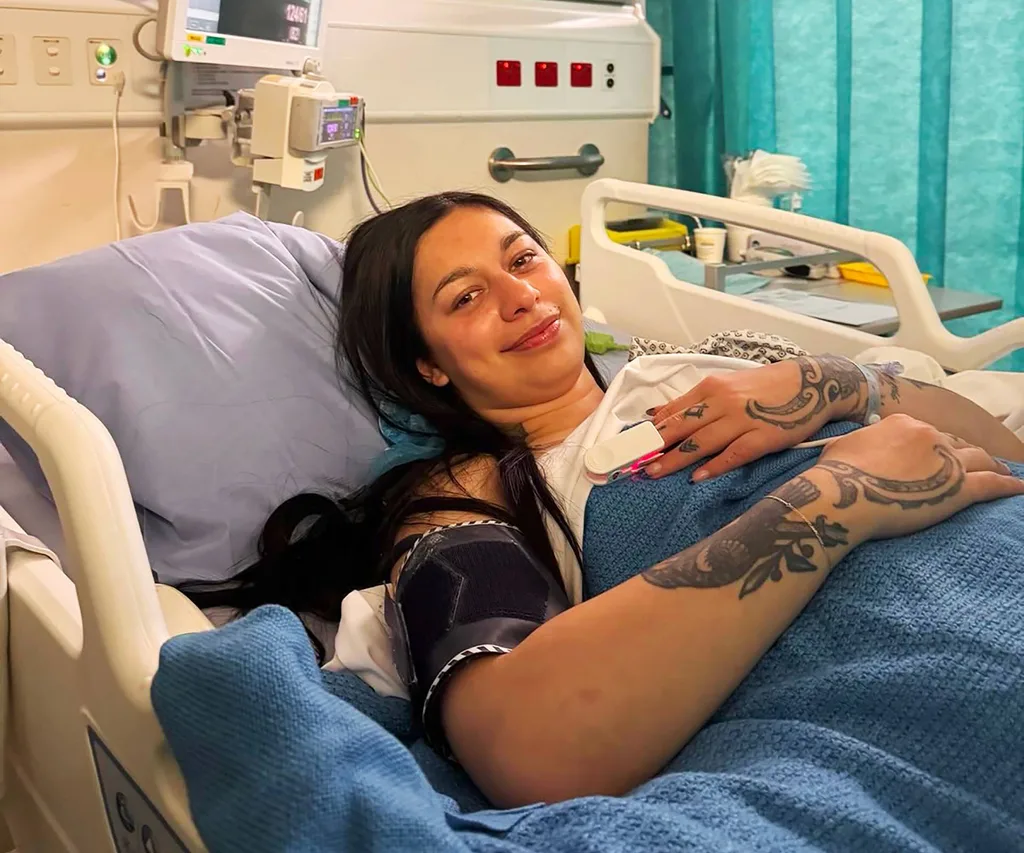
Tamatha Paul has made a name for herself as a fearless voice in Parliament, but now the young Green Party politician, the elected MP for Wellington Central, is showing a different kind of courage. An Instagram post made from her hospital bed after a recent heart ablation revealed the extent of her lifelong health conditions. It also showed the battles that have shaped Tamatha’s journey and the struggles she has faced behind closed doors.
Her whole life, Tamatha has masked the impact of her disabilities. She has two autoimmune conditions that cause chronic pain and fatigue, which can make it impossible for her to move or even get out of bed some days.
“I’ve always been really open about my lupus and rheumatoid arthritis because they were diagnosed when I was 12, and are just part of my reality,” she tells Woman’s Day.
“But until now, I’ve never said, ‘Actually, life can be a bit harder for me.’ That was my first time letting the world know.”
Tamatha, 28, admits to being “a little anxious” about sharing her health challenges so publicly.

Facing the fear of being misunderstood
“One of my biggest fears is when people know you have any kind of disability, they start to make decisions on your behalf about what they think you can and can’t do. I didn’t want that to happen.”
She also worried about how disabled communities would react to her post, but “hundreds if not thousands” of supportive messages quickly eased her fears — and they “meant the world”.
Tamatha explains, “Many of the people who reached out told me about their own health challenges, which was a great reminder of why I do the job I do.”
The diagnosis that changed everything
Doctors picked up the politician’s heart condition a year ago during a routine iron infusion, when a quick vitals check revealed something was wrong.
Tamatha recalls, “They said, ‘Your heartbeat sounds really weird,’ and put me on 24-hour monitoring, which showed more than a third of my heartbeats were irregular. “It made so much sense as I was feeling dizzy and light-headed, and when I got up to speak in the House, I would feel my heart going crazy. I have been a politician for four years and public speaking doesn’t rattle me. I wondered what was going on.”
Doctors put Tamatha on the urgent list for ablation surgery to stabilise her heartbeat, but she waited a full year before finally receiving the operation. As someone who has relied on the health system since she was a child, the MP says one of the key drivers behind her Instagram post was to highlight how broken the system is.

A system under immense pressure
“Our health professionals across the board are under such immense pressure,” she shares.
“Wellington Hospital has one of the best cardiology departments in the country, yet there are only four specialists there who do ablations. I’ve been reaching out to cardiologists right across New Zealand, who tell me there is not enough care and support available right now for babies being born with heart conditions.”
The only solution, she says, is to fund our public hospitals differently.
“I’m lucky because I can afford to see a private rheumatologist for my autoimmune conditions and visit my GP regularly. But this is a privilege many people can no longer afford.”
Healing at home
When Woman’s Day chats with Tamatha, who is of Ngāti Awa and Waikato Tainui descent, she is recovering at home following her ablation surgery. But the MP hasn’t slowed down completely, showing us a gorgeous pink ruffled handbag she whipped up on the sewing machine the previous day.
“I need to keep my mind occupied and doing something creative can be a bit mindless, which helps me not to think about the weight of the world,” she smiles.
Where her determination started
A talented artist, Tamatha sold her paintings to fund her two successful political campaigns, which saw her become the second-youngest Wellington City councillor at age 21, and the first Māori MP
for Wellington Central and youngest Green MP at 26.
Growing up in Tokoroa, politics wasn’t initially on Tamatha’s radar. As the youngest of seven kids, her focus was on being the first member of her family to go to university.

Working hard from day one
“I’m not from a privileged family, so I knew I’d have to work hard to make it happen,” she tells.
“When I was 15, I started working at KFC after school until 10pm and when I was in Year 13, I did bar work after that a few nights a week until 2am.”
Working two jobs meant Tamatha attended school only 60% of the time in her final year, but she still finished as dux and won several university scholarships. When she was studying at Victoria University of Wellington, Tamatha became the first wahine Ma‒ori to lead the students’ association, where her love of politics was ignited.
On a recent visit back to Tokoroa, when the region’s pulp and paper mill shut down, Tamatha popped in to see Judy Andrews, who had given her the job at KFC.
“I was super-young when Judy interviewed me for the job and we were besties for the four years I worked there,” she tells.
“I’m grateful for that job as it taught me the value of hard work and how to talk to people from all walks of life.”
Facing abuse in the public eye
Tamatha says being a young, indigenous, disabled female politician compounds the already challenging environment facing women in the Beehive. An internal report by the Greens revealed she is one of the most targeted MPs when it comes to online harm and abuse.
Tamatha also factored this in before deciding to make her hospital post.
“I’ve had some serious threats and didn’t want to give the haters something else to throw at me,” she reveals.
Coping with constant online abuse
For her first year and a half in Parliament, she thought she could “grin and bear” the abuse, but she now has systems in place to protect her from reading most of the things written about her.
“People stepping into positions of power expect to cop a bit of flak, but there is nothing to justify the degrading, cruel and threatening behaviour female politicians have to deal with,” Tamatha insists.
“A lot more needs to be done to regulate social media platforms, and educate young men how to look at, think about, respect and treat women.”
Despite the challenges, Tamatha remains deeply committed to her cause.
“When I think about my parents, my family and my friends, I feel such a sense of responsibility to fight injustice and give a voice to what I know a lot of average New Zealanders are going through right now.”
Prioritising rest and wellbeing
To manage her health, Tamatha has made some significant lifestyle changes, which include prioritising “sleep, peace and rest” when she is at home, as well as not drinking alcohol. She can tell if a flare-up from her autoimmune conditions is imminent, so she rests her body to minimise the impact.
“I usually spend any days off napping – I live quite a grandma life,” she jokes.
“I learnt early on that I couldn’t go out and party like other young people. I still have fun, though. I love music and I’m a DJ. I did a set in Wellington recently with one of New Zealand’s best DJs.”
The inspirational young MP has a message for other disabled Kiwis – to remember how incredible they are for navigating the challenges put in front of them.
“We know our bodies better than anybody else and we deserve to be believed,” she reflects.
“We deserve to be treated with kindness and fairness. It’s important not to let anybody else’s ideas about our health or disability change what we know to be true for ourselves. We can do or be anything we want to be.”



Share this post