




Growing up in London with untold wealth – and closely connected to the crème de la crème of British aristocracy – Emma Thynn had it all.
As a young teenager, however, she had no inkling of just how much of an impact she would make on the world.
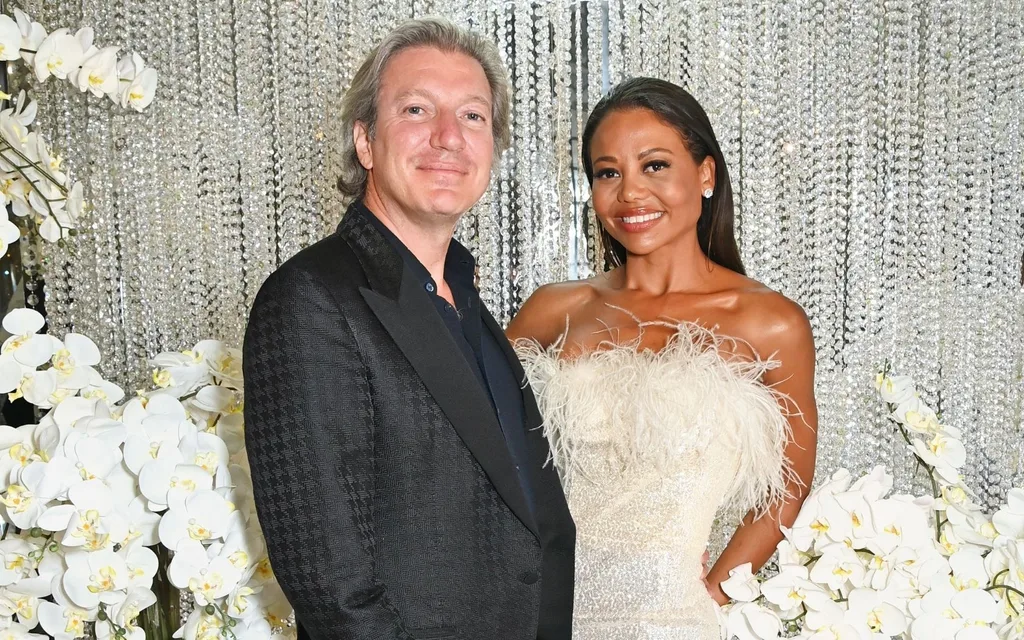
For many years now, the Marchioness of Bath, 40, has been quietly and elegantly running Britain’s famous Longleat estate, complete with its own animal park, along with her husband Ceawlin Thynn, 52, the 8th Marquess of Bath.
Nine years ago, the mum of two made history for a second time when she became the first member of the British aristocracy to welcome a child – her second son, Lord Henry Thynn – through surrogacy.
And this year, she and the Marquess made history once again when they went to court to ensure Henry’s rights of succession were secure despite the nature of his birth – and won.
An anything but ordinary upbringing
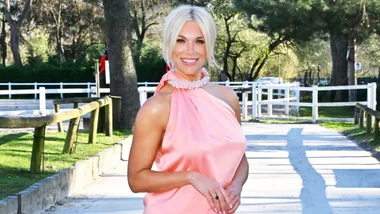
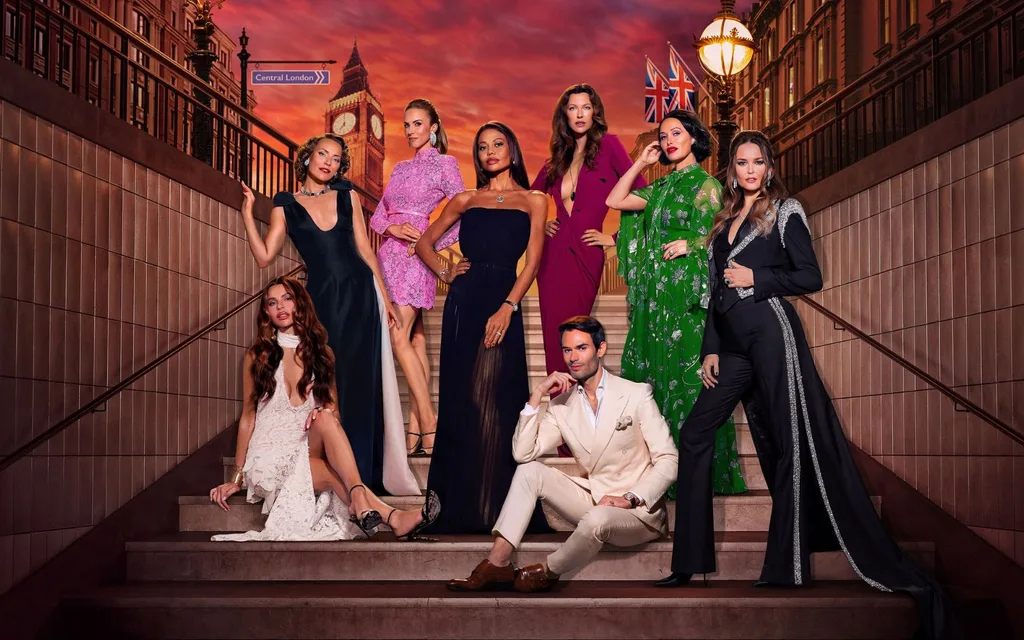
She’s modelled for Dolce & Gabbana and Victoria’s Secret, has been fashion editor at British Vogue, and this year starred in the reality show Ladies of London: The New Reign, which recently ended its streaming run on Three Now.
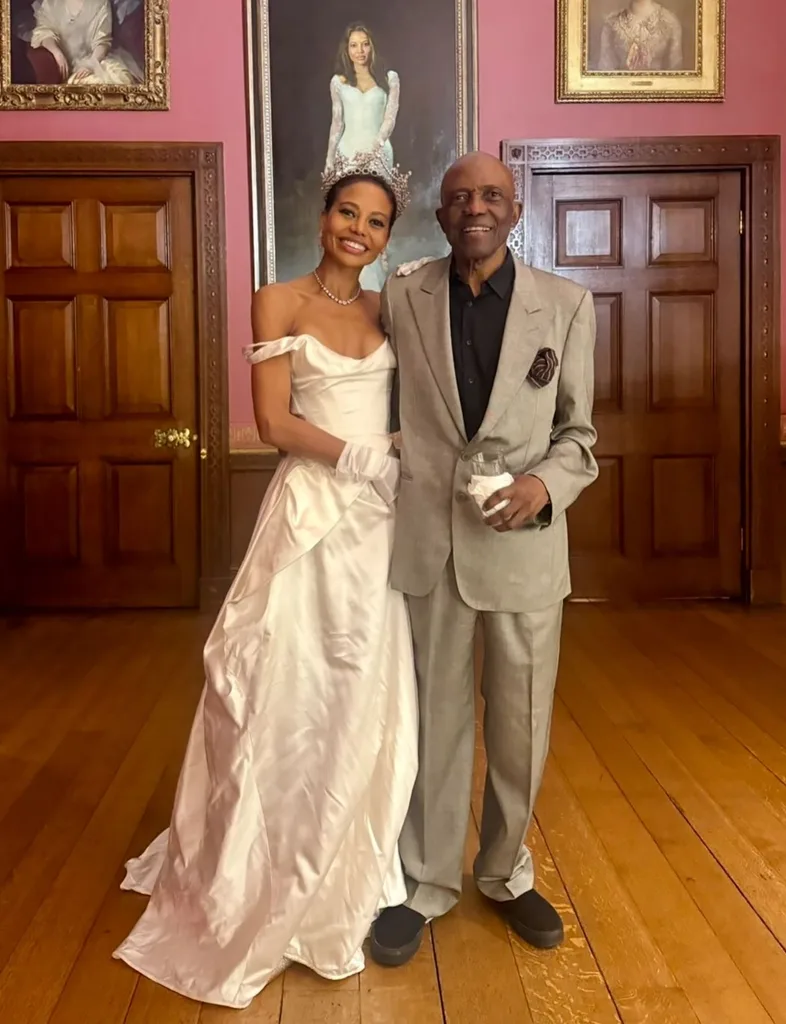
Given her upbringing as the daughter of interior designer/socialite Suzanna McQuiston, now 82, and Nigerian oil and gas billionaire Oladipo Jadesimi, 81, it’s safe to say an ordinary life was never on the cards for Emma.
She owes her existence to an affair between Suzanna, then a divorced mother with two grown-up children, and Oladipo. The pair never married or lived together but, says Emma, her father was a constant presence in her life. Her mother’s high-society connections meant Emma first met Ceawlin when she was just three years old – and he was 15 – at a society wedding.
Seventeen years later, she bumped into him at a private members’ club in London. Their 12-year age difference didn’t matter a jot and soon they were inseparable.
“It was serendipity,” she says. “Never in a million years could we have predicted that!”
Life-threatening complications
They wed in 2013 when Ceawlin’s father Alexander was still alive and Ceawlin’s title was Viscount Weymouth. On their big day, Emma instantly became Viscountess Weymouth, but their nuptials led to a falling out between Ceawlin and his Hungarian mother Anna, who allegedly questioned how marrying Emma would affect the family’s bloodline. Ceawlin uninvited his mother, who has since died, from the wedding due to her comments.
When Alexander, the 7th Marquess of Bath, died of pneumonia in 2020, aged 87, Ceawlin inherited his title and estate, including Longleat’s 128-room Elizabethan palace built in 1580, which is set on 4000 hectares and includes one of Britain’s most-loved zoos.
Not everything, however, has gone swimmingly for the pair.
In 2014, when she was heavily pregnant with her first son, Emma began suffering from severe headaches and started having trouble breathing.
Doctors discovered she was suffering from hypophysitis – a rare inflammation of the pituitary gland – that had caused a life-threatening brain bleed.
She underwent an emergency C-section and was told it would be highly dangerous to carry a second child. Instead, two years later, an American surrogate gave birth to their second son Henry.
“I had friends who had done it and it is actually quite a common thing to do,” says Emma. And I am so lucky and very grateful we could go down that route.”
Breaking British barriers
When questions were later raised as to whether Britain’s long-standing inheritance rules may get in the way of Henry inheriting, the couple sought clarification from the courts.
In May this year, the judge ruled that it would be “unfair” to treat Henry as though he were not his father’s son due to the fact that his biological mother did not give birth to him.
The decision is now being viewed as a landmark ruling that could eventually shape how aristocratic succession rules are interpreted in a modern era of assisted reproduction.
Whether she’s blazing a trail for surrogacy or transforming the image of British aristocracy, Emma says she’s first and foremost a mother, a wife and a caretaker of Longleat.
“I aspire to a future where my skin colour is not a defining characteristic,” she says simply. “Of course, it should be irrelevant.”