




 Photography: Monty Adams.
When newsreader Melissa Stokes was renovating her house recently, she asked the builders to leave a hole at the top of the stairs. This was not for architectural reasons, nor for light or ventilation.
“It’s a yelling hole,” she laughs.
“We’re a family of yellers. I’ve just had to accept it.”
It’s not quite the image most of us have of the 1News presenter, who stepped into the role almost a year ago after the departure of TV veteran Simon Dallow. No, the woman who delivers the six o’clock news each evening with such calm authority seems like the sort of person who would have everything under control.
Yet Melissa cheerfully admits that in real life, there’s none of the composure we see on screen. In fact, most days she arrives at work in a flurry – an armload of overflowing bags in her arms, leaking Tupperware of leftovers for lunch and “usually in mismatched socks because I can never find a pair”.
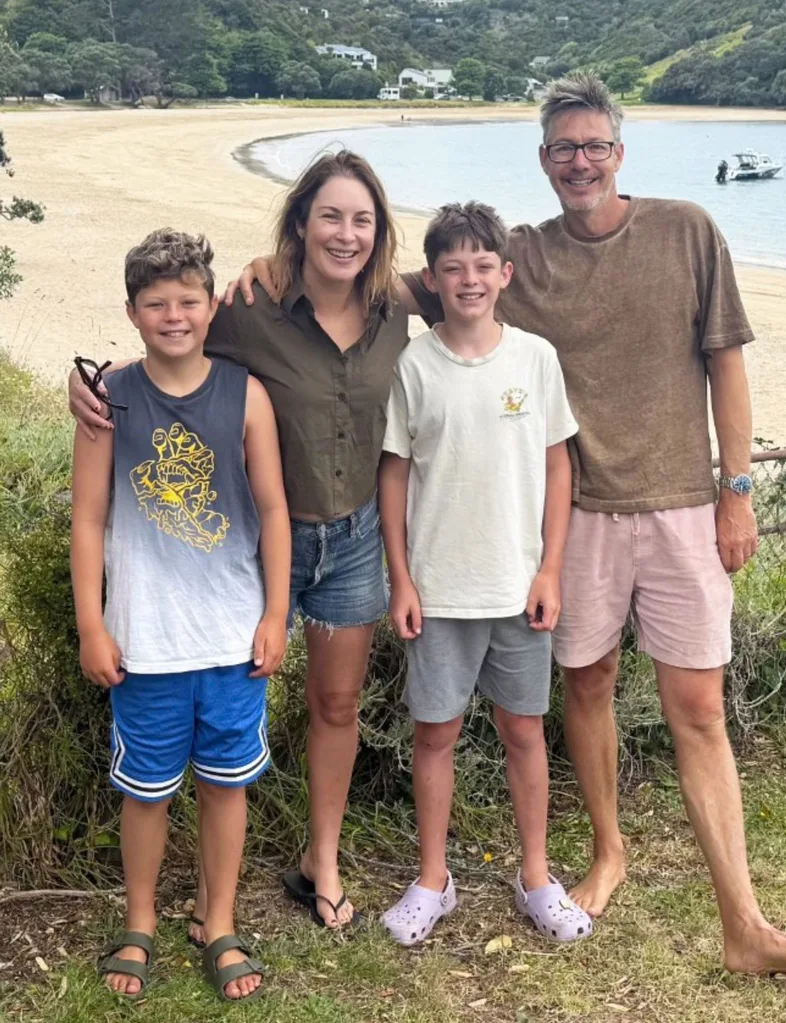
Life with her cameraman husband Dave Pierce, and their two boys Hugo, 14, and Freddie, 12, is beautifully chaotic. It’s loud, messy and far from polished.
“I have accepted this is the way we are,” she says.
“The builders thought I was crazy, but I know my family isn’t going to get up and try to find each other – they yell from the spot they’re in, so the hole just made sense. Outside of work, I run a fairly loose ship.”

The thrill of live television
It’s a chilly Friday morning and the 1News anchor is catching up with The Weekly on her day off. She’s got her boys away to school, although she’ll be seeing Freddie again shortly when she heads to the nearby sports fields to watch his football tournament. Makeup-free, dressed in trackpants, trainers and a jacket, her hair falling loosely around her shoulders, Melissa relishes the freedom to be off duty.
“I get trussed up five nights a week at work. My preferred situation is no makeup and trackies. I like to be comfortable!”
Melissa tends to fly under the radar. In fact, she’s always pleasantly surprised when she’s approached out in the wild because most of the time, she forgets she’s famous. Or more accurately, she’s not even convinced she is.
While photoshoots, interviews and the inevitable public scrutiny – which has ramped up now she’s in the top job – are simply part of the package, they’re not what keeps her hooked. It’s the journalism, that addictive “cut and thrust” of daily news, that first drew her in two decades ago.
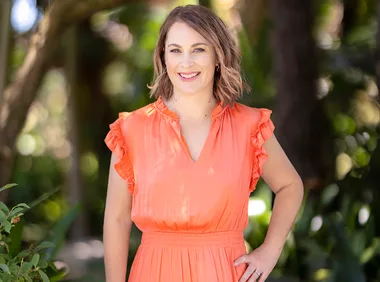

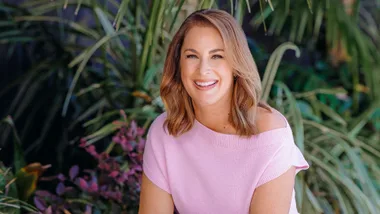
“There’s a magic to live television,” she explains.
“It is such a rush – I love the sense that anything could go wrong because it’s terrifying and intoxicating at the same time. I love being part of a team imparting information at critical times, and I love the marriage between words and the pictures, and the incredible immediacy of it. “Maybe when I was younger, I thought, ‘Oh, my gosh, I’m on telly!’ but that aspect quickly faded for me. It’s all the other parts of the job that I love the best.”

Stepping into the spotlight
After nearly 25 years at TVNZ – including a stint as Europe correspondent and, for the past seven years, weekend newsreader – she was already a familiar face to viewers. But the promotion to weekday anchor marked a defining moment in her career: it’s the role she had been working towards for years.
And with it came a new level of responsibility. Reading the country’s most-watched news bulletin each night means carrying the weight of the day’s biggest stories into Kiwis’ living rooms. It’s a responsibility Melissa has never taken lightly. She’s hard-working, ambitious and serious about her job. Yet if she felt at all daunted by the move into the top spot, she confesses she didn’t have a lot of time to think about that, because from day one, huge news stories have just kept on coming.
“The year started with the devastating Mt Maunganui landslide, then came the war in Iran, the fuel crisis. We’ve lost amazing people like Dame Jools Topp and Sir Sam Neill, and there’s the political upheaval and an election. It just hasn’t stopped.”
Melissa admits that throughout her career, she’s always been focused on what’s next. As a reporter, becoming Europe correspondent was the ultimate challenge; as a presenter, taking the flagship bulletin newsreader’s chair was the next.
For now, she’s simply focused on doing the best job she can.
“I always knew I could do the job,” she says.
“My bosses are very clear that they want me to speak up editorially about the bulletin and to have an input. I firmly believe we should be robust in our discussions around what’s going in the news and what’s focused when. It’s good to have that debate and discourse about it.”

Finding a new family rhythm
For seven years, Melissa worked weekends, meaning during the week, she was mostly at home. She was a taxi driver, taking her boys and their mates to sports trainings and games, and a cheerleader, always on the sidelines at their activities. But now, the weeks look a little different. She still sees them off in the mornings, but now she’s at work in the afternoons and doesn’t return home till 7.30pm. Melissa admits she worried about the impact on her family.
“That was the biggest thing to get my head around.”
But when she asked Hugo recently, “Do you miss me in the afternoons?” she was met with a response that was both brutally teenage and reassuring.
“It was a very loaded question,” Melissa laughs.
“But he just looked at me like I was nutty and said, ‘Um, no, we’re fine.’ And it reminded me that I’m more like a normal mum now, working during the week. The kids have really taken it in their stride. I think it’s been harder for me, to be honest, because I don’t like missing out on their lives.”
The laughter they bring her
Melissa is heartened to find that by the time she arrives home, the boys are often keen to chat about their days. Hugo and Freddie, she says, are hilarious, and she feels lucky they include her in their lives.
“People used to say if you don’t pick them up from school or see them straight after school, you can miss the goings-on of the day,” she says.
“But they save up their stories and those little insights or observations that they know I will find funny or appreciate. They have a real sense of the absurd. Even their silly YouTube stuff – most of it is absolute dribble – but occasionally they’ll show me something that has me on the floor. They just bring so much laughter
into my life.”
She also likes the idea that her boys are seeing her do something she loves.
“It’s important for kids to understand that working is the way we’re putting dinner on the table, and that to be able to have the things we have and do, we have to work hard.”
Embracing the curveballs
There is another lesson motherhood has taught her – one she suspects she would have been slower to learn without Hugo, who has ADHD. Melissa has spoken openly about the challenges of raising a neurodivergent child. There were years when life at home and school were difficult, and she and Dave spent a great deal of time wondering what they could do to make life easier for Hugo.
Now, she says, things feel very different. Hugo is settled and happy at high school, and his ADHD is no longer a defining part of family life.
“In his early years, it tore me apart, working out what we could do for him and how we could help make his life easier,” she shares.
“But as he’s got older, we don’t really think about it on a daily basis. He’s happy, smart and thriving, which we feel so lucky for.”
Embracing the curveballs
She thinks back to the days when people would suggest parenting courses – “I still feel angry about that” – and she knows first-hand how judgemental other parents can be.
“Kids are so different and they all have their phases. But if I see a kid having a meltdown now, it’s never a case of, ‘Oh, that’s a bad kid’ or, ‘They must be shitty parents.’ Things are always much more complex and you never know what other people are dealing with.”
At 48, Melissa says she has enough life experience to know that the children you imagine having and the children who actually arrive are not necessarily the same thing.
She reflects, “You imagine how glorious this child is going to be and they’re going to be so good at everything, and you’re just going to be this super-proud mother and they’ll eat all their vegetables. And then the reality is you get some curveballs that you didn’t expect along the way.”
Watching her boys grow
Melissa’s eyes well as she talks about her sons. They’re at an age now where she can see how fast time is moving. There is something about teenage boys that makes her heart melt.
“They’re sort of so big for their bodies and they’re goofy, and they don’t realise what else is going on. They’re just adorable.”
And she’s continually amazed by how different her boys are. Hugo likes to get to school early, is up at the crack of dawn and organised in time to ride his bike or take the bus. Whereas football-fanatic Freddie goes at his own speed. Melissa has given up trying to change this.
“I’ve never known anyone to take their time like Freddie,” she laughs.
“He cannot be rushed and he hardly ever makes the bus. Usually it’s me dropping him off minutes before the school bell.”
Melissa says it without a trace of complaint. In fact, being in the car with her boys is one of her favourite things.
“I think they’re less guarded with their conversation – you just get that unconscious stream of chat.”

Learning to let go
Perhaps the biggest challenge of parenting teenagers is knowing that, little by little, you have to let them go. Melissa – who has talked about her anxiety in the past – is the first to admit she’s a worrier and her job probably doesn’t help. Reporting on the things that can go wrong in life has left her finely tuned to all the possibilities. While she does her best not to let those worries spill over onto her boys, it’s not always easy to switch off the anxious part of her brain.
“You see those extraordinary events or you talk about them all day, and then you can’t help but apply that to real life. So I do worry about them getting the bus, riding their bikes, but that doesn’t mean I’m going to stop them from doing those things.”
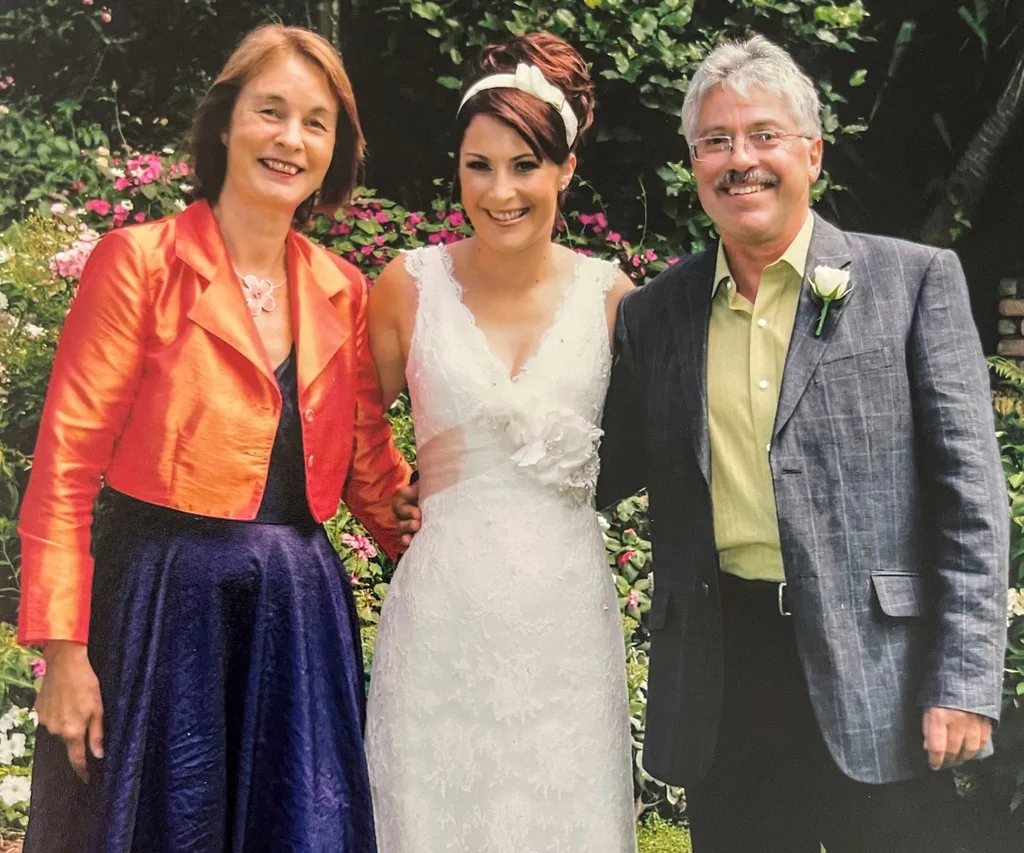
If becoming a parent changed the way Melissa sees the world, losing her mum, Gill, changed it again. In June 2023, Gill died by euthanasia, aged 72, after a seven-year battle with lung cancer. When the cancer spread to her brain, she made the decision to end her life on her own terms – a choice Melissa has spoken about with remarkable honesty. Soon after her mother’s death, she wrote a deeply moving account of the experience.
“The responsibility to get Mum to the finish line in the way she wanted was unlike any pressure I’ve ever known. It seems to me to be a bold and courageous choice to step into death – but Mum, who placed few demands on any of us, was certain that this was how it ended. She didn’t think it was brave – the immediate future was going to be full of pain and indignity, and for her, hope had long been lost.”
When grief sneaks up on you
Three years on, Melissa still finds it difficult to put the experience into words.
“I’m still very pleased she got to go out the way she wanted to go. I’m proud of her for it. But it also feels totally surreal that we had that experience and I’m not sure I could ever handle going through it again. It was incredibly hard.”
The grief, she says, is less raw, but it still catches her by surprise, particularly when she thinks about all the things Gill is missing.
“Grief just sneaks up on you. Like, every now and again, it gets me. I just wish she was here to see all of it.”
Gill would have been thrilled to see Melissa in the top job, and equally delighted that the family had finally tackled the renovation of their old, damp and draughty bungalow on Auckland’s North Shore. It was something Gill was desperate to see happen, so in the final weeks of her life, Melissa promised her they would do it.
Earlier this year, the family moved in with Melissa’s dad Roger for nine months while the builders got to work. Melissa laughs when asked about living with her dad again.
“I thought he’d love it, but he didn’t,” she says.
“He was so amazing letting us stay for so long and really patient, but I think by the end, he was pleased to have his quiet house back. He said to me at one point, ‘You realise you all yell, don’t you?’”
And then there was the cat – they didn’t get on.
The people in her corner
For all the jokes, there’s no doubt Melissa and Roger share a close bond. When she heads to Freddie’s football tournament after this interview, it’s Roger who will be alongside her on the sidelines.
“He’s my plus one. We go everywhere together.”
Now the family is back in their upgraded home, their new routine has settled into place and, for Melissa, life feels good. She’s the first to say she couldn’t do what she does without the constant support of husband Dave. It’s 20 years since they met in London – the classic journalist-and-cameraman pairing, Melissa jokes – and through all those years, he has been her steadying presence.
“I don’t think there’s room for two show ponies in a relationship,” she says with a laugh.
“He’s a real behind-the-scenes kind of guy. He’s always been in my corner, always there supporting me. He’s very good at reading me and at letting me be who I am.”
Still working full-time as a TVNZ cameraman, Dave now runs the football carpool, joins the boys’ WhatsApp groups and takes charge of dinner. There is plenty of support elsewhere too. Roger is a huge help, while a tight-knit group of mum friends is there when she needs them, as well as her mother-in-law.
At weekends, Melissa prioritises family time. Sometimes she feels guilty for turning down invites out with friends, but she’s never been particularly good at big social occasions.
“I find big groups draining.”
Enjoying the fizz
Give her a friend’s couch, a glass of wine and a decent conversation any day. These days, her favourite evenings are often the simplest ones – family dinners, time with friends and, preferably, somewhere trackpants are acceptable. Recently, they’ve started hosting around-the-world dinners with family friends, letting the children choose the menu.
“We’ve had Mexican night, American night… the kids love it.”
As she edges towards 50, Melissa is surprisingly relaxed about getting older. If anything, she feels more certain of herself than ever before. Physically, she feels strong.
“I’m drinking the water, doing the weights,” she says.
But it’s the confidence that’s changed the most.
“I know myself now. I can stand up for myself in ways I couldn’t before. I’m not as scared of being direct or voicing an opinion, or having a debate and proper discourse – which I think is a bit of a lost art. That’s all come from getting older. “And yes, I’m in an industry that has a reputation for tossing women aside as they age… but good luck with that,” she smiles.
“Times are changing. We don’t fixate on a man turning 50, so I think we need to change the lens a little.”
These days, if life starts to feel overwhelming, she knows what to do – heading outdoors for a long walk until, as she puts it, her “busy brain” quietens. Perhaps the hardest lesson for someone who has always chased the next challenge is learning to stop and appreciate what she’s already achieved.
She often thinks of something her former colleague Mark Crysell says, “You’ve got to drink it while it’s fizzy.”
Melissa smiles. “He’s right. I need to remember to enjoy the fizz.”