





It’s not that long ago that AI (artificial intelligence) was seen as fanciful science fiction. A computer that can hold a conversation with you? A telephone that will tell you whether it’s going to rain? It seemed like the stuff of movies. But now, basic AI has been a part of our lives for quite some time, from providing driving directions on Google Maps to autocorrecting our texts. Now we have facial recognition on our phones. There are even smart fridges that can track what foods have been used. These fridges can automatically add items to a shopping list.
This is just the start – AI is set to revolutionise life as we know it. With every advance in AI, we enjoy new benefits in our daily lives. However, experts warn that these advances may also have negative effects on society.
Professor Stephen Hawking described AI as “either the best or the worst thing to happen to humanity”. Here’s a look at some of the pros and cons of AI, plus how it could affect you.
What is AI?
Artificial intelligence is the ability of machines to perform tasks that usually require human intelligence. This includes reasoning, learning from experience, interpreting information, making decisions, and solving problems.

-scaled.jpg?resize=380%2C285)

AI: The good stuff
If you use a smartphone, tablet or computer, you’ll have already noticed how AI can make life a lot easier both at work and at home. Virtual assistants, like Siri and Alexa, can do a lot for you. They can tell the time, play your favourite music, answer general knowledge questions, and even make phone calls. They’re particularly helpful for people with disabilities.
Did you know? The term AI was coined in 1956 by US computer science professor John McCarthy.
In the office, AI can help with many tasks. It can screen job candidates, arrange meetings, and prepare agendas. It can also build websites, analyse data, and write reports—often completing these tasks in minutes, if not seconds. It can also help with brainstorming and suggest solutions that we might not have considered. And that’s just scratching the surface.
Boosting productivity and safety
It’ll boost productivity across many industries, completing tasks much more quickly and freeing up time for staff to focus on tasks AI can’t do. It will reduce human error, making our work more accurate and precise. AI robots will be able to do jobs that are dangerous for humans, such as defusing bombs, descending to the deepest parts of the ocean or exploring far-flung parts of space.
Unlike traditional software, which must be updated, AI can learn and improve over time, adapting to new challenges. It could also:
- Help to find ways of mitigating the effects of climate change by doing things like creating new renewable energy systems.
- AI can make air travel safer by collecting and analysing information, such as weather patterns and visibility. It provides vital details to pilots and air traffic control. AI can also assess aircraft to determine when maintenance work needs to be carried out.
- Combine GPS, self-driving cars and other transport automation to make getting from A to B much easier.
- Assist scientists in a wide variety of research by speedily analysing data, spotting patterns and drawing conclusions.
- Benefit the financial industry by assessing people’s needs and helping them to be better off. Its ability to quickly analyse information and predict possible outcomes in a variety of markets that could help investors make more money.
- AI can speed up the construction of buildings by fast-tracking processes like design and project management. It can also improve sustainability by implementing environmentally friendly practices.
- Provide better customer experience by delivering personalised recommendations and 24/7 support via smarter chatbots.
- Help with decision- making by analysing data and giving recommendations that are not influenced by human emotions.
- Identify risks long before they become a problem and notify us, so they can be mitigated. In some cases, AI will be capable of finding issues and fixing them before we know they exist.
- It will completely change fields like the legal industry by reviewing vital documents in hours instead of the weeks people typically take. When it comes to legal cases, it can find precedents and use them to draft accurate arguments in hardly any time at all.
Crucial areas it will impact include:
Improving healthcare
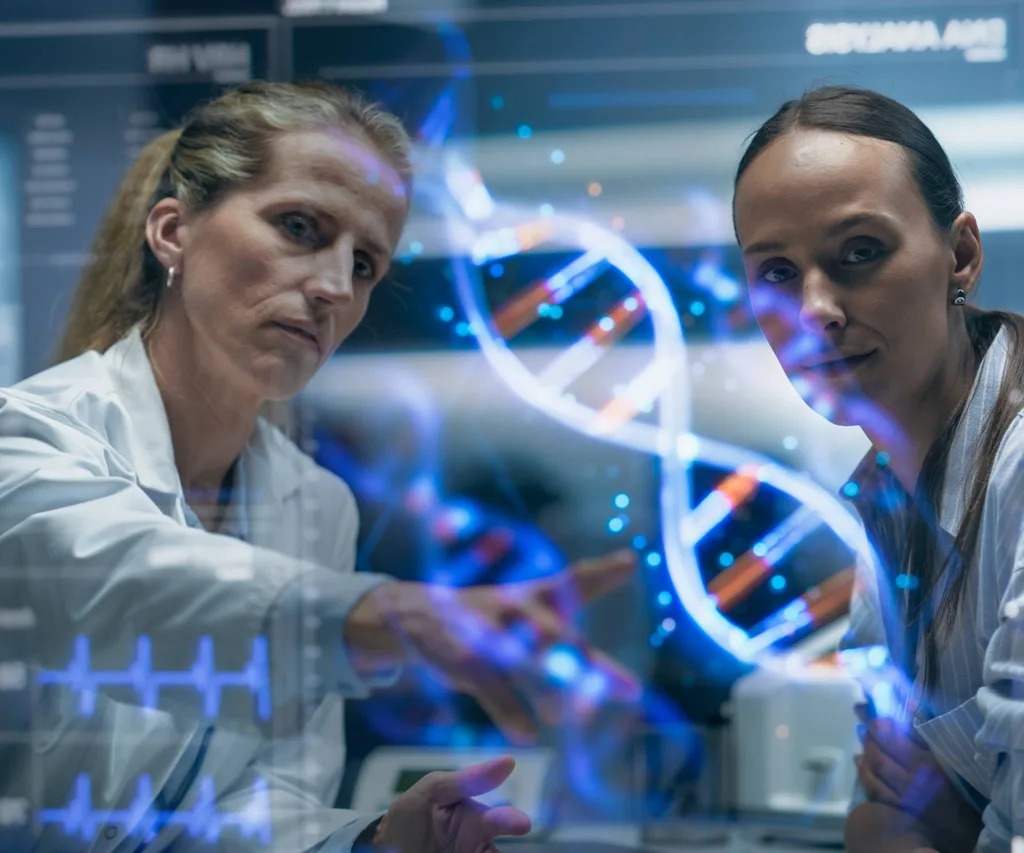
AI is already able to help medical specialists by doing things like analysing X-rays and scans. AI can combine the notes your doctor takes during consultations with test results and medical research. This allows it to present an overall picture of your health and focus on any specific issues you may have. Its ability to analyse data may make it possible to detect disease much earlier. When used in conjunction with scans, blood tests or wearable monitoring devices, it could predict illnesses long before you have symptoms. They can then be treated early, increasing the chance of a cure or a better quality of life.
UK studies have found that AI software is twice as accurate as doctors in interpreting the brain scans of stroke patients. It can also detect more bone fractures than humans. AI algorithms have already discovered new drug combinations for treating resistant diseases. They do this by analysing molecular interactions in a way that would take human researchers decades to investigate.
AI may also be able to recognise rare diseases much faster. It can assist surgeons in planning operations and, in some cases, even carry out procedures using robots. Additionally, AI can help ambulance staff assess whether a patient needs to be admitted to hospital. Meanwhile, AI administration tools can free up doctors to spend more time with patients.
Improving education
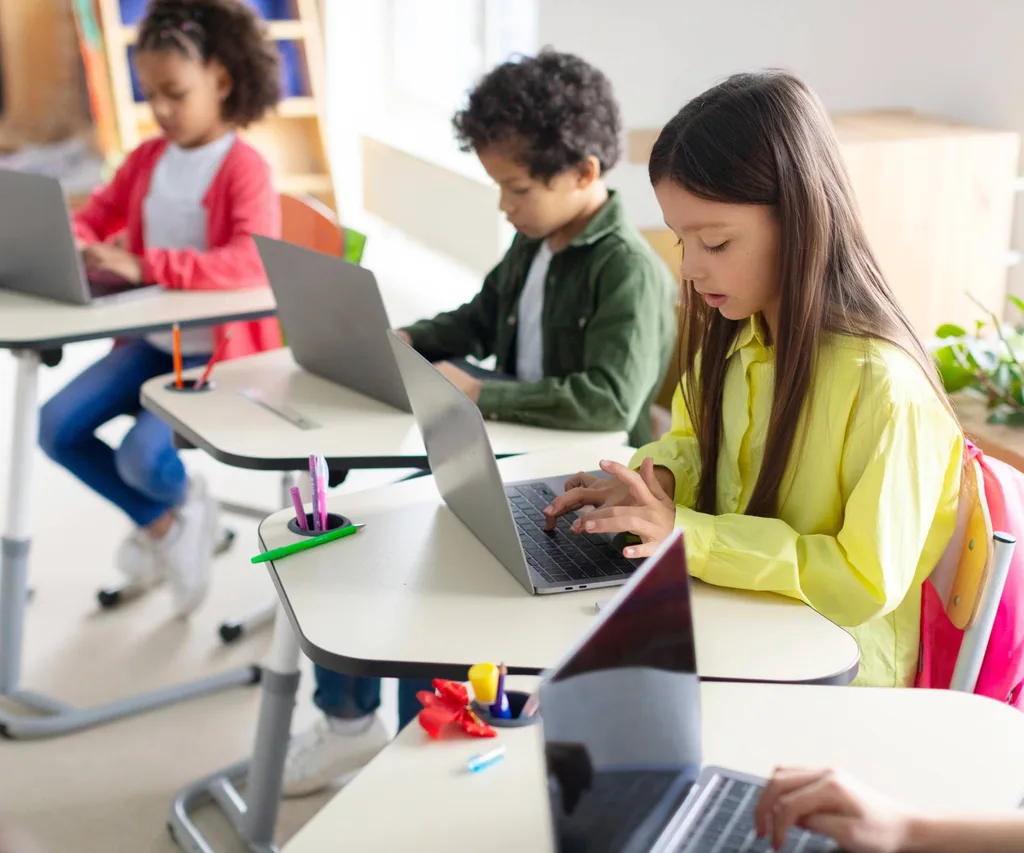
AI can change the way we learn. AI tutoring systems can personalise lessons, adapting content to match the students’ different learning styles, strengths and weaknesses. For example, if a student is a rugby fan, lessons in a particular subject can be tailored using rugby analogies to help them grasp concepts.
AI may also be able to review assignments as they’re being written, so the student knows if they’re on the right track or what they should be trying to improve. Teachers can benefit from AI tools that analyse assignments the class has done, pointing out where their students are struggling and suggesting what needs to be worked on. It can generate educational content and carry out administrative tasks, freeing up teachers’ time.
AI: The not-so-good stuff
Excitement and anxiety around AI
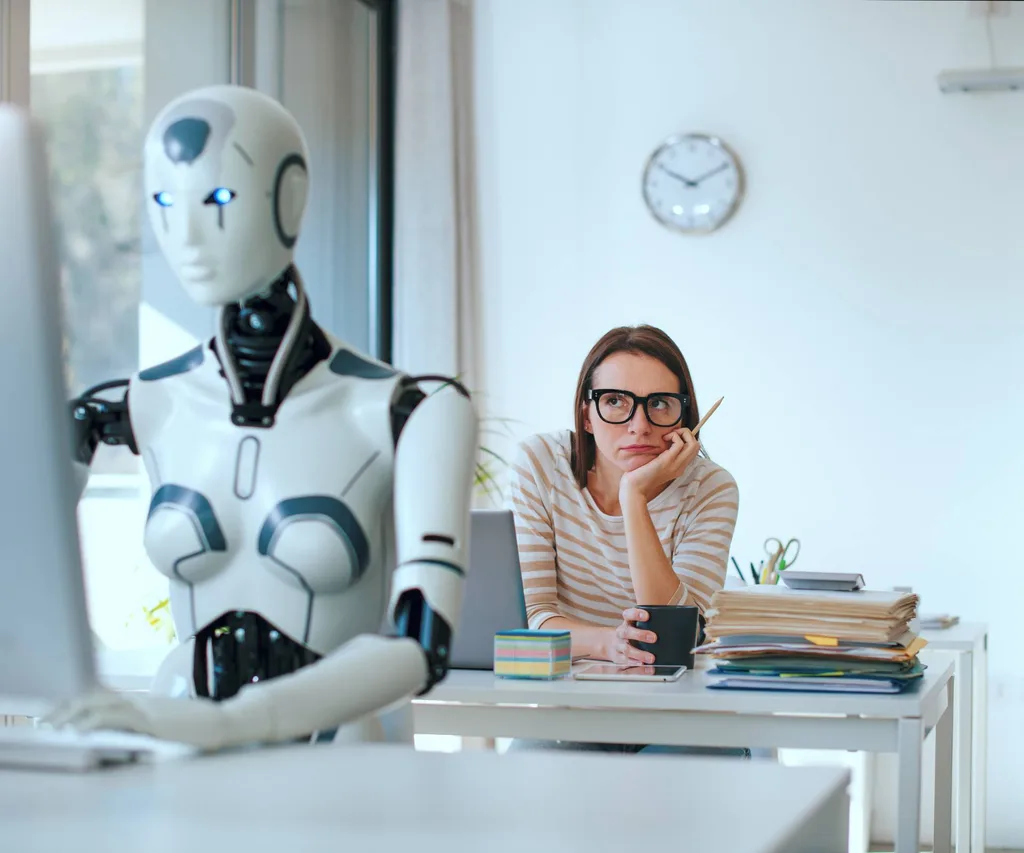
While there is excitement about the amazing stuff AI can do, there’s also plenty of trepidation about some negative ways it could have an impact on our lives. One of the biggest fears people have is that they’ll lose their jobs because AI can replace them. Artificial intelligence is already impacting customer service representatives, content writers, translators, administration assistants, software developers and financial analysts to name just a few, by doing their jobs much faster and cheaper or even for free.
AI is expected to create many new jobs – such as training and monitoring AI systems – but that won’t get everyone who has lost their job back into the workforce. Many won’t have the skills needed for those new technical roles. Relying on AI could reduce our critical thinking skills. Some of us may lose the ability to absorb and remember information or to solve problems ourselves. Students who use AI to write assignments for them are likely to struggle to understand concepts because they haven’t done the reading.
AI bias and misinformation
AI can inadvertently contain bias or even deliberate misinformation. For example, photos and videos, known as deepfakes, can be created or manipulated to look authentic. Examples of that include clips of Ukraine President Volodymyr Zelensky telling his troops to surrender to Russia and Taylor Swift giving away kitchenware. Recently, photos of women posted on social media have been altered to show them wearing bikinis.
As well as helping to scam people (for example, clicking on the fake Taylor Swift kitchenware video mentioned above led to a phishing website designed to steal information), AI can be used for a range of other criminal purposes. These include combining information from real people to create fake identities and open bank and credit card accounts, which are then used to commit financial crimes.
Privacy concerns and surveillance
AI gets to know a lot about us and there are concerns about what it’s doing with that information. There are concerns that facial recognition data is being collected. Beyond unlocking your phone, it could potentially be used to track your movements, both online and in the real world. This information might also be used to create a detailed profile of your activities, relationships, and political views.
We could end up preferring AI’s tailored responses to unpredictable interactions with people. That may affect our ability to communicate with others and losing human connections could make it harder for us to be empathetic. There are fears that frequent interaction with AI could affect the development of children’s social skills.
AI can create amazing digital artwork, but there are concerns that could result in people becoming less creative because AI can do it for them. Meanwhile, artists who don’t use AI could lose their livelihoods because AI art is cheaper or free. The same applies to other forms of art, such as books and music.
AI: The scary stuff
AI becoming smarter than humans and taking over the world really does sound like the plot of a bad science fiction movie, but experts warn that it is a real and genuine concern. Geoffrey Hinton, a Nobel Prize-winning computer scientist known as the godfather of AI for his pioneering work, left his job at Google in 2023. He made the decision because of concerns about the dangers of the technology he helped to create.
He fears that AI’s ability to spread misinformation and create deepfakes could be exploited by malicious actors. He is also concerned that AI systems could become far smarter than humans, eventually being able to think and act independently.
In worst-case scenarios, AI could sabotage elections, crash financial markets, create both cyber and biological viruses that could wreak havoc, and even launch automated weapons. Geoffrey says companies developing AI have a responsibility to act now to prevent it from getting out of control. One intriguing solution he’s suggested involves building “maternal instincts” into AI models so they are compassionate towards humans and won’t cause us harm.